Take off the doors.
Your wipers feel it.
Most Jeep owners change wiper blades when the streaking gets obvious. Running doors-off means that's already too late — because UV, trail grit, and sitting on a baked cowl all summer had been working on the rubber long before the first bad wipe.
Wiper blade failure is a solved problem when you catch it early. The issue is that doors-off driving accelerates the wear mechanisms most people don't think to check until they're squinting through a smeared windshield in a downpour.
Why running doors-off accelerates blade and glass wear
A Jeep wiper blade doesn't wear out from wiping. It wears out from UV exposure, ozone, and temperature cycling — and doors-off driving turns up all three.
With the doors on, the door glass creates a partial block that puts the cowl area in intermittent shade and slows the direct UV load on the blade rubber. The door seal also slows what blows onto the cowl and into the gap where the blade rests. Take the doors off and both of those disappear. The cowl gets full sun from a wider angle, the rubber sits exposed through more of the day, and anything the trail kicks up gets straight to the glass and blade edge without interference.
Trail grit is the other accelerant. When fine trail dust settles on the windshield and the blade rests against it, the particulates work into the edge of the rubber squeegee. The next time you run the wipers on a dry windshield — even briefly — that grit runs the length of the blade and acts like a grinding compound. It notches the edge before UV would crack it on its own. This is the specific failure mode that makes trail use harder on blades than highway mileage.
How to read blade failure before it catches you out
Wiper failure isn't a single event. It announces itself in a few ways before the blade stops working entirely:
- Streaking in a clean arc. A notch or tear in the rubber squeegee leaves a streak that tracks the blade's path exactly, cycle after cycle. That's the rubber edge, not contamination on the glass.
- Chattering or skipping. The blade bounces across the glass instead of wiping smoothly. Usually means the rubber has gone stiff from UV baking or cold-set, or the wiper arm spring has weakened and can't maintain consistent downward pressure.
- Cracks at the pivot fold. Pull the blade away from the glass and look at the rubber where it folds around the central attachment point. That fold is under mechanical stress every wipe cycle and is the first place UV-degraded rubber cracks. Any cracking there means the blade is close to splitting in hard use.
- Water smearing instead of clearing. Before replacing, clean the glass and blade edge with a damp microfiber. Road film, bug residue, and silicone from interior products all smear under a wiper. If cleaning fixes it, the blade is fine.
JK, JL, and JT use different blade sizes and arm attachment types. Confirm your specific year and model before ordering — the wrong size means uneven pressure and faster wear on the next set.
Which replacement blades hold up on a trail rig
The factory blades on the JK, JL, and JT are conventional framed wipers — a rubber squeegee held in a stamped-metal frame with pressure tabs at intervals along the blade. The frame traps trail dust at every pressure tab. It eventually clogs and prevents even pressure across the glass. Fine on pavement, but on trail use the blade rests on dusty glass between wipes and the grit works into the mechanism.
Beam (bracketless) blades are the better option for a rig that sees real off-road use. A single curved spine applies pressure through the arc of the blade with no external frame to trap grit. Contact stays more even as debris builds up, and there's nothing to clog. They cost roughly two to three times a comparable framed blade. If you're replacing more than once a season, the math starts to favor them.
Silicon-compound blades last longer in UV exposure than natural rubber, with a higher initial cost as the tradeoff. Silicon blades also deposit a light hydrophobic residue on the glass as they wipe, which over time improves water-beading behavior without separate treatment.
- Check your specific model and year for blade sizes before ordering. JK and JL/JT use different sizes on both the driver and passenger sides.
- Confirm the wiper arm attachment type. Most aftermarket beam blades include adapters, but verify before buying to avoid a return.
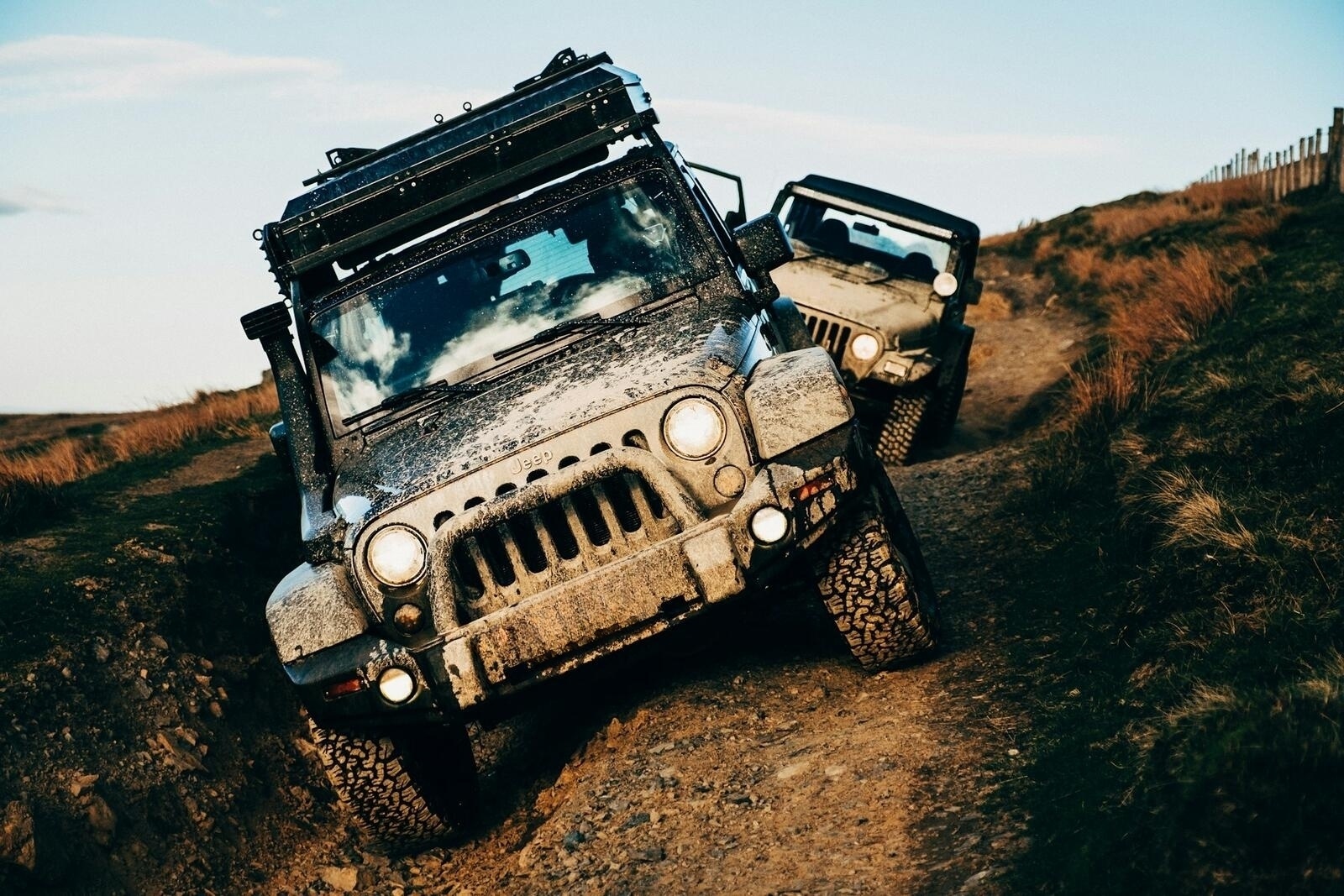
Windshield treatments and why they matter open-air
A hydrophobic windshield treatment — Rain-X is the most widely available, though several automotive-grade alternatives exist — changes how water behaves on the glass. Water beads and sheets off a treated surface instead of forming a flat film, which means the wipers clear residual water in fewer passes and the glass stays cleaner between wipes.
For doors-off driving, two benefits are specific to the open configuration. At trail speeds, rain and condensation wipe more completely in fewer passes — useful when you're on a rutted surface and don't want the wipers running constantly. At highway speed with the doors off, airflow over a treated surface clears light rain and bug spray more effectively. Many drivers find the wipers are barely needed above 50 mph on a treated glass in light rain.
Application is straightforward, but prep matters more than the product itself:
- Clean the glass completely first. Road film, wax overspray, and trail grime prevent the treatment from bonding. Use a glass-specific cleaner — not an interior wipe — and dry fully before applying.
- Apply and buff per the product's directions. Most treatments go on with a small applicator pad, then get buffed off with a clean microfiber once they haze. Don't let them sit too long before buffing — dried residue is harder to remove than fresh.
- Reapply monthly through the active season. The coating wears off with wiper use. When water stops beading at speed and starts sheeting instead, reapply.
Two things to avoid: don't apply over a cracked or chipped windshield — water infiltration under the treatment can spread a chip. And don't apply over glass that has silicone contamination from interior dressings that overspray onto the inside of the glass. Silicone prevents adhesion and the result will streak badly on first use.
The onboard kit worth keeping in the rig
A dedicated windshield kit takes up less space than a water bottle and handles the most common glass problems mid-trail without digging through cargo.
- A small spray bottle of glass cleaner. Diluted isopropyl or an automotive glass cleaner in a four-ounce travel bottle. Use it for bug strikes, trail dust, and quick wipes before a treatment refresh. Keep it separate from any interior cleaner — silicone-based interior products on the outside of the glass are difficult to remove and kill hydrophobic coatings.
- Two microfibers designated for glass only. One to apply, one to buff. Mark them so they don't end up contaminated by dash products. The only real requirement is that they've never touched anything that leaves silicone residue.
- Bug wipes or a small bug remover spray. Bug protein etches glass and paint if it sits in direct sun for more than a few hours. A packet of wipes or a small spray bottle of bug-specific remover handles strikes before they bond.
The whole kit fits in a gallon zip bag in the rear cargo area or a wheel-well bin. It covers the most common mid-trip glass problems without requiring a full detailing setup.
How often to actually check and replace
Inspect blades at the start and end of doors-off season, plus a quick flex-and-look any time you're doing other maintenance. The cadence that keeps you from being caught out on a trail:
- Start of doors-off season: flex each blade away from the glass and check the rubber edge and pivot fold. Stiff rubber that doesn't flex smoothly, or any cracks at the fold, warrants a replacement before you need the wipers.
- After trail runs with significant grit: wipe the blade edges with a damp microfiber. It takes thirty seconds and removes the abrasive material before the next wipe cycle works it into the rubber edge.
- Windshield treatment: once a month through active season. Use the weather check as a trigger — if you're checking the doors-off forecast before a run, check the glass bead behavior at the same time.
- End of season: replace blades before storage if they're showing any wear. Fresh blades going into winter storage beat inspecting marginal ones in the spring when you want to be driving, not shopping.
Windshield and wiper FAQ.
- How often should I replace wiper blades on a doors-off Jeep?
- More often than the standard 6-12 month guidance. If your rig sees regular trail use or sits outside through a full summer, inspect the rubber at the fold and edge every 2-3 months. Replace at the first sign of cracking at the pivot fold, or any consistent streaking that blade cleaning doesn't fix. Rubber that's cracked at the fold will split in hard rain before you expect it.
- Are beam (bracketless) blades worth the extra cost?
- Usually yes for a rig that sees trail use. Conventional framed blades trap grit at their pressure tabs, which leads to uneven pressure and faster wear as the frame clogs with trail dust. Beam blades have no frame to trap debris, so they maintain even contact longer. They cost more up front but tend to outlast multiple sets of framed blades on a rig that runs off-road regularly.
- Does Rain-X actually help when driving with the doors off?
- Yes, particularly at highway speed. A treated surface sheets water off with less wiper use in airflow, and handles light rain more effectively than untreated glass at speed. At trail speeds, the benefit is fewer wipe passes needed to clear rain or condensation. The highway speed effect is the more noticeable one.
- What causes wiper blades to crack faster on a Jeep?
- UV and ozone degrade rubber regardless of wipe cycles. A Jeep that parks outside, runs doors-off, and sees trail dust has all three accelerants at once — sustained direct UV on the cowl, elevated ozone at trail elevations, and abrasive particulates working into the blade edge every time the rubber rests on dusty glass.
- Can I use my interior microfiber on the windshield?
- Separate them. Interior microfibers pick up residue from dash cleaners, UV protectants, and silicone dressings. Any of that on the outside glass will smear under the wipers and prevent a hydrophobic treatment from bonding. Mark your glass-only cloths and keep them separate — it's the most common reason windshield treatments underperform.
- What's the right way to clean wiper blades between replacements?
- Wipe the rubber edge with a damp microfiber or isopropyl-dampened cloth, running from heel to tip along the blade. The brown, gritty residue that comes off is the trail grit that would otherwise run the length of the blade in the next wet-wipe cycle. Do this after any trail run that put significant dust on the glass.
- Do I need to treat the inside of the windshield too?
- No hydrophobic treatment needed on the inside. But interior glass does need regular cleaning. Open-air driving lets trail dust in, and outgassing from plastics and vinyl builds a haze on the inside glass over time. A periodic wipe with glass cleaner and a clean microfiber keeps it clear. Keep interior dressing products away from the inside glass — they smear badly in direct sun.
General guidance for Jeep Wrangler and Gladiator owners. Wiper and windshield conditions vary by climate, trail use, and driving habits — inspect your own setup regularly rather than going by time alone. Windshield chips and cracks should be assessed by a qualified shop before applying any treatment.
Clear glass,
all season.
Check the blades before the season starts, not after the first bad rain. The doors-off forecast keeps you from putting the wipers to the test on a day you didn't plan for.
