Ride open.
Clean it after.
The factory interior was designed for a vehicle with doors. Pull them off and every surface in the cabin (the dash, seats, carpet, and door sills) takes direct sun, rain, and trail grit with nothing in the way. This guide covers how to protect it before the damage starts and how to wash it when it does not.
The mistake most doors-off Jeep owners make is treating the interior as a cleanup problem. It is a protection problem. A cargo liner and a set of all-weather floor mats cost less than one professional detail after a summer of neglect, and the cleaning cycle is much shorter once the physical barriers are in place.
What takes the worst abuse
The floor and carpet absorb mud, water, and grit on every run. The seats get direct UV radiation through the open side and whatever blows in from the trail. The dash and exposed vinyl surfaces chalk and fade over a full season without any protection from door glass or door panels.
On the JL/JLU and JT, the mid and upper trim seats use a leatherette that looks better than base cloth but shows cracking sooner when it dries out under direct sun. The JK's harder-wearing vinyl is more forgiving. The exposure is the same across both generations; what differs is how quickly each material shows the damage.
Priority order, if you are deciding where to start: carpet and floor mats first (they hold moisture and are the fastest path to mildew), fabric seats second (grit in the bolster seams causes abrasion wear over time), dash and hard surfaces third (cumulative UV damage that is slow to appear and irreversible once it starts).
The protection that cuts your cleaning time
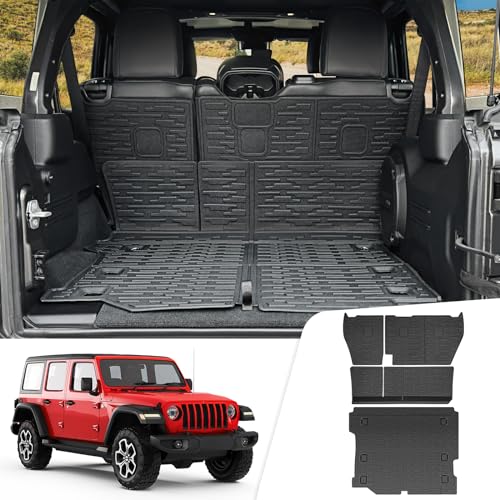
Physical barriers do the most work. A cargo liner means the rear floor never takes a direct mud hit. It takes an easily hosed-off rubber sheet instead. All-weather floor liners keep the factory carpet dry on wet trail days. The cleaning routine gets much shorter when the surfaces doing the actual work can be pulled out and rinsed in 90 seconds.
- All-weather floor liners lock into the factory floor clips on most JL/JT builds and create a waterproof basin over the carpet. When they are full of mud and water from a trail run, you pull them, hose them off, and reinstall. The factory carpet underneath stays dry.
- Cargo area liners cover the rear floor and optionally the seat backs. The JL/JT cargo area collects trail debris directly from the liftgate opening. The liner takes the hit and wipes clean in under a minute.
- Seat covers for regular trail use: if you are running off-road most weekends, a seat cover rated for outdoor use handles rain, mud, and UV better than exposed cloth or leatherette. Look for covers with elastic or strap anchors at the headrest and under the seat base. Slip-on covers migrate on the first hard trail corner and end up crumpled on the floor by the time you park.
Floor and cargo protection for JL/JT
Cargo liners, wheel-well bins, and console organizers that take the hit so your factory interior does not have to. Every link goes to Amazon.


Jeep JL Rear Wheel Well Storage Bin (2024–2025)

Jeep JL Center Console Organizer & Side Tray (4-Piece)
How to actually wash fabric seats and carpet
Fabric and carpet respond to cleaning products, but they have to dry fully afterward. The failure mode is damp upholstery that stays wet for days in a closed Jeep. That produces mildew and an odor that will not leave with a spray-and-wipe pass.
- Pull floor liners or mats first. Shake or hose them off separately. All-weather rubber liners go straight under a garden hose. Factory carpet mats need a scrub brush and warm water, then need time to fully dry before you reinstall them.
- Vacuum the seats and carpet before any moisture. A handheld or shop vac pulls the dry grit out first. Wet cleaning over dry grit turns abrasive particles into a scrub against the fabric weave. The vacuum step is what prevents that.
- Apply foam fabric cleaner in sections. Work a roughly 12-inch section at a time. Let it dwell 2-3 minutes before agitating.
- Agitate with a soft-bristle brush. Work in the direction of the fabric grain on flat seat sections. On seat bolsters with an embossed surface pattern, a circular motion gets into the texture better.
- Extract rather than blot. A wet/dry vacuum pulls the cleaner and suspended grit out of the fabric. If you only have towels, blot firmly rather than wiping so you are not pushing grit deeper into the pile.
- Air out completely before closing the Jeep. Windows down, top off if possible, for at least 2-3 hours. In humid climates or after a full fabric wash, a moisture absorber in the footwells helps prevent mildew while the upholstery finishes drying.
If your all-weather floor liners were doing their job, the factory carpet underneath rarely needs this full treatment. Pull the liners, hose them off, reinstall. That covers your floor-care routine on a normal run day.
UV protection on the dash and hard surfaces
The JL/JT dash is textured hard plastic, not soft vinyl, but it still chalks and fades under sustained UV without any block from door glass or door panels. The exposed door sill trim and seat-back vinyl are softer and typically show cracking first.
- Use a dry-touch or matte-finish UV protectant on the dash. High-gloss or "wet shine" formulas attract dust, turn greasy in direct heat, and reflect glare from the gauge cluster straight into your eyes. Avoid anything labeled "maximum shine" on interior surfaces.
- Reapply every 4-6 weeks through peak season. A product applied in April is not still working in August. The cadence is more frequent than most people expect because there is no tinted door glass diffusing the UV load.
- Test a new product in an inconspicuous spot first. Some protectants that work fine on dash plastic will haze leatherette. The seat-back upholstery and the dash are different enough materials that not all products work across both.
- Do not use full-strength all-purpose cleaner on soft vinyl or leatherette. Dilute to 10:1 or use a dedicated interior cleaner. Full-strength APC strips surface treatments faster than UV alone would.
The realistic cleaning schedule
Two tiers keep this manageable without turning every run into a detail job:
- After every trail run: pull the floor liners, hose them off, check the carpet for standing water. Dry-brush the seats if there is visible grit on the bolsters. Five minutes. This is the step that stops the grit-to-abrasion cycle before it starts.
- Monthly through peak doors-off season: full fabric-cleaner pass on seats and exposed carpet, vinyl wipe on hard surfaces, UV protectant on dash and door sill trim. 30-45 minutes.
If you are running doors-off on street only and skipping trail use, you can stretch the full clean to every 6-8 weeks. The UV protectant cadence stays the same regardless. UV accumulates whether you are on pavement or on the trail.
Interior washing and protection FAQ.
- How often should I deep-clean the seats and carpet when running doors-off regularly?
- Monthly through peak season is the right cadence for a full fabric-cleaner pass. After trail runs, a quick dry-brush and floor-liner rinse is enough to stop the grit-to-abrasion cycle. The monthly clean covers what the quick post-run routine misses.
- Do I need all-weather floor liners if my Jeep already has the factory rubber mats?
- Factory rubber mats help but they are not the same thing. OEM mats are thin, do not lock into the floor clips, and do not cover the full floor area. Aftermarket all-weather liners are deeper, cover more surface area, and have raised edges that hold water and mud rather than letting it migrate to the carpet edges. If you are doing trail runs or driving in rain with the doors off, the coverage difference is real.
- Can I pressure-wash my Jeep seats and carpet?
- Not a good idea. Fabric seats and carpet are not designed for pressure washing. High pressure drives water and grit deeper into the foam rather than extracting it, and can damage stitching and seat foam over time. A wet/dry vacuum with a foam fabric cleaner does the job correctly. Reserve pressure washing for painted exterior panels and the undercarriage.
- What causes the mildewy smell in a Jeep interior after rain?
- Wet fabric and carpet that do not dry fully. Seats and carpet on a Jeep are thick enough to hold moisture for days in a closed cabin, and that is the window where mildew gets started. After a rain event, leave the top off or windows down for several hours to let things dry. In humid climates, a charcoal or silica moisture absorber in the footwells helps pull residual moisture before mildew has time to set.
- What should I look for in a seat cover for doors-off use?
- Two things: material and anchoring. The material should be outdoor-rated, such as neoprene or a neoprene-blend fabric that handles UV and water without degrading quickly. The anchoring matters as much as the material: a cover needs to attach at the headrest and under the seat base, not just drape over the seat. Covers that only slip on will migrate on the first hard trail corner and bunch up under you. The coverage goes away exactly when you need it most.
- JK vs. JL and JT: does interior care differ between generations?
- The approach is the same but the materials respond differently. The JL introduced softer dash materials and a leatherette option that looks better out of the box but shows cracking sooner if you let it dry out without UV protectant through a full summer. The JK's harder interior plastic is more forgiving about gaps in the maintenance schedule. JL Rubicon and higher trims reward the regular protectant cadence more visibly because the materials hold their appearance better when kept up.
- How long should I let the interior air out after cleaning the seats?
- At least 2-3 hours with good airflow, windows down and top off if possible. If you washed the full seat surface and the weather is humid, longer is better. Closing the Jeep or reinstalling floor mats before the fabric is fully dry is the fastest path to a mildew problem.
General guidance for Jeep Wrangler and Gladiator owners. Interior materials and trim levels vary by model year and build; test any cleaning or protectant product in an inconspicuous area before full application.
Ride open.
Clean it after.
Install the protection before the mess starts and the cleaning cycle stays short. Browse the full interior lineup or check the week before you commit to pulling the doors.