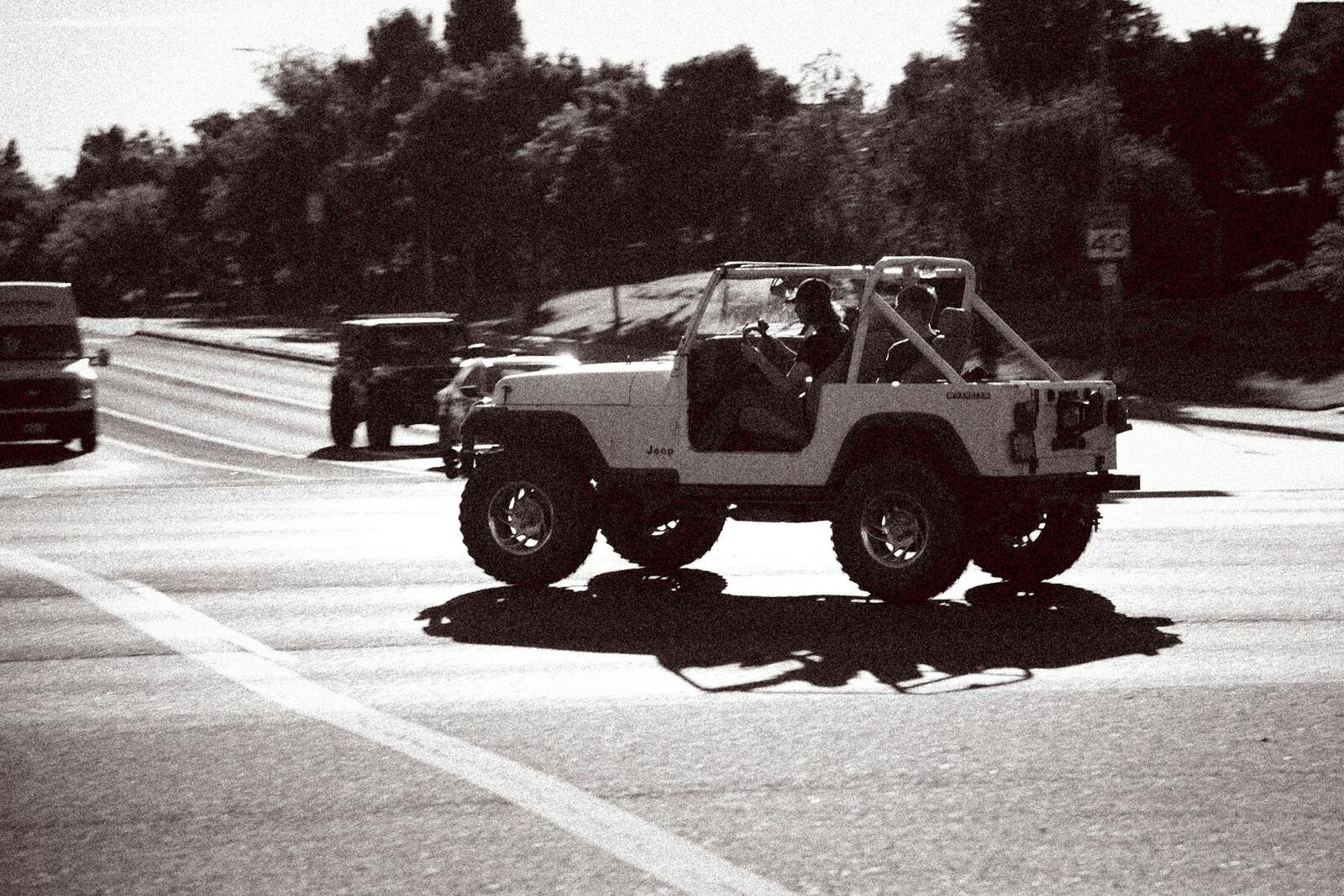
Half a door
or none at all?
Tube doors give you a grab bar, a mirror mount, and a legal fig leaf of side protection without the weight of full doors. Going completely doorless is simpler, cheaper, and maximally open — but your mirrors, legality, and passenger comfort all become your problem. Here's how to actually decide.
Both setups put wind in your face and bugs in your teeth. The difference is everything else: how legal you are, how your passengers feel at 70 mph, and what happens when the trail gets tight. This guide lays out the real tradeoffs so you stop arguing in the forum and start riding.
The two setups, clearly
You've already decided the big doors are coming off. The question is what, if anything, goes back on in their place:
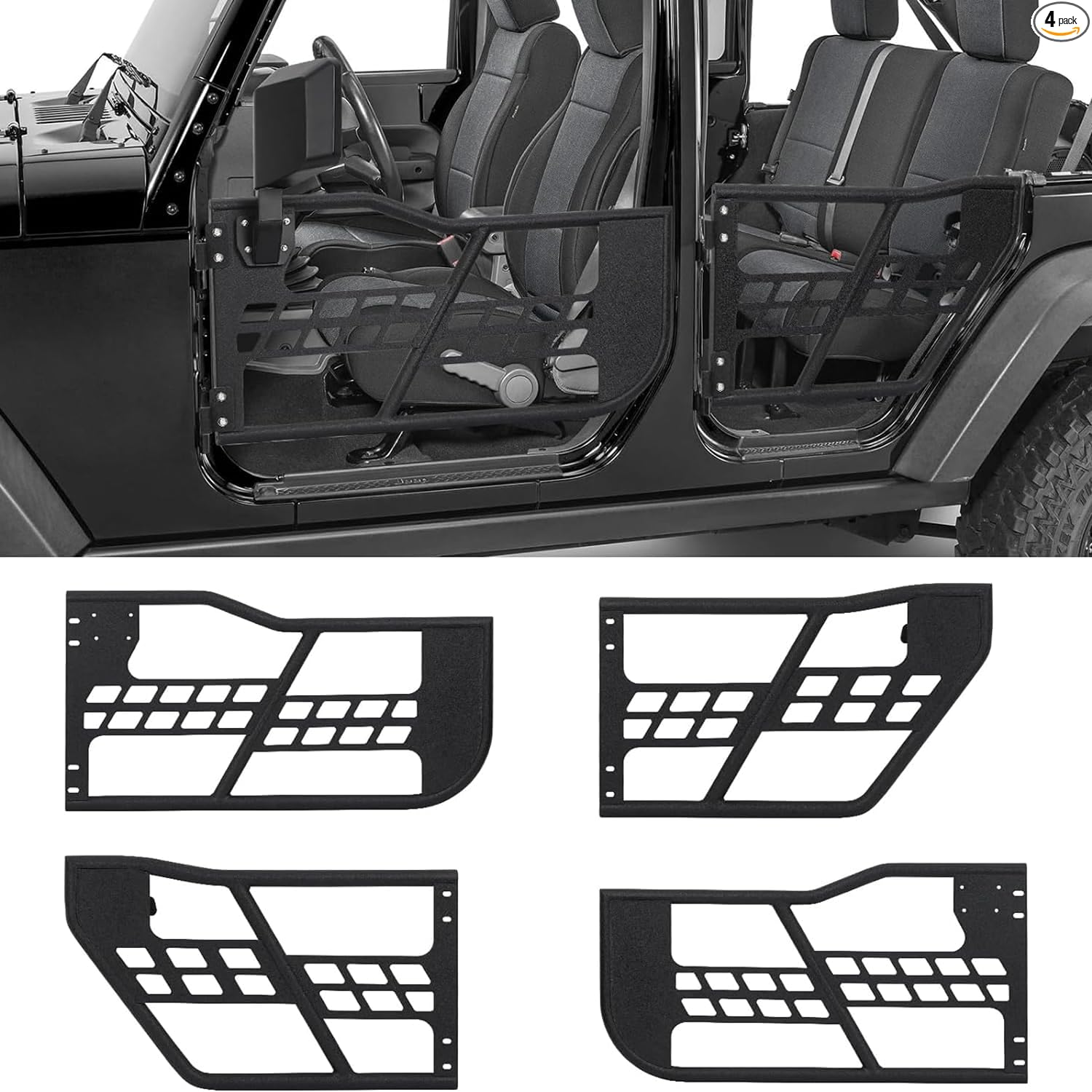
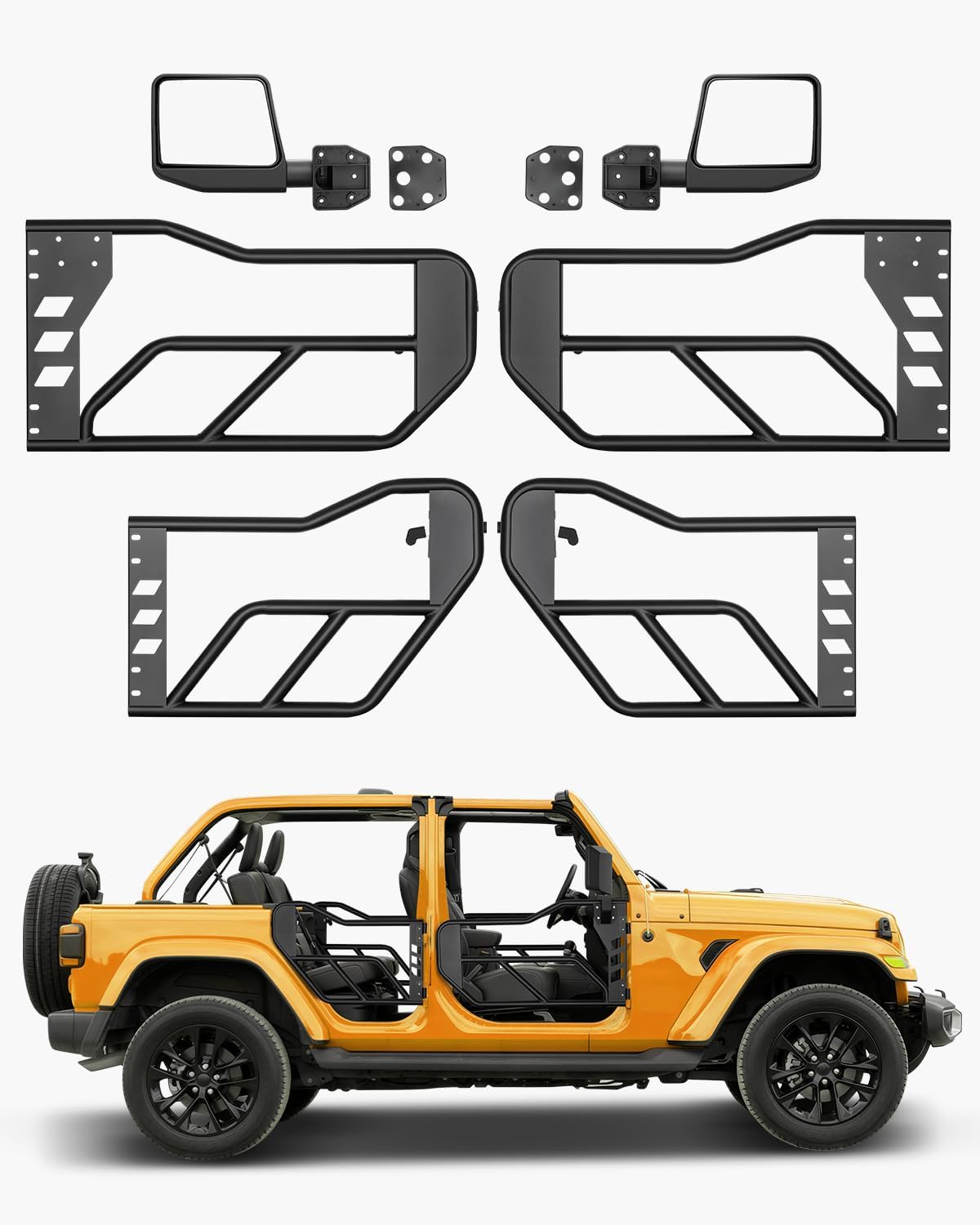
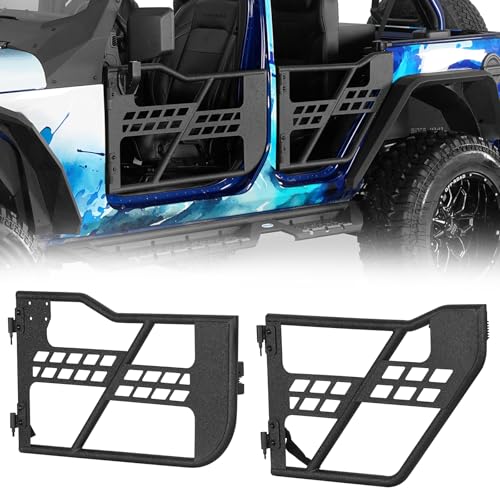
- Tube doors (or half-doors) bolt to the same hinge points your full doors used. They're a steel tube frame — no glass, no interior panel, minimal weight — with a grab bar, a footwell kick, and a mirror mount built in. You look open-air; you basically are. But you have a defined side opening, something for passengers to hang onto, and a legal mirror perch.
- Fully doorless means nothing in the door opening at all. You pull the full doors, stow them, and run bare. You need separate hinge-mount or A-pillar mirrors, you lose the grab bar entirely, and every state's legal picture gets more complicated. Maximum open-air; maximum DIY.
Neither is "better." They're different rigs for different priorities. The sections below break down each variable so you can match the setup to how you actually use the Jeep.
Legality: what varies, what doesn't
Here's where it gets state-specific, so read this carefully: most states don't require doors at all. The door itself is almost never the legal issue. What they do require — in nearly every state — is that you maintain the mirrors. On a stock Wrangler or Gladiator, the side mirrors are mounted to the doors. Pull the doors, lose the mirrors. That's the legal exposure, not the door opening.
Tube doors solve the mirror problem automatically because they bolt to the same hinges and come with mirror mounts. Bolt on the tube doors, mount a set of mirrors, done. The mirror question is settled the same way it was with your full doors.
Going fully doorless puts the mirror burden on you — you need hinge-mount or A-pillar mirrors that give a legally adequate rearward view. Most states want at least the driver's-side mirror; many want both sides plus the interior rearview. Running a mirror on both sides and leaving the interior rearview in place satisfies essentially everywhere.
A few states — confirm yours — have additional language around occupant protection or roll structure that could touch tube-door territory, though this is rare and almost never enforced against aftermarket tube doors. We're enthusiasts, not lawyers: check your own state's vehicle code before you drive either setup on public roads, and remember that off-road parks can add their own requirements.
Tube doors worth bolting on
Steel tube frames for JL Wranglers and JT Gladiators — open-air feel with a mirror mount and grab bar included.


Fat-Tube Half Doors: Set of 4

VEVOR Tubular Trail Doors with DOT Mirrors (Set of 4)
Tube door options: what's actually out there
Tube doors come in a few configurations — full four-door sets for the JL Unlimited and JT, or front-only half-door kits if you want to keep the rear doors stock or remove them entirely. The main variables:
- Tube diameter and wall thickness — fatter tube feels more substantial and is harder to bend on a trail obstacle. "Fat tube" half-doors are a specific style with a wider-gauge upper tube that gives a chunkier look and a better grab-bar grip.
- Mirror mounts included — most tube doors include a basic mirror bracket; some come with integrated mirrors already fitted. Check whether the included mirrors are actually usable or just legal checkboxes — adjustability and vibration resistance matter a lot at speed.
- Finish — textured powder coat or raw steel. Powder coat holds up better to UV and trail debris; raw steel needs attention if you're near salt water.
- JK vs. JL vs. JT fitment — the hinge geometry changed between generations. JK (2007–2018) and JL (2018+) tube doors are not interchangeable. The JT Gladiator (2020+) shares the JL hinge but has different rear door geometry. Buy for your exact model.
Installation is a direct swap: pull the full door, bolt on the tube door to the same two hinges, reconnect the door latch to your existing striker, mount the mirrors. No drilling, no wiring. Most people do a set in under two hours with basic hand tools.
Mirrors for going fully doorless
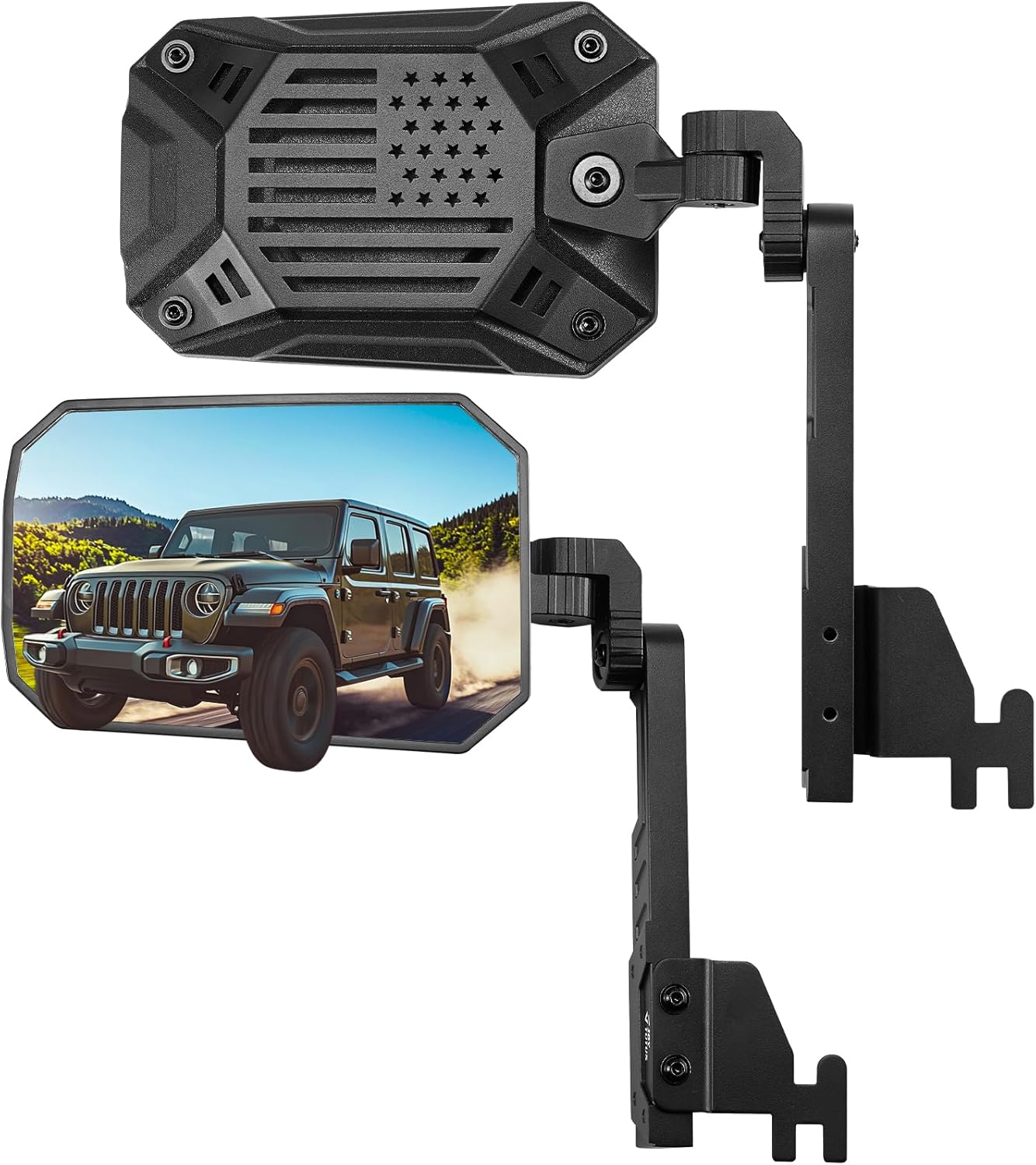
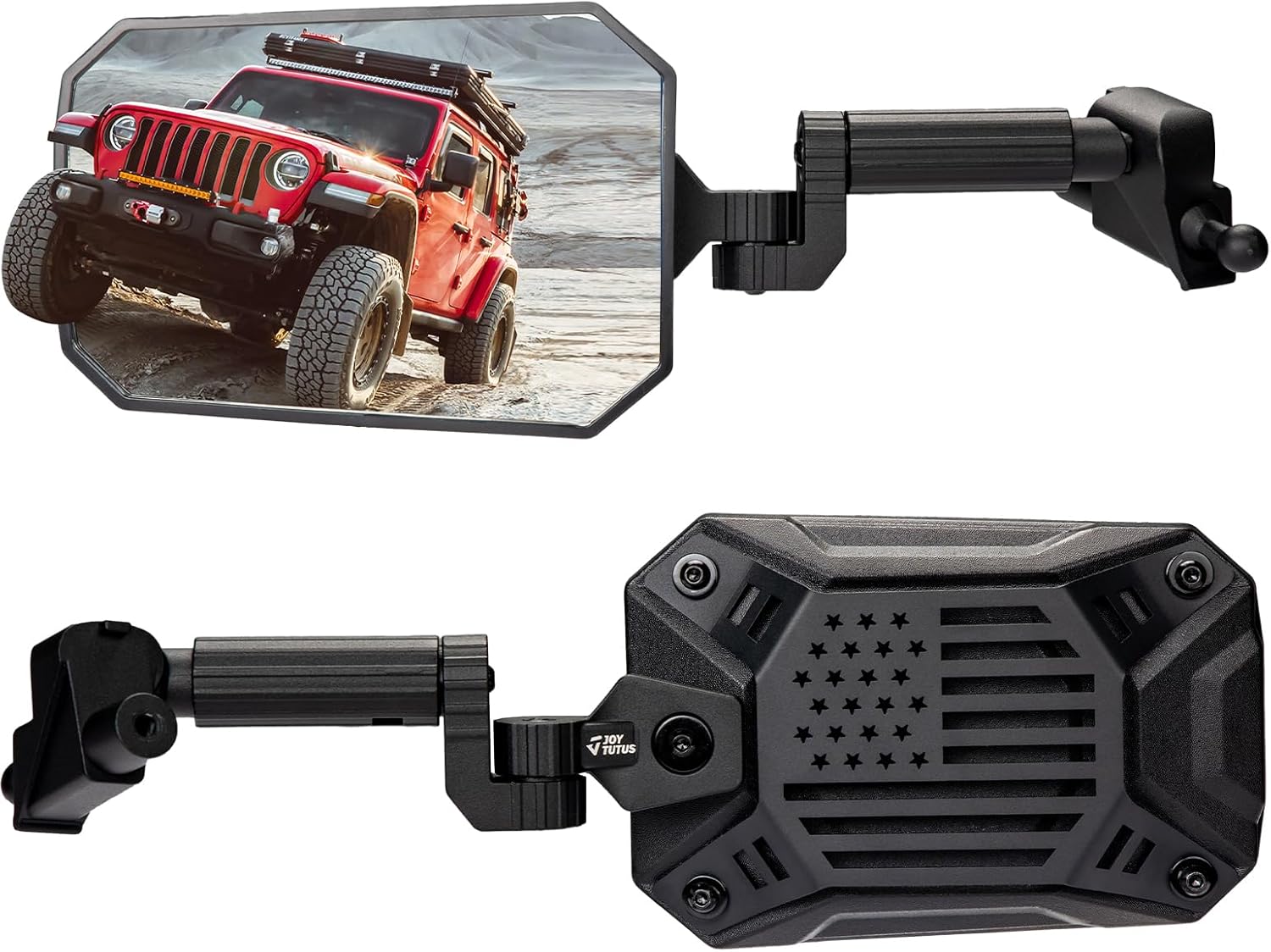
Hinge-mount and ball-adapter mirrors that keep you street-legal with nothing in the door opening.
Going fully doorless: mirrors are the whole game
Once you commit to running with nothing in the door opening, the mirror situation is entirely on you. Two mounting approaches:
- Hinge-mount mirrors clamp directly to the exposed door hinge — the same hinge that holds tube doors. They put the glass roughly where your factory mirror sat, and they come off with a few bolts when you want to run clean on a closed trail. Quick-release versions use a bracket that stays put and let the mirror head pop on and off in seconds.
- A-pillar / ball-adapter mirrors mount to the windshield frame or a dedicated A-pillar bracket. They're the most vibration-resistant option — the pillar is rigid — and they're independent of the door opening entirely, so they stay on whether you're doors-on or doors-off.
Either style works. The practical difference: hinge mirrors disappear cleanly when you want them gone, while A-pillar mirrors are a set-and-forget solution if you run doors-off most of the time. For the full breakdown, see the doors-off mirrors guide.
Highway and comfort: the honest comparison
This is where tube doors earn their money — and it's the variable most people underestimate until they've done a long highway stretch fully doorless.
Fully doorless at highway speed is loud. Wind wraps around the A-pillar and hits you in a wide buffeting column. Conversations become shouting. Music becomes irrelevant. After an hour, it's tiring. It's also genuinely cold in shoulder-season weather — there's nothing to catch any wind at all.
Tube doors meaningfully cut wind buffeting, even though they're just a tube frame with open air in the middle. The lower tube and kick panel block a surprising amount of leg wind; the upper tube breaks up the column that hits your shoulder and head. It's not the same as a full door, but it's noticeably better for passengers who didn't sign up for the full doorless experience.
Passengers with full doors off also lack a grab point. If you have kids, a nervous rider, or a dog with opinions, the grab bar on a tube door is doing real work. Fully doorless means whoever is in the front passenger seat is holding onto the center console or the dash.
If your Jeep is primarily a trail rig that rarely sees highway speeds, none of this matters much. If you're mixing daily driving, highway miles, or family runs with your trail time, tube doors are the significantly more livable setup.
Trail use: where doorless actually wins
On the trail, the calculus shifts. Tube doors add weight — not much, but some — and they narrow your visual sightlines compared to running completely open. Looking over your shoulder or down at a rock ledge, a clean door opening gives you an unobstructed view that even a minimal tube frame interrupts at the edges.
For technical crawling where visibility is everything, fully doorless is legitimately the better choice. You can see your rear wheel placement, your rocker position, and the obstacle line without any frame in your peripheral vision. This matters on narrow ledges, in tight off-camber sections, and anywhere your spotter is working the rear quarter.
Tube doors can also catch and bend on trail obstacles that would have cleared a bare rocker. Not dramatically — they're not a liability — but a fully doorless Jeep has one less thing to hang up on rock or brush in tight terrain. If you're running rock sliders, they're protecting the rocker; the door opening above them is clear.
For easy to moderate trails, overlanding, and forest roads, tube doors and fully doorless are functionally equivalent. Pick whatever you prefer.
Quick decision guide
Skip the forum debate. Here's the honest tiebreaker:
- Trail-only, mostly moderate terrain, solo or experienced riders: go fully doorless. Simpler, lighter, maximum visibility, cheapest to execute. Buy a set of hinge-mount mirrors and you're done.
- Street and highway miles, passengers, family use: tube doors. The wind buffeting and grab-bar difference is real and it matters over distance. Your passengers will thank you.
- Technical crawling, competition, tight terrain: fully doorless. Unobstructed sightlines are worth more than any other variable here.
- You want the open-air look without committing to mirrors as a separate purchase: tube doors with integrated mirrors. One purchase solves everything.
- You swap frequently — doors on for winter, doors off for summer: tube doors are easier to justify than managing hinge mirrors and a separate storage system. They're a cleaner seasonal swap.
One more thing worth saying: tube doors and fully doorless aren't permanent decisions. Tube doors unbolt in minutes. Many owners run tube doors for street and highway use, then pull them for trail days and run bare with A-pillar mirrors already installed. You don't have to pick a lane forever — you can pick a lane for the day.
Tube doors vs. doorless FAQ.
- Are tube doors street legal?
- In almost every state, yes — tube doors aren't the legal issue. What matters is mirrors: tube doors bolt to your existing hinges and include mirror mounts, so they solve the mirror requirement the same way your full doors did. Confirm your state's vehicle code, and make sure your mirrors give an adequate rearward view. A handful of states have additional equipment language, but tube doors on a public road are not a meaningful legal risk in practice.
- Do I need mirrors if I run tube doors?
- Yes. Tube doors provide the mount; you still need to put mirrors on them. Most tube doors come with basic mirrors included or a bracket that accepts standard aftermarket mirrors. Check the listing — some include usable mirrors, some include a bracket only.
- Is it illegal to drive without doors?
- Driving without doors is legal in most U.S. states — the door itself almost never appears in vehicle equipment laws. What's required is mirrors. Since stock Wrangler and Gladiator mirrors are mounted to the doors, pulling the doors means you need a replacement mirror setup (hinge-mount, A-pillar, or tube door mirrors) before you're street legal. Confirm your own state's vehicle code.
- Do tube doors fit both JK and JL Wranglers?
- No — JK (2007–2018) and JL (2018+) tube doors are model-specific. The hinge geometry changed between generations and they don't interchange. The JT Gladiator (2020+) shares the JL front hinge but has different rear geometry. Always buy tube doors listed for your exact model and year.
- How hard is it to install tube doors?
- It's a direct swap on the same hinges your full doors use — no drilling, no wiring required. Pull the full door, bolt on the tube door using the same hinge bolts, connect the door latch to your existing striker, and mount the mirrors. Most people complete a set of four in under two hours with hand tools.
- Are tube doors worth it vs. just running doorless?
- For trail-only rigs with experienced riders, fully doorless is simpler and lighter. For street use, highway miles, or passengers who didn't specifically sign up for the full doorless experience, tube doors are meaningfully more livable — the wind buffeting difference is real and the grab bar does work. The honest answer is it depends on how you use the Jeep.
- Can I use A-pillar mirrors with tube doors?
- Yes — A-pillar mirrors mount to the windshield frame regardless of what's in the door opening. If you already have A-pillar mirrors dialed in, you don't need to swap to tube-door-mounted mirrors just because you've added tube doors. Use whichever mirrors you have aimed and trust.
- What's the difference between tube doors and half doors?
- The terms are often used interchangeably, but half-doors technically refers to the lower portion of a split-door setup (like Jeep's own factory half-door option). Tube doors are aftermarket full-height replacements made from steel tubing with an open frame. 'Fat tube' half-doors are a specific style with a wider upper tube gauge. For practical purposes: tube doors and half-doors both bolt to the same hinges and give you a mirror mount and grab bar — the difference is mostly aesthetic and in tube diameter.
General guidance for Jeep Wrangler and Gladiator owners — not legal advice. Vehicle equipment laws vary by state and change over time. Confirm your local rules before driving either setup on public roads.
Tube doors or nothing.
Both beat sitting in the garage.
Pick your setup, sort the mirrors, and go. Trail season doesn't wait for the forum to reach consensus.