As an Amazon Associate we earn from qualifying purchases. Every buy button leads to Amazon.As an Amazon Associate we earn from qualifying purchases.Full disclosure →Disclosure →
GUIDE / INTERIOR TRIM REPAIR

The sun finds
every crack.
Fix them first.

When the doors come off a Wrangler or Gladiator, the A-pillar trim, sun visors, and grab handles stop being protected interior parts and start being outdoor furniture. UV and heat work into every stress point, and the same parts always go first. Here is what to watch, what to buy, and whether to repair or replace.

PART OF THE CARE & STORAGE SHELFSee all 9 guides →

The fix is rarely expensive. What costs money is waiting until a surface crack has delaminated or a visor bracket has broken completely. This guide covers the damage sequence, the repair products that actually work, and a triage checklist so you know whether to reach for adhesive or a new part number.

What breaks first, and why

The damage order is consistent across JK, JL, and JT platforms. A-pillar trim panels go before almost anything else. They sit at the top of the windshield frame, face the sun at an oblique angle, and on the JK and JL they are thin ABS plastic with a textured surface coating that UV cracks separately from the substrate underneath. The coating chalks and flakes, the plastic beneath starts to show hairlines, and within a season of regular doors-off use in a hot climate you have surface checks that will eventually work through the whole section.

Sun visors are next. The hinges are the failure point, not the visor fabric or foam. Jeep visors clip to a plastic bracket mounted to the headliner, and that bracket fatigues from repeated folding and from the thermal cycling that is magnified without a door-framed environment. On the JL, the visor pivot is tighter to manufacturing tolerance than on the JK, which means when it does crack it tends to go at the clip rather than the pivot arm itself.

Grab handles come third. The factory roll-bar handles are rigid nylon with UV stabilizers, but prolonged exposure chalks them the same way A-pillar trim does, and the mounting points can develop play from trail vibration. Functional failure is slower, but it happens.

Finally, any exposed horizontal plastic surface collects UV damage by facing up. Dashboard soft-touch material on the JL and JT is more refined than the JK's harder plastic, so it shows oxidation differently. The JK dash chalks opaque. The JL soft-touch tends to go tacky before it chalks, a surface plasticizer migrating out before the breakdown gets visible. The tacky stage is the earlier warning.

Catching it before it cracks through

Surface checks are the first signal. Run a fingernail across A-pillar trim at an angle. If you can feel individual cracks before you can see them clearly in direct light, the coating is compromised. At that stage the damage is surface only and a UV trim restorer can stabilize it. Wait until the cracks are visible from two feet away and you are reversing material loss, not just slowing it.

For sun visors, the test is functional: fold the visor up and press the pivot lightly side to side. Factory tolerance on a healthy pivot is minimal, a millimeter of play at most. If you can wobble it noticeably, the bracket clip is fatigued. That is the stage where the aluminum clip repair kit pays for itself. Once the plastic bracket has fractured and the visor hangs, you are into a headliner pull for a full swap.

Grab handles: check for surface crazing, fine web cracking visible in raking light, and for any movement at the mounting bolts. A handle that is crazed but solid at the mount is a cosmetic problem. A handle with loose mounting hardware is a safety problem. Address the latter first.

REPAIR BEFORE YOU REPLACE

What to buy for the repair

The anchor fix for visors, plus a real upgrade for grab handles once you are pulling things apart anyway.

Browse Jeep gear and accessories →

How to actually use the repair kit

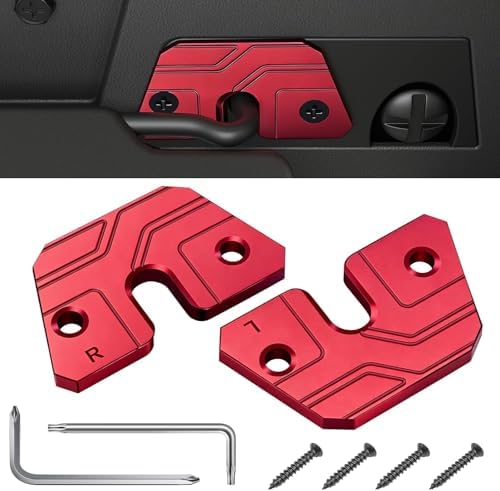
The Veharvim kit replaces the failed plastic pivot clip with an aluminum one. The procedure is simpler than pulling the headliner for a full visor swap: release the visor from its clip (a flat screwdriver through the gap at the pivot), set the new aluminum clip, and press it back. If the foam body of the visor is intact and the fabric has not delaminated, a pivot swap takes fifteen minutes and restores full function. You are replacing the one part that actually breaks.

For A-pillar trim, the repair sequence depends on where the damage is:

  • Surface chalking, no cracks through the substrate: clean the panel thoroughly, apply a UV-rated trim restorer, give it two coats with a 24-hour cure between them. No panel removal required.
  • Hairline cracks in the surface coating, substrate intact: work a plastic-compatible adhesive into the crack, let it cure, sand flush, then protect with UV restorer. Catching this stage saves the panel.
  • Through-cracks with flex in the panel: the panel needs replacement. Adhesive will not hold structural plastic under trail vibration and thermal cycling.

Grab handle replacement is a straightforward bolt-swap. If you are pulling the factory handle because it has crazed past the point of looking acceptable, paracord replacements are a genuine upgrade. They are softer on bare arms when the doors are off, they do not conduct heat the way hard nylon does after sitting in direct sun, and they do not chalk. They mount to the same roll-bar threads.

The secondary damage most people miss

Loose cargo in a doorless Jeep migrates. A water bottle that rolls across the cargo floor leaves a scuff. A floor jack handle that shifts on a trail climb drags across the wheel-well liner. A bag with a metal zipper pull bouncing against the C-pillar trim can score a line across a panel you have not looked at in a year.

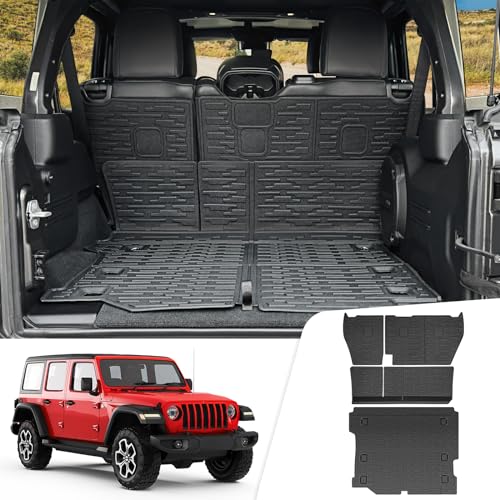
This is abrasion damage, not UV damage, but it shows up on the same surfaces and it is entirely preventable. A cargo liner covering the rear floor and lower seat backs stops most of it. Wheel-well storage bins give a fixed home to the gear that otherwise slides around in those recessed areas and scuffs the inner fender. If you are already repairing trim damage, adding containment for the next season is the obvious second step.

STOP THE SECONDARY DAMAGE

Cargo liner and wheel-well bins

A liner and a pair of bins give loose gear a fixed home. Scratch damage on exposed trim is almost always preventable.
See all storage and organization →

Repair vs. replace: the triage checklist

Before you order parts, run through this. It is faster than guessing.

  • Surface chalking only, no cracks through the substrate: repair. A UV trim restorer stabilizes the surface and slows further oxidation. No panel removal required.
  • Hairline cracks in the surface coating, substrate intact: repair. Plastic adhesive into the crack, cure, sand flush, then protect. Catching this stage saves the panel.
  • Through-cracks with flex in the panel: replace. Source the OEM or aftermarket replacement panel. Adhesive will not hold under trail vibration.
  • Sun visor pivot with noticeable wobble, visor fabric intact: repair. Aluminum clip kit, fifteen-minute job.
  • Sun visor bracket fractured, visor hangs or detaches: replace. Do the headliner pull once with the correct part rather than patching a broken bracket.
  • Grab handle crazed, mounting hardware solid: cosmetic decision. Replace if the crazing has reached the point where pieces might shed on trail. Paracord swap is a bolt-out, bolt-in job.
  • Grab handle with loose mounting hardware: address immediately. Tighten to spec first; if the threads are stripped, use a thread insert. This is a safety item, not a cosmetic one.
  • Dash soft-touch tacky or chalking: clean and condition. A quality interior plastic conditioner with UV block slows this significantly. Full dash replacement is a major job and rarely necessary before significant mileage if you stay on top of conditioning through peak doors-off season.
STRAIGHT ANSWERS

Interior trim repair FAQ.

Which Jeep interior parts crack first when running doors-off?
A-pillar trim panels go first, followed by sun visor pivot brackets, then grab handles. All three face direct UV without the protection the door frames used to provide. The A-pillar trim coating chalks and hairlines before the substrate cracks; visor pivots fatigue at the clip point; grab handles chalk and craze without losing structural integrity until late in the damage sequence.
Can I repair a cracked sun visor myself, or does it need a shop?
If the visor pivot bracket has cracked but the foam and fabric are intact, yes. An aluminum replacement clip kit is a 15-minute DIY job. If the bracket has broken completely and the visor hangs loose, the full swap requires pulling the headliner, which is a longer DIY or a short shop visit. The aluminum clip repair catches most visor failures before they reach that stage.
What is the difference between UV damage on a JK dash and a JL dash?
The JK uses harder ABS-type plastic on the dash that chalks opaque as UV breaks down the surface. The JL and JT have softer-touch materials that tend to go tacky first (a surface plasticizer migrating out) before they chalk. Both respond to UV-block interior protectants. The JL tacky stage is an earlier warning: if you catch it there and condition the surface, you slow the process significantly.
Will a UV protectant actually stop A-pillar trim from cracking?
It slows the process, not stops it. UV protectants with block ratings reduce UV absorption at the surface, which is where the damage starts. Applied before surface chalking begins they are most effective. Applied after chalking has started they stabilize what is left and slow further degradation. Neither gets the original surface finish back once it is gone.
Are aftermarket grab handles as safe as factory handles?
Paracord grab handles mount to the same factory roll-bar threads as OEM handles, so the mount strength is the same. The load rating of quality paracord exceeds what a grab handle sees in normal use. The difference is feel and aesthetics, not structural safety. Confirm the threads are clean and the bolts are torqued to spec regardless of which handle you are running.
Does a cargo liner actually protect interior trim from damage?
For the rear floor and lower C-pillar area, yes. A fitted liner stops loose gear from sliding across the carpet and lower trim panels. The common failure mode without a liner is abrasion scoring from gear that migrates on trail obstacles. It does not protect the dash or A-pillars, but it prevents a large category of preventable scratch damage in the area where most loose gear lives.
JK vs. JL visor replacement: is the procedure the same?
Similar but not identical. Both require releasing the visor pivot from its headliner bracket. The JK bracket is a simpler clip; the JL is a tighter tolerance fit. On the JL, the aluminum repair clip needs to be fully seated before the visor feels secure. On both, if you are doing a full replacement rather than a clip repair, pull up a model-specific headliner guide before you start. The headliner attachment sequence differs between generations.

General guidance for Jeep Wrangler and Gladiator owners. Product and repair details cover common JK, JL, and JT configurations; always verify fitment for your model year. Not professional mechanical or safety advice.

REPAIR IT CLEAN

Fix it now.
Or replace it later.

The triage checklist is above. The parts that crack first are the visors and the A-pillar trim, and both are fixable before they become replaceable. Add a liner in the cargo area while you are at it.
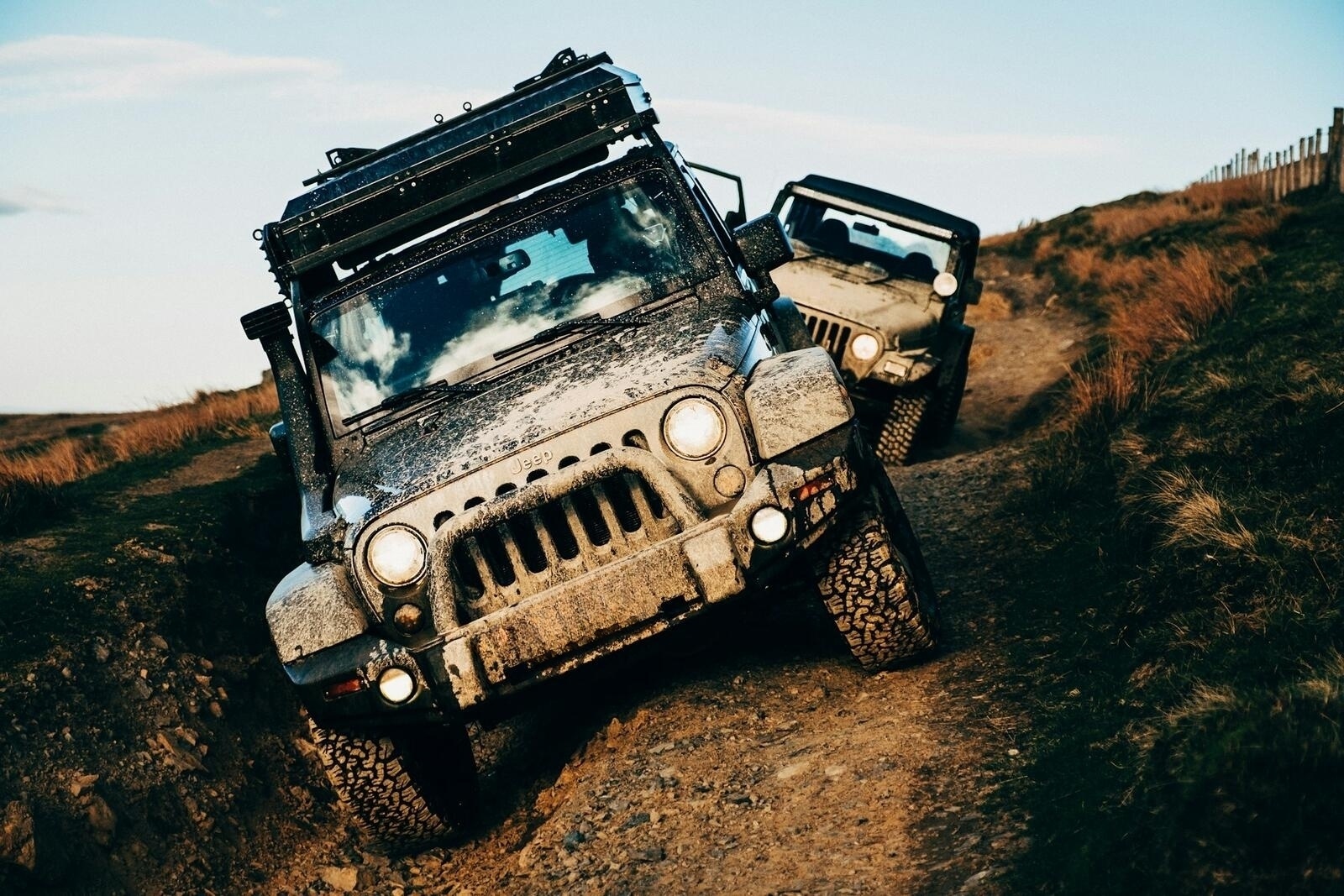
Doors-off Jeep on a muddy trail in direct sun

Fix it before it splits.