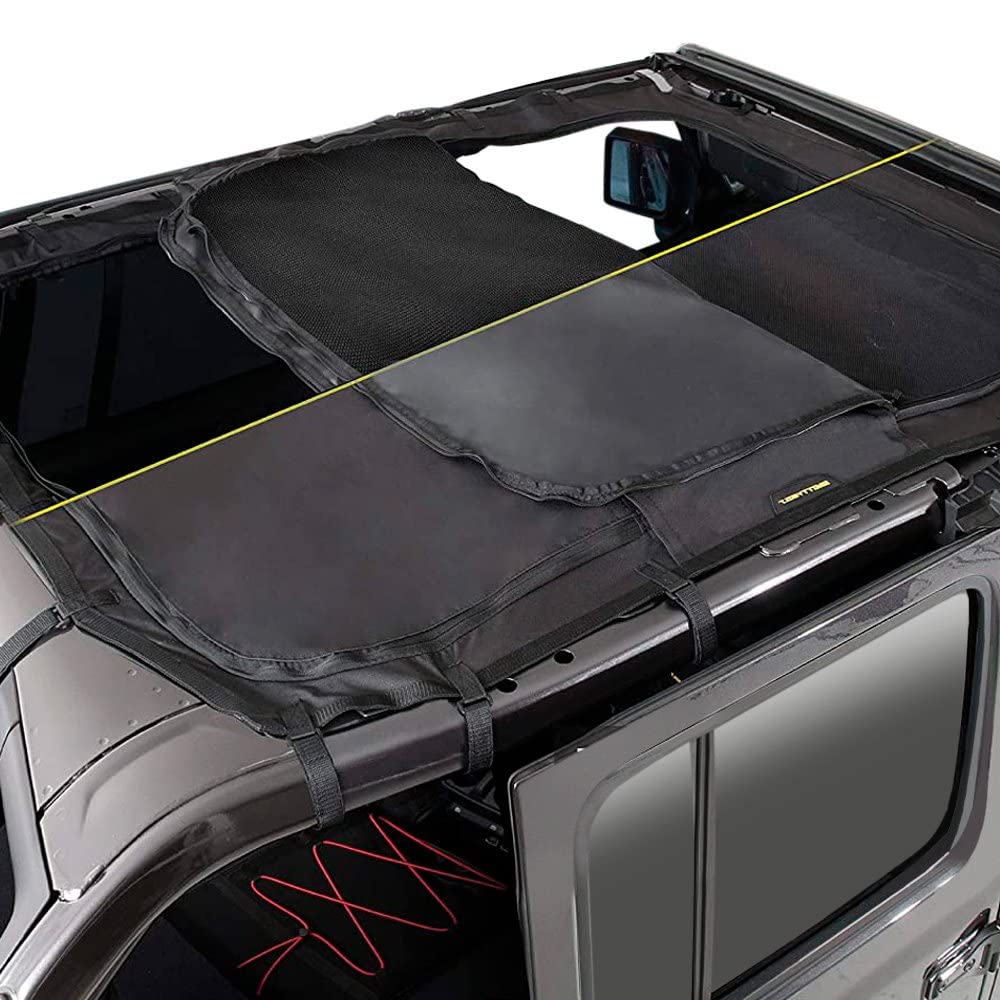
Smittybilt Extended Shade Top with Skylights
Check price on Amazon
Buy →You already decided a hardtop is not for you. But the soft-top aisle has three genuinely different answers, and picking the wrong one means either frying in the sun or fighting a two-person install every time you want the breeze back. Here is what actually separates a shade top, a fastback, and a full soft top for a Jeep running doors off.
These three top styles solve different problems. A shade top is minimalism in canvas form. A fastback is a solo driver's quick cover. A full soft top is the closest thing to a weather-ready hardtop you can pull off without two people and twenty minutes to spare. Pick based on what you actually do with your Jeep, not what the trail looks like on a perfect Saturday.
A hardtop comes off once a season, or stays on forever. A soft top is more of a dial: shade only, quick shelter, or full weather coverage. Jeep owners ended up with three distinct categories because those are genuinely different use cases, not because manufacturers ran out of ideas.
The short version: shade tops block UV and overhead sun but leave your flanks and rear open. Fastbacks give you a real envelope over the cab with a frameless design that one person can install in about ten minutes. Full soft tops add zip-in windows, better insulation, and hardware that folds the whole top above the windshield when you want it open. Each costs more than the last and does more than the last.
Two things worth knowing upfront before comparing them: all three run JK, JL, or JT specific (the mounting points differ between generations), and none of them replaces the weather sealing of a hardtop. If you live somewhere with genuine cold winters, the hardtop wins. These are warm-season rigs.
A shade top is a canvas panel that stretches across your roll bar and covers roughly the area above the front seat. There are no side windows, no rear coverage, and no illusion of weather protection. What you get is a ceiling that blocks direct overhead sun, cuts glare, and keeps a sunburn off your scalp without trapping the wind.
The Smittybilt Extended Shade Top for the JL adds skylights so you get natural light without the direct UV hit, and it extends slightly further back than a standard bikini top, giving rear passengers a bit more coverage. Install takes one person under five minutes: stretch it over the front hoop, clip the rear straps, done. Storage footprint when it is off the Jeep is a small stuff sack.
What shade tops do not do: they offer zero rain protection, they do nothing for wind noise at highway speed (there is nothing to catch the wind differently), and they leave the cab open to spray from any direction. If a storm comes up, you are wet. They work best on fair-weather trail rigs and beach-day Jeeps where the sun is the enemy and the breeze is the point.
A fastback is a frameless soft top that covers the full cab in a single smooth surface from the windshield to the tailgate. Frameless means no metal bows inside the fabric, so the install is lighter and faster than a traditional full soft top, and the storage position is a clean fold at the front of the cab rather than a pile of bow hardware. One person can do it in under ten minutes once they have run it a few times.
The Rugged Ridge Voyager for the JLU is typical of the category: it zips on at the windshield header, pulls tight over the cab, and fastens at the rear corners. When you want it open, you unzip the rear, peel it forward, and fold it flat above the windshield. It does not include side windows in most configurations, which means you get solid overhead coverage without closing the cab.
At highway speed, a fastback makes a real difference over an open top. You get less buffeting and the wind wraps around the outside of the fabric rather than filling the cab. It is not as quiet as a full soft top with windows, but it is a big step up from nothing. Rain coverage is better than a shade top (the cab stays mostly dry in a light shower), but heavy or driving rain still comes through the open sides.
A full soft top is the closest thing to a removable weather-tight envelope this side of a hardtop. It includes bowed or framed hardware, zip-in rear and side windows, and mounting points at the windshield and rear tub that create a proper seal. When everything is closed, you can run it in real rain and highway weather. When you want it open, the whole assembly folds forward above the windshield in a sunrider-style fold, and the windows come out and store separately.
The Bestop Sunrider for Hardtop is an unusual entry in this category. It mounts to a hardtop's windshield header and replaces only the roof section, folding open for a sunroof-style opening without removing the hardtop's sides. That makes it a different product than a ground-up soft top, but it belongs in this comparison because it gives you the "sky open, sides closed" experience with actual weather sealing around the opening.
A traditional full soft top install takes two people and twenty to thirty minutes the first few times. Once you have done it ten or fifteen times, two people can manage it in fifteen. The hardware is heavier, the windows need care when stored, and the full system takes more space in the garage than a folded fastback. But when rain rolls in and you close everything up, you are actually dry.
The three top styles from the catalog, side by side. Every link goes to Amazon via our affiliate redirector.
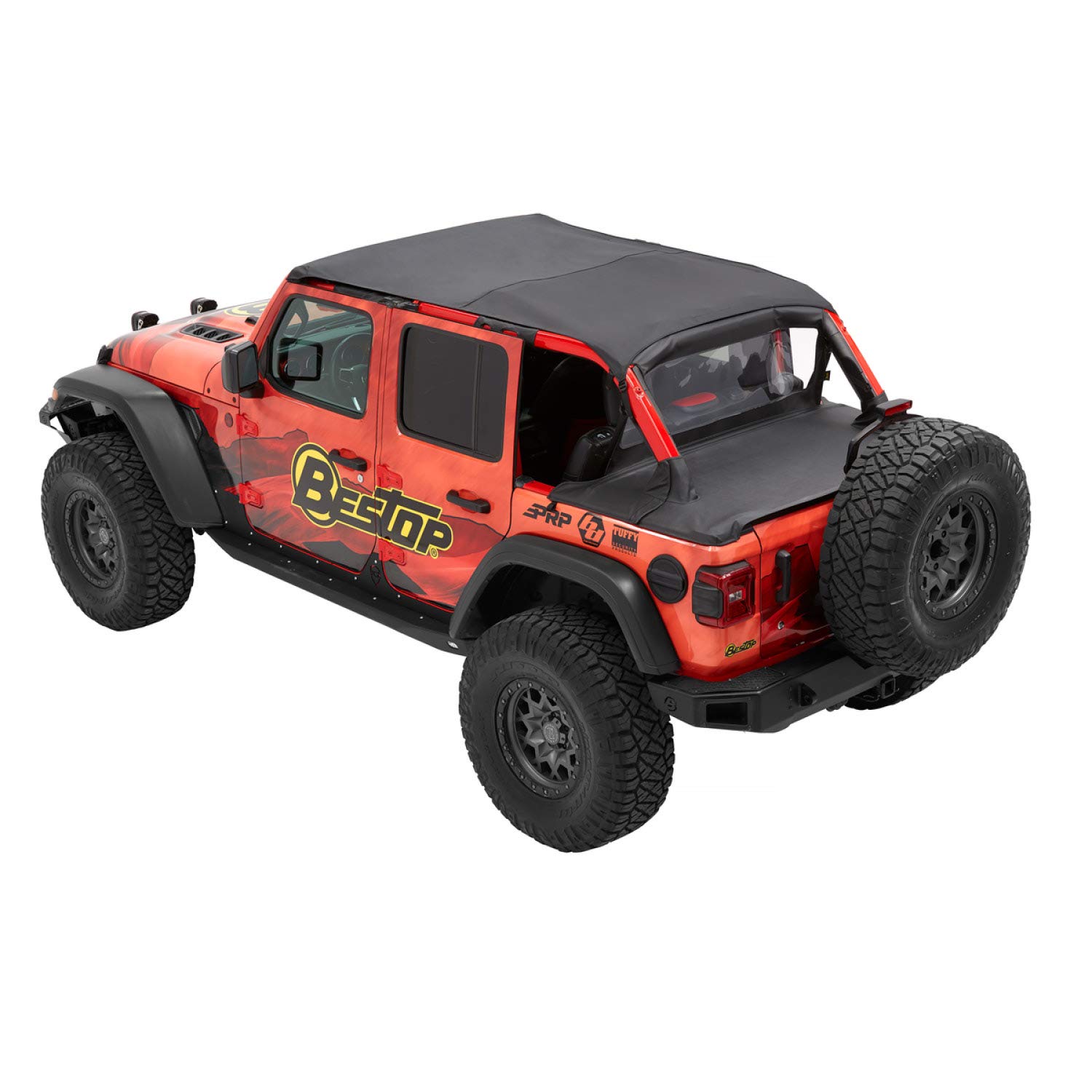
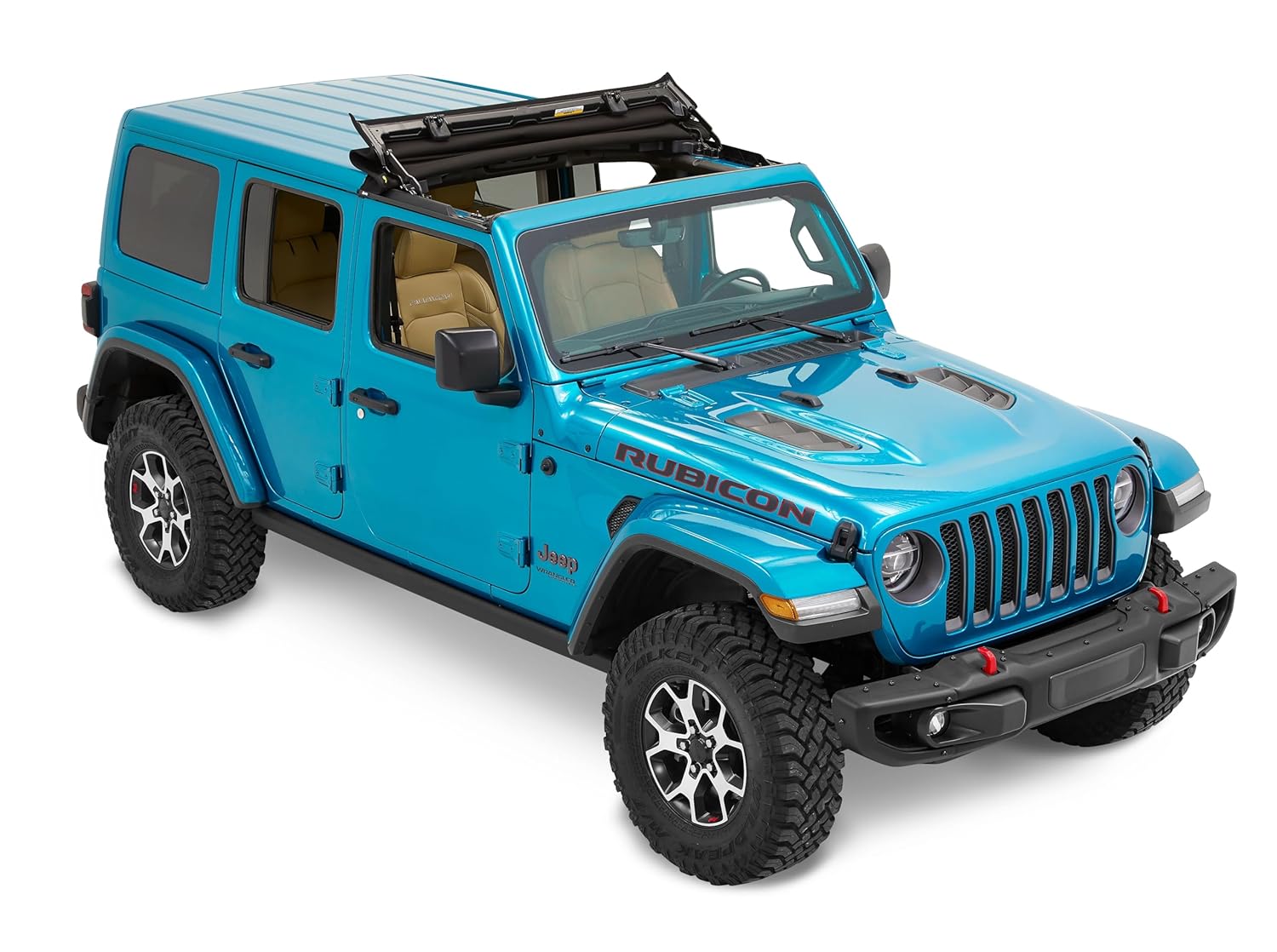
All three top styles are designed to run with the doors off, but they behave differently once the doors are gone.
A shade top is the natural doors-off companion. With no doors and a shade top, you have maximum airflow from all sides and a canvas ceiling that blocks direct overhead sun. This is the quintessential trail-day setup: a breeze from every angle, just a canvas ceiling to keep UV off your head and shoulders.
A fastback without doors gives you a quieter, better-shaded cab for highway runs. The fabric cuts wind buffeting overhead and you get full cab coverage without closing the sides. Airflow stays excellent, and if it starts to rain lightly you have overhead cover for a quick run to shelter.
A full soft top with the doors off is a weather hedge. You can drive in light rain with the top closed, then fold it open when the sun comes back. The open sides mean you are not sealed against rain, but the overhead cover keeps most of a shower off. On a Jeep with a full soft top and no doors, the top is the flex piece: fold it open for the trail, close it for the drive home in an afternoon storm.
Pick based on the two or three days a year your choice gets tested hardest, not the average day.
The one case where none of these wins: if you live somewhere with six months of cold weather and want a single top for all of it, a hardtop is still the right call. Soft tops in every style are a warm-season compromise.

Install times and fitment vary by model year and manufacturer version. Confirm fitment for your specific JK, JL, or JT before buying, and check your local vehicle code if you have questions about top requirements for road use.
Whether you want a sun blocker you can toss on in two minutes or a full soft top that closes up when the weather turns, all three options are in the catalog. The forecast tool calls the week so you know which days are worth pulling the top off to begin with.