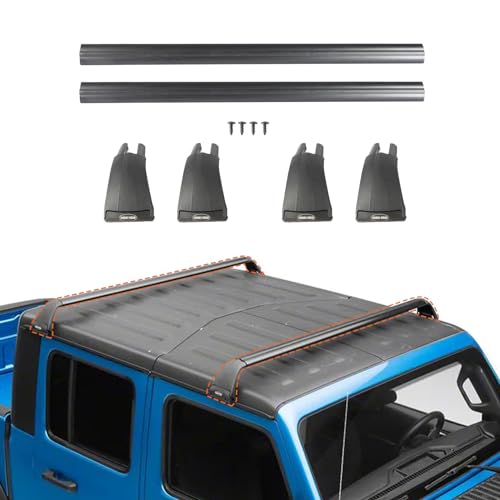
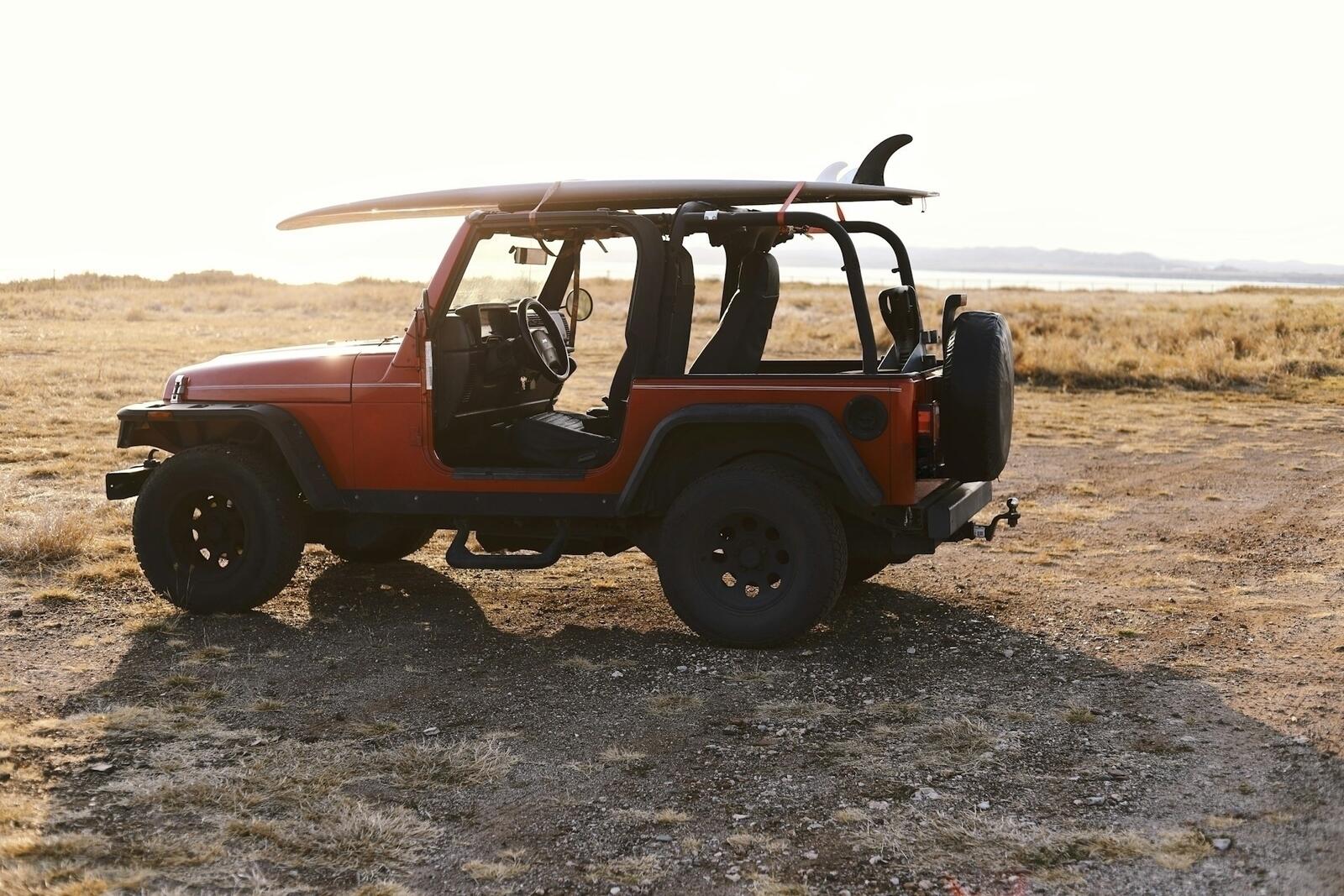
Top loaded.
Doors optional.
A roof rack on a doored Jeep is a storage problem. A roof rack on a doors-off Jeep is a wind-noise and vibration problem that also stores things. Understanding the difference is how you end up with the right setup instead of something you hate at 65 mph.
The short version: crossbars get you a modest, quiet, flexible mounting platform; a full overland rack gets you serious cargo real estate at the cost of noise and weight. Neither one is right for everyone — and for a lot of doors-off rigs, a tailgate rack sidesteps the whole debate.
Why doors-off changes the roof rack math
A Wrangler or Gladiator with its doors on is already a brick at highway speed. Take the doors off and two things happen: the cabin becomes a wind funnel, and everything on the roofline is now dealing with more turbulence than the factory engineers designed around. That matters for roof racks because turbulence is the main driver of wind noise — and different rack styles handle it very differently.
The other doors-off factor is vibration. An open cockpit transfers road noise and buzz more directly than a closed one. Anything bolted to the roof — especially a large flat platform — can act as a sounding board. That's fine at slow trail speeds, but genuinely relevant at 70 mph on a highway run between trailheads.
The upshot: a setup that's tolerable on a fully buttoned-up Jeep might be aggravating on the same Jeep running doors-off. Worth thinking through before you bolt anything permanent to the roofline.
Crossbars: the low-commitment option
A crossbar system gives you two lateral bars running across the roof, mounted to the factory hard top tracks. No side rails, no mesh floor, no platform — just a clean mounting surface for cargo boxes, bike mounts, kayak saddles, or a simple cargo basket over loose gear.
From a doors-off perspective, crossbars are the friendlier option:
- Wind noise: because there's no solid surface, air passes through instead of hitting a wall. At highway speed, crossbars add some whistle — more or less depending on bar profile (aero-shaped bars are noticeably quieter than round or square) — but far less than a full platform rack with a squared-off leading edge.
- Load rating: crossbars on a JK/JL/JT hard top typically handle 150–200 lbs in motion (dynamic) and more when parked static. Enough for most overland kit, a lighter roof tent, or a season's worth of camping gear. Confirm the specific bar's rating before going heavy.
- Installation: clamp-to-track or factory-point mounts, no drilling, typically under an hour with basic hand tools. Comes off the same way if you want a clean roofline for summer.
- Flexibility: most aftermarket accessories — Yakima, Thule, off-brand T-slot gear — mount to crossbars, so you can swap setups by use case without changing the base.
The main limitation is that crossbars alone aren't a cargo surface. Without a basket or box on top, you can't just pile loose gear on bare bars. They're a platform for accessories, not a platform by themselves. Add a cargo basket if you want the surface area — it drops onto the bars in minutes and stays put.
Crossbars we'd run
Low-profile, hard-top-mounting crossbars and a bolt-on cargo basket — the quieter roofline option for doors-off Jeeps that do real highway miles.
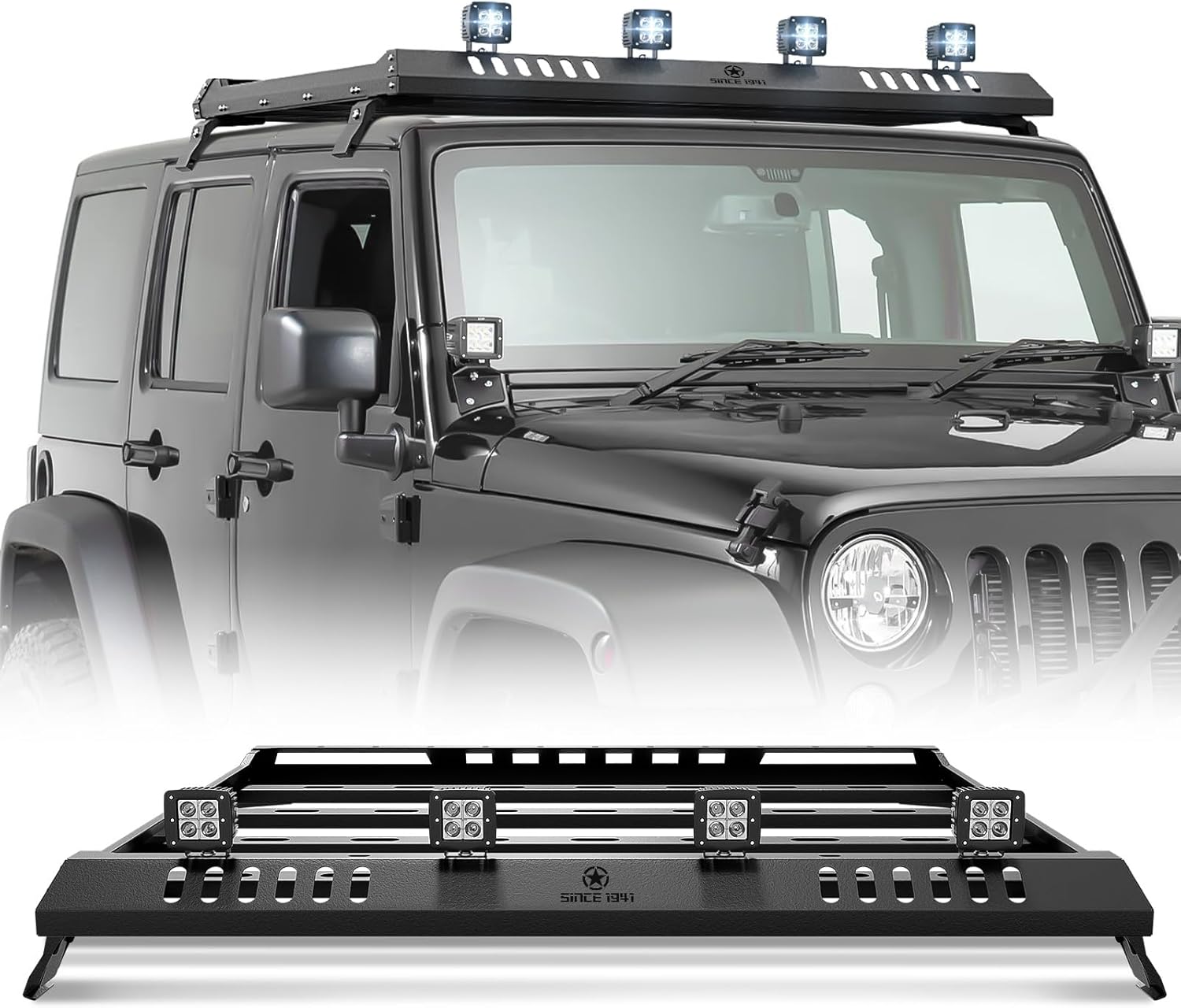

Steel Roof Cargo Basket w/ 4 LED Pods
Full overland rack: serious cargo, serious commitment
A full overland roof rack is a welded steel or aluminum platform that replaces the top of your Jeep's roofline visually and functionally. You get a continuous load-rated surface — walk on it, strap roof tents to it, bolt lights along the rails, lash down coolers and gear bags. It's the choice for multi-day overland builds, remote camp setups, and anyone who legitimately needs to carry more than a cargo box and two bikes.
From a doors-off perspective, the tradeoffs are real and worth being straight about:
- Wind noise: a solid platform catches air like a sail. The leading edge creates turbulence, and that turbulence hits the open cockpit directly when you're running doorless. At trail speeds it's barely noticeable. At highway speed, it's loud — plan to raise your voice or crank the stereo. Aero-profiled leading edges help; a flat platform with a squared-off front is the worst case. This is the single biggest reason not to run a full platform on a primarily highway-driven doors-off rig.
- Weight: a steel overland rack adds 60–100+ lbs before you load anything. Combined with the elevated center of gravity, this is meaningful for off-road dynamics on side-slope and articulation-heavy terrain. Aluminum racks cut 20–40% off that number at higher cost.
- Load rating: full platform racks typically carry 400–600 lbs or more — enough for a full-size RTT, a full cooler, a spare 5-gallon fuel can, and extra recovery gear simultaneously. If you genuinely need that capacity, nothing else comes close.
- Installation: more involved than crossbars. Overland racks mount to the factory hard top's roof rails and sometimes require additional anchoring points. Plan 2–4 hours, follow the instructions closely, and check torque again after the first 50-mile shakeout.
The honest doors-off verdict: if your Jeep is primarily a trail rig that does short highway stints to get there, the noise is tolerable. If you're doing 100+ highway miles with the doors off between home and a campsite, you'll want to either put the doors back on for the drive or rethink the full platform.
Full overland platforms
High-capacity roof platforms for multi-day builds. Real load capacity, real wind noise — the right call when you actually need the room.
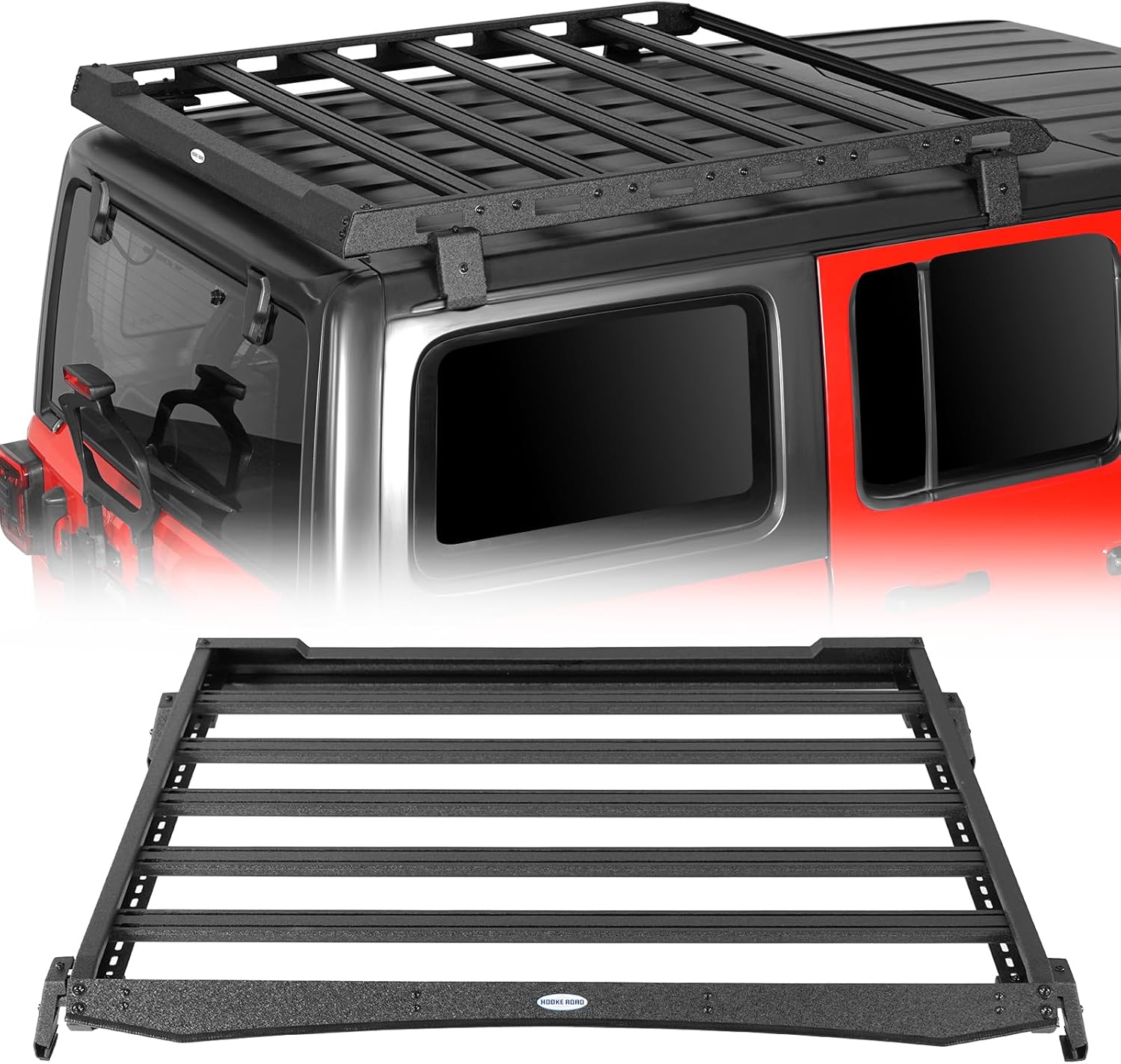
Hooke Road Overland Roof Rack (Hard Top)

Steel Roof Cargo Basket w/ 4 LED Pods

Tailgate rack: cargo without touching the roofline
If the wind-noise equation doesn't work for your use case — or you just don't want the weight and cost of a full roof setup — a tailgate rack is the third option, and the most underrated one for doors-off rigs specifically.
A tailgate cargo rack mounts to the rear of the Jeep: over the spare tire, at the hitch, or integrated with the tailgate area. You get zero roofline impact on wind noise, a lower center of gravity, and cargo you can actually reach without a step stool. For gear that needs frequent access — coolers, camp chairs, traction boards — the tailgate position has genuinely better ergonomics than anything bolted to the roof.
What it doesn't do: carry the same volume as a full roof rack, or handle load types that need a horizontal surface above the roofline (roof tents being the obvious example). If you need an RTT, you need a roof rack. But if you need cargo storage and you're prioritizing doors-off comfort, the tailgate rack does the job better than most people expect.
JL-specific note: the Wrangler JL (and JT Gladiator) tailgate and spare tire carrier geometry differs from the JK. JL-specific racks that integrate with the spare mount give the cleanest install — check fitment against your model year before ordering.
Which setup actually fits your use case
Three questions get you most of the way there:
- Do you need a roof tent? If yes, you need a full overland rack rated for your RTT's loaded weight. End of that branch.
- How many highway miles do you drive doors-off? Mostly trails with short highway runs → an overland rack is livable. Regular highway stretches → crossbars or a tailgate rack, unless noise genuinely doesn't bother you.
- Is easy access more important than raw volume? If you're digging into your gear constantly, the tailgate beats the roofline on ergonomics every time.
For most Jeep owners who go doors-off on weekends and aren't building a full expedition rig, the answer is usually crossbars for flexibility or a tailgate rack for simplicity. The full overland platform earns its cost when you're building a rig that genuinely needs the cargo capacity — not because it looks the most built-out.
Tailgate rack approach
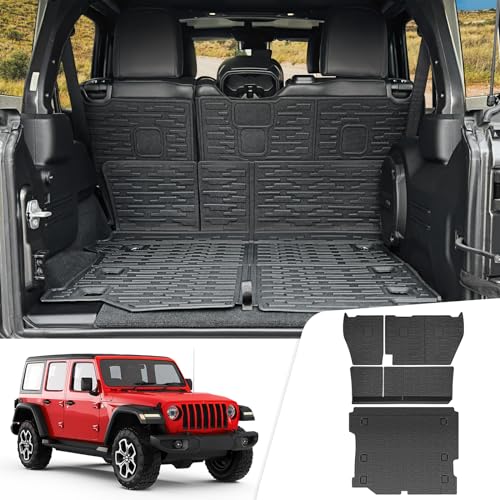
Lower center of gravity, no wind-noise penalty, and gear you can actually reach. The underrated cargo strategy for doors-off Jeeps — pair with a cargo liner to keep the cabin sorted.
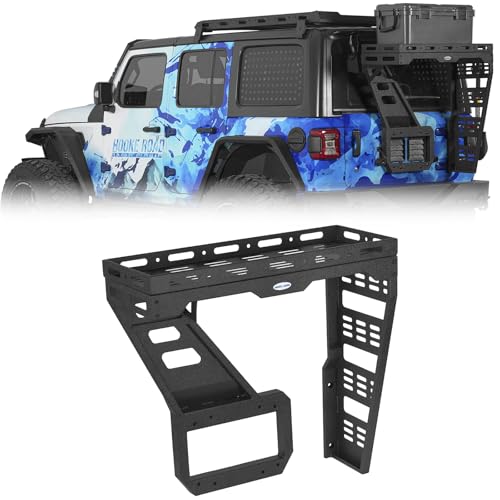
Hooke Road Tailgate Spare Tire Cargo Basket (JL)

Jeep JL 4-Door Cargo Liner + Seat Back Protector
Roof rack FAQ.
- Do roof racks work with a soft top?
- Most aftermarket roof racks — including full overland platforms — are designed for hard tops with factory roof rails. Soft tops don't have the structural mounting points to support a loaded rack. If you run a soft top, look at hitch-mounted cargo carriers or tailgate racks instead.
- How much wind noise does a roof rack add when running doors-off?
- It depends on rack type and speed. Crossbars add a moderate whistle at highway speed but far less than a solid platform. Full platform racks are significantly louder — the leading edge creates turbulence that hits the open cockpit directly. At trail speeds, both are fine. For highway miles with the doors off, crossbars or a tailgate rack are the quieter choices.
- What are the load ratings for Jeep roof racks?
- Crossbar systems typically rate 150–200 lbs in motion (dynamic load). Full overland platforms often carry 400–600 lbs or more. Always use the dynamic rating — not the static number — when figuring out what you can carry at speed. The factory hard top mounting points also have their own limits, so factor those in with the rack's rated capacity.
- Do roof racks fit both JK and JL Wranglers?
- Not always interchangeably. The JK (2007–2018) and JL (2018–present) have different roof rail spacing and body dimensions, and the JT Gladiator has its own specs as well. Most quality racks are model-year-specific or sold in JK and JL variants. Check fitment for your exact model and year before ordering.
- Is a full overland rack worth it for casual weekend doors-off use?
- Honestly, for most weekend doors-off use, probably not. The wind noise at highway speed is a real quality-of-life hit, the weight raises your center of gravity, and the cost is substantial. Crossbars cover most practical use cases for day hikes and weekend trips. Save the full overland platform for builds that genuinely need the cargo capacity.
- What makes a tailgate rack a good choice for a doors-off rig?
- A tailgate rack mounts cargo capacity to the rear of the Jeep — over the spare tire or at the tailgate — so it doesn't touch the roofline at all. Zero wind noise penalty, lower center of gravity than a roof load, and gear you can access without climbing. For a doors-off rig that prioritizes comfort and access over maximum volume, it's often the smarter choice.
- Can crossbars support a roof tent?
- Some lighter RTTs can mount to crossbars if the bars are rated for the combined load, but it's marginal territory. Most roof tent manufacturers recommend a full platform rack with rated side rails. Check your specific tent's weight, add the weight of two occupants (RTT ratings are often stated dry), and compare against the bar's dynamic load rating. If it's close, go with the platform rack.
- Does a roof rack affect off-road handling?
- Yes, particularly a fully loaded overland platform. A higher center of gravity reduces stability in side-slope and off-camber situations. Crossbars and an empty platform rack have minimal impact. Where it matters most: articulation-heavy trails and any terrain with significant lateral tilt. Load the rack as low as you can and distribute weight front-to-back when possible.
General guidance for Jeep Wrangler and Gladiator owners. Load ratings, fitment, and installation requirements vary by product and model year — always confirm against the manufacturer's specifications before loading a rack. Off-road performance impacts depend on terrain, load distribution, and driving conditions.
Rack it right.
Then leave the doors home.
Pick your load strategy, grab the setup that fits how you actually use the Jeep, and check the sky before you commit to a full day out. The doors-off forecast calls the week for free.
