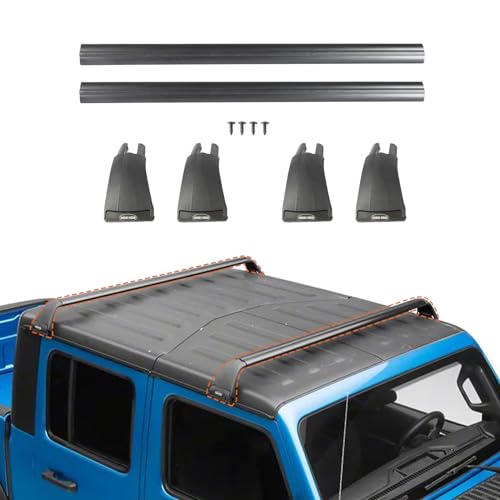
Hooke Road Roof Rack Cross Bars (JK/JL/JT Hard Top)
Check price on Amazon
Buy →Choose crossbars, a full platform, or a tailgate rack. Those three designs come with three very different answers on wind noise, weight, and how awkward your entry gets once the doors are gone.
The price tiers are real and the tradeoffs are real. Crossbars get you a quiet, flexible mounting surface for about the cost of a tank of gas and a lunch. A full overland platform gets you serious cargo at the cost of noise and center of gravity. A tailgate rack sidesteps the roofline entirely and puts gear where you can actually reach it.
If you search for roof cargo on a Wrangler or Gladiator without a price anchor, you'll find everything from basic bolt-on bars to premium expedition platforms. The useful range for most owners lands in three places:
The right tier depends on what you're hauling, how many highway miles you drive with the doors off, and whether you need a roof tent footprint. Those three questions narrow it down fast.
A crossbar system gives you two bars running laterally across the hard top, clamped to the factory roof rails. No mesh floor, no side rails, no platform surface. Just a clean mounting base for cargo boxes, bike mounts, kayak saddles, or a cargo basket over loose gear. The Hooke Road crossbars for the JK/JL/JT hard top are among the better-documented options for current-gen Wranglers and Gladiators.
The doors-off case for crossbars is simple: air passes through them rather than hitting a wall. At highway speed they whistle, but it's a low whistle, not the open-cockpit turbulence you get from a full platform. If you drive any real highway miles without doors, the difference is noticeable from the first exit ramp.
Load capacity on crossbars is typically 150-200 lbs in motion (dynamic rating). That covers most practical trip loadouts: a rooftop cargo bag, day-hike kit, a lighter roof tent footprint. It's not enough for a fully loaded RTT with two occupants and bedding unless you check the specific bar's rating against your actual numbers first.
What crossbars don't do: give you a continuous cargo surface. Add a cargo basket on top of the bars if you want to pile loose gear instead of strapping things to individual bars.
The quietest, most flexible roofline option. Mount to JK/JL/JT hard top tracks; add a cargo basket for actual surface area.
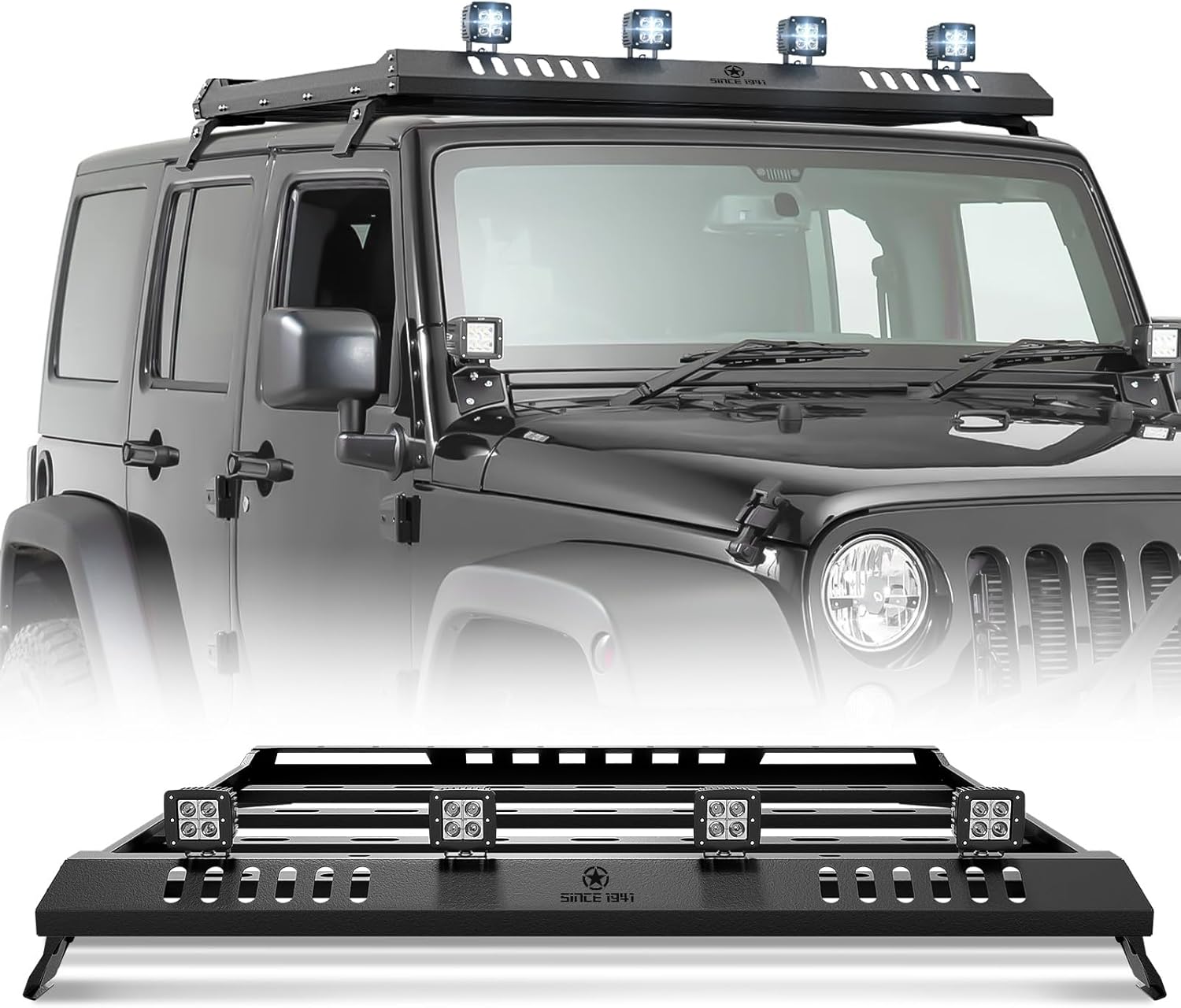
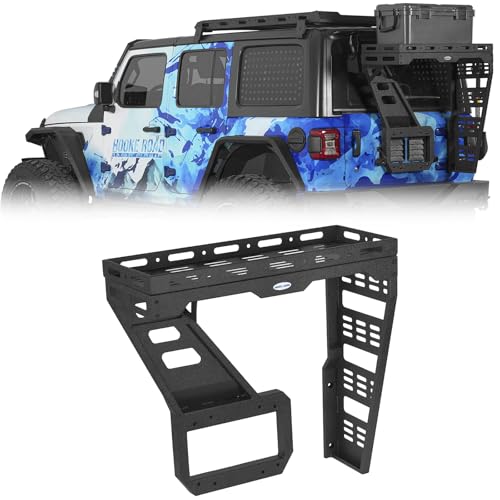
A full platform rack turns the top of the Jeep into a continuous load-rated surface. Walk on it, strap a rooftop tent to it, bolt lights along the rails, lash down a cooler and a fuel can simultaneously. The Hooke Road overland rack gives you a hard top-mounted platform rated for significantly more than crossbars. If you genuinely need to carry that much gear, nothing else at this price comes close.
The doors-off tax on a full platform is real. The leading edge catches air and sends turbulence into the open cockpit. At trail speeds it's barely noticeable. At 70 mph on a highway run between trailheads, it's loud enough that you stop trying to have a conversation. An aero-profiled leading edge reduces it; a flat squared-off front is the worst case. With doors on, the cabin absorbs a lot of that turbulence. Doors off, it hits you directly.
The access issue doesn't get talked about enough. A full overland rack sits roughly 5-6 feet off the ground, and most come with a ladder mounted at the rear tailgate area. On a Jeep with its doors on, the door frame gives you something to grab while you step onto the ladder. Doors off, that handhold is gone. Getting onto the rack and back down is more awkward than the product photos suggest, especially when you're carrying anything with your hands. For gear that stays strapped in transit and unpacked at camp, it's fine. For anything you dig into at every stop, the ergonomics case for a tailgate rack gets stronger fast.
Steel platform racks add 60-100 lbs before you load a single thing. Combined with the elevated center of gravity, that matters on side-slope and articulation-heavy terrain. Aluminum racks cut 20-40% off that number at a higher price per rack.
Maximum cargo capacity for multi-day builds. Real load capacity, real wind noise. Worth the price jump when you actually need the room.
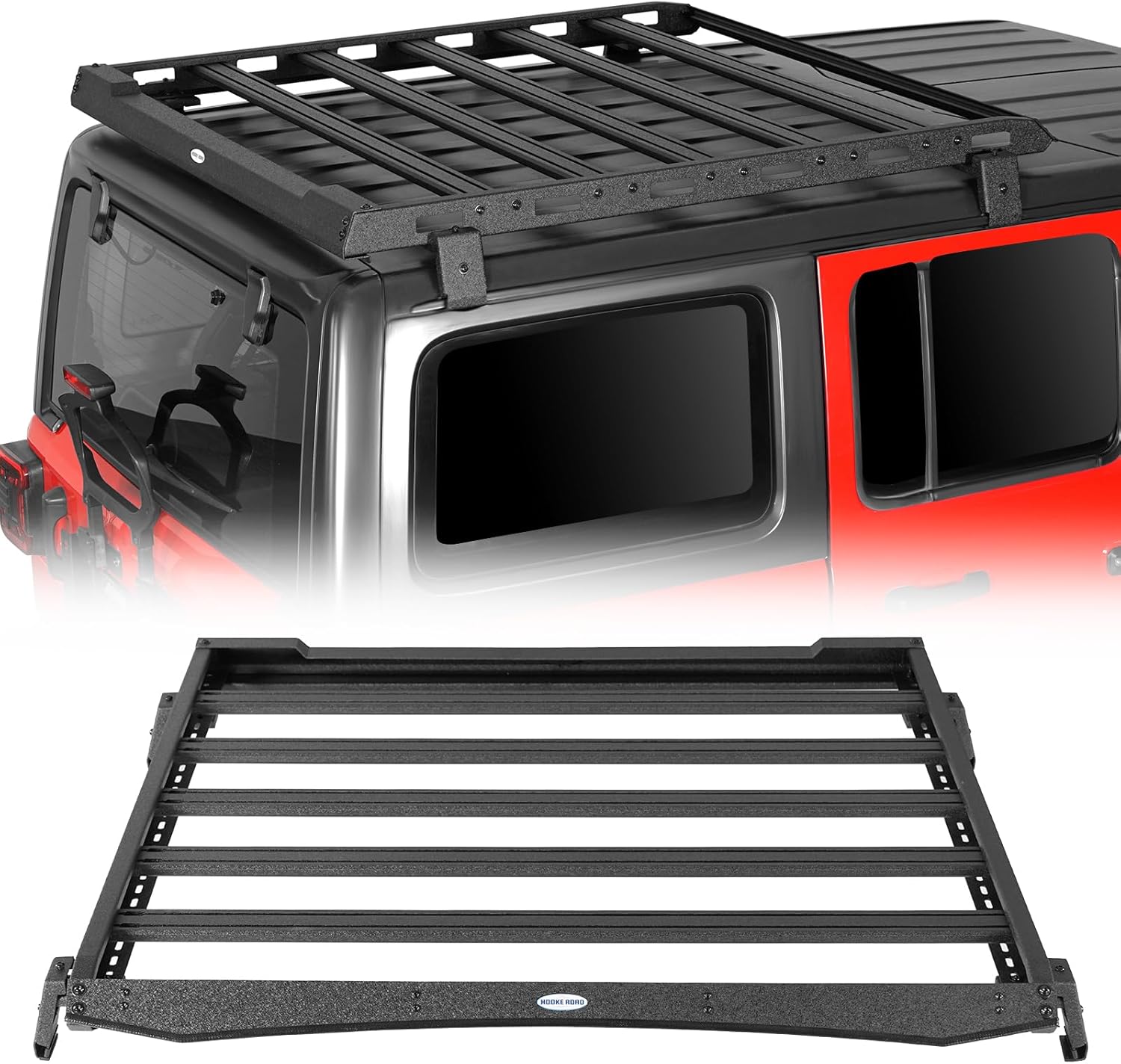
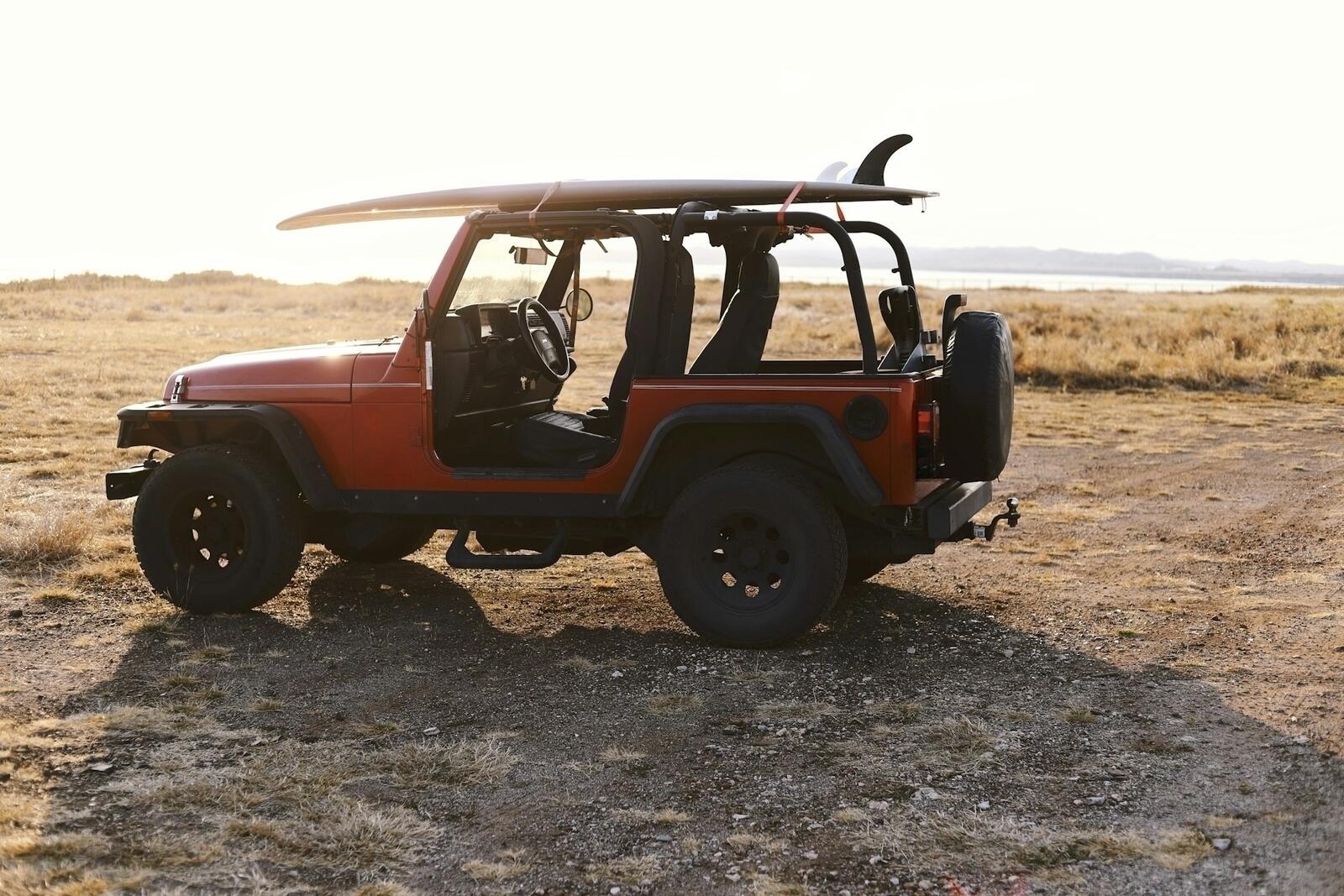
A tailgate cargo rack mounts over the spare tire at the rear of the Jeep. No roofline presence, no wind noise penalty, and gear that's reachable from the ground without a ladder. The Hooke Road JL tailgate rack integrates with the spare tire carrier on the JL Wrangler (2-door and 4-door) and gives you a basket platform behind the rear bumper.
For doors-off rigs, the ergonomics argument is stronger than most comparisons acknowledge. When the doors are on, you lean out the doorway or grab the door frame while reaching into the rack. When the doors are off, that option is gone. A tailgate rack is a stand-and-reach operation. A roof rack is a step-up-and-dig operation. If your cooler, chairs, or recovery gear lives on the rack, that's a real usability gap on every stop.
What a tailgate rack doesn't do: carry a rooftop tent (you need roofline clearance), replace a full roof rack on an expedition build, or work universally across Jeep generations without checking fitment. The Hooke Road JL unit is designed for the JL Wrangler spare tire carrier, so a JT Gladiator owner needs to verify fitment before ordering.
Lower center of gravity and zero wind noise are real gains. The volume ceiling is real too. For weekend trips where you want gear accessible, the tradeoff lands in the tailgate rack's favor.
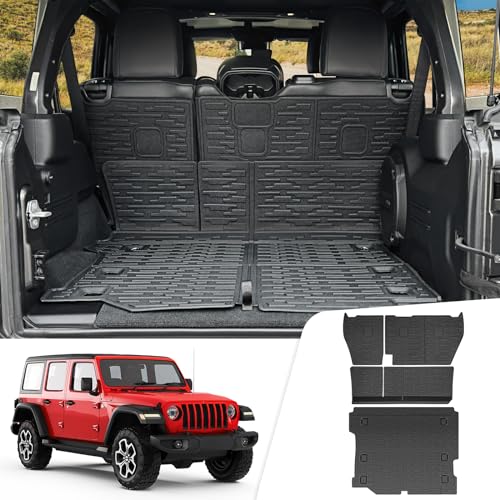
Lower center of gravity, no wind noise penalty, and gear you can actually reach. Pairs well with a cargo liner to keep the interior sorted.
These three platforms have different roof rail geometry, different tailgate and spare tire carrier designs, and different overall dimensions. Racks that fit a JL Wrangler don't automatically fit a JK, and the JT Gladiator's longer wheelbase and bed area add another variable.
The clearest rule: always confirm the specific product lists your exact model year, not just "Wrangler" or "Jeep." Hinge dimensions and roof rail spacing vary enough that a close-but-wrong mount will either have play you'll feel at 65 mph, or won't clamp fully at all.
Three questions narrow it down:
For most owners doing weekend runs and the occasional overnight, crossbars cover it. The full overland platform earns its cost on builds that genuinely need the cargo volume, not because the build looks more serious. A tailgate rack is the underrated answer for doors-off-focused rigs where comfort and access matter more than capacity numbers.
General guidance for Jeep Wrangler and Gladiator owners. Load ratings, fitment, and installation specs vary by product and model year. Always verify against the manufacturer's current specifications before loading a rack.
Crossbars for flexibility, a full platform when you actually need the capacity, a tailgate rack when you want gear you can reach. Pick your tier, check the sky, and see what the week has in store.