As an Amazon Associate we earn from qualifying purchases. Every buy button leads to Amazon.As an Amazon Associate we earn from qualifying purchases.Full disclosure →Disclosure →
GUIDE / TRAIL RECOVERY

Stuck.
Now what?

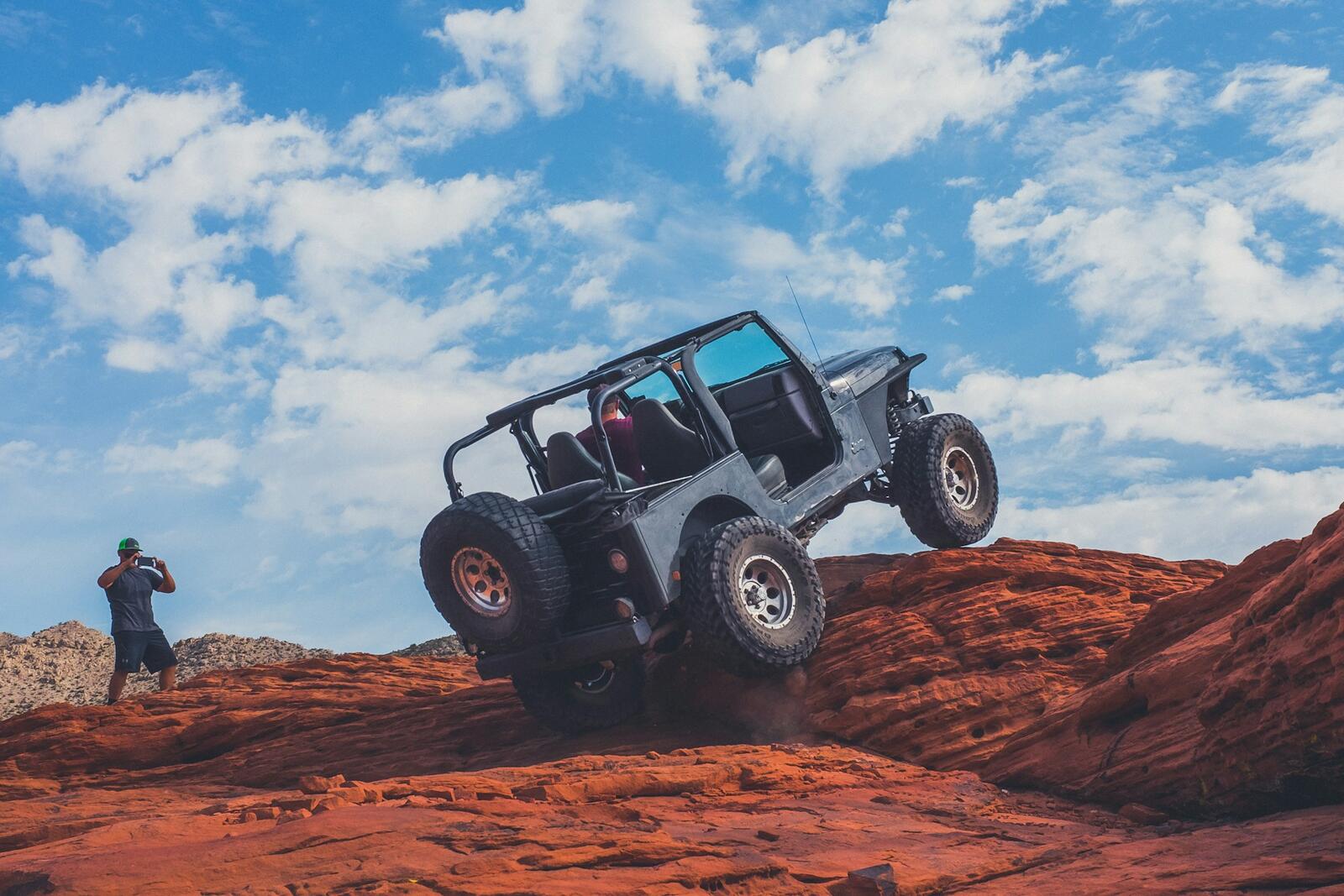
You're running doors-off on a dirt two-track, the trail goes soft, and the front lockers can't find traction. The wind's been in your face for two hours, the doors are home in the garage, and your recovery plan is a prayer. Here's what to actually pack — and why the answer depends on whether you're solo or rolling with a buddy.

Kinetic recovery ropes and traction boards solve the same problem from opposite ends. One requires a second vehicle. One doesn't. Grabbing the wrong one — or nothing at all — is the kind of decision that ends with a very long walk. Here's the comparison, the rigging basics, and a decision tree you can run in your head on the morning of.

Why recovery gear hits different doors-off

Going doors-off doesn't change your Jeep's crawl rating or ground clearance. What it changes is the margin for error on a trail day. You're already further from "buttoned up" — and if you sink axle-deep into a sand wash or high-center on a ledge, your path home is limited by whatever you threw in the bed that morning.

The two main recovery tools for a short-crew day run are kinetic recovery ropes and traction boards. They're not interchangeable. They're complementary — and which one you need first depends entirely on who's in your group. Before we get to the decision tree, here's how each actually works.

Kinetic recovery ropes: the snatch-and-go

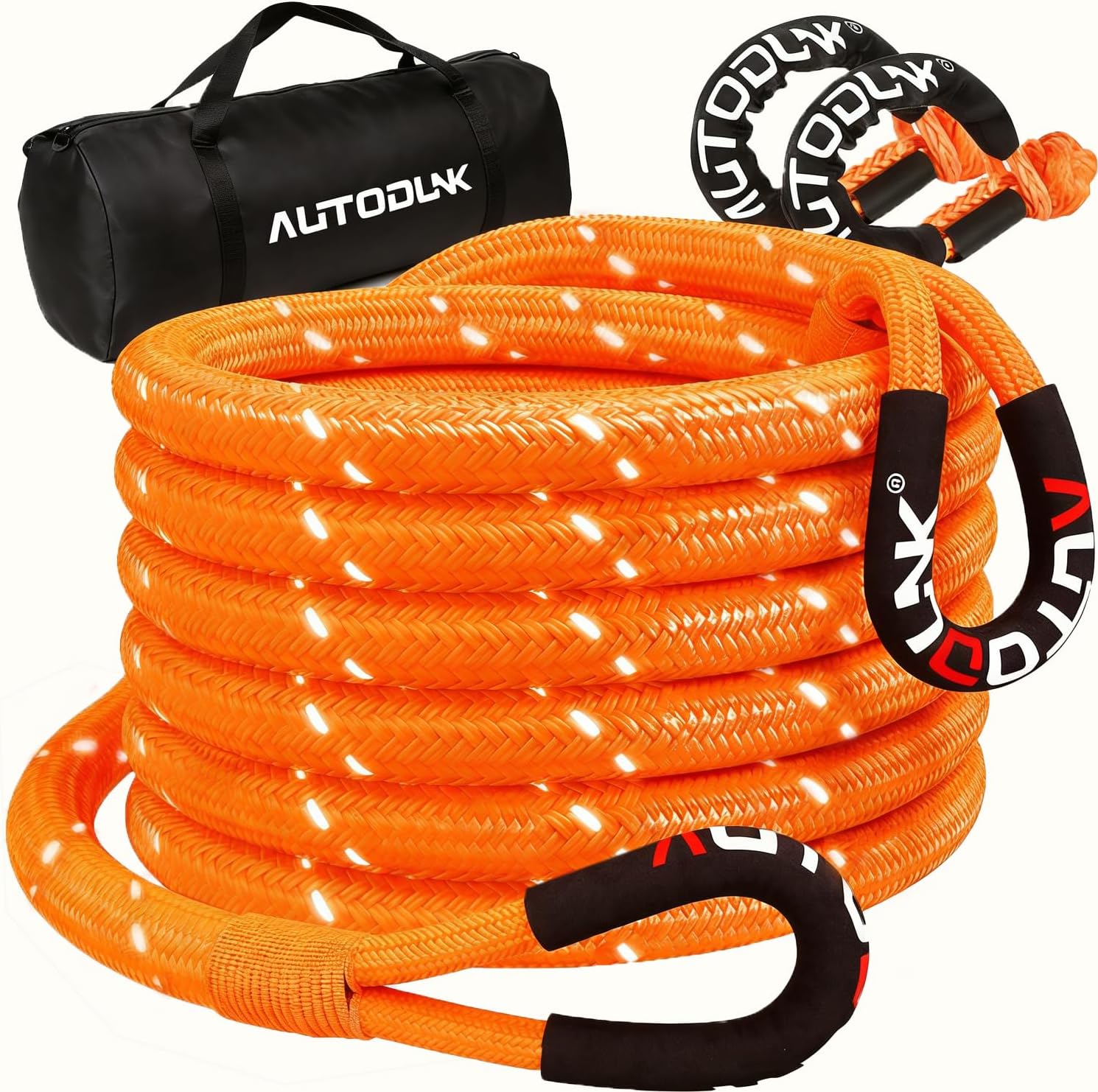
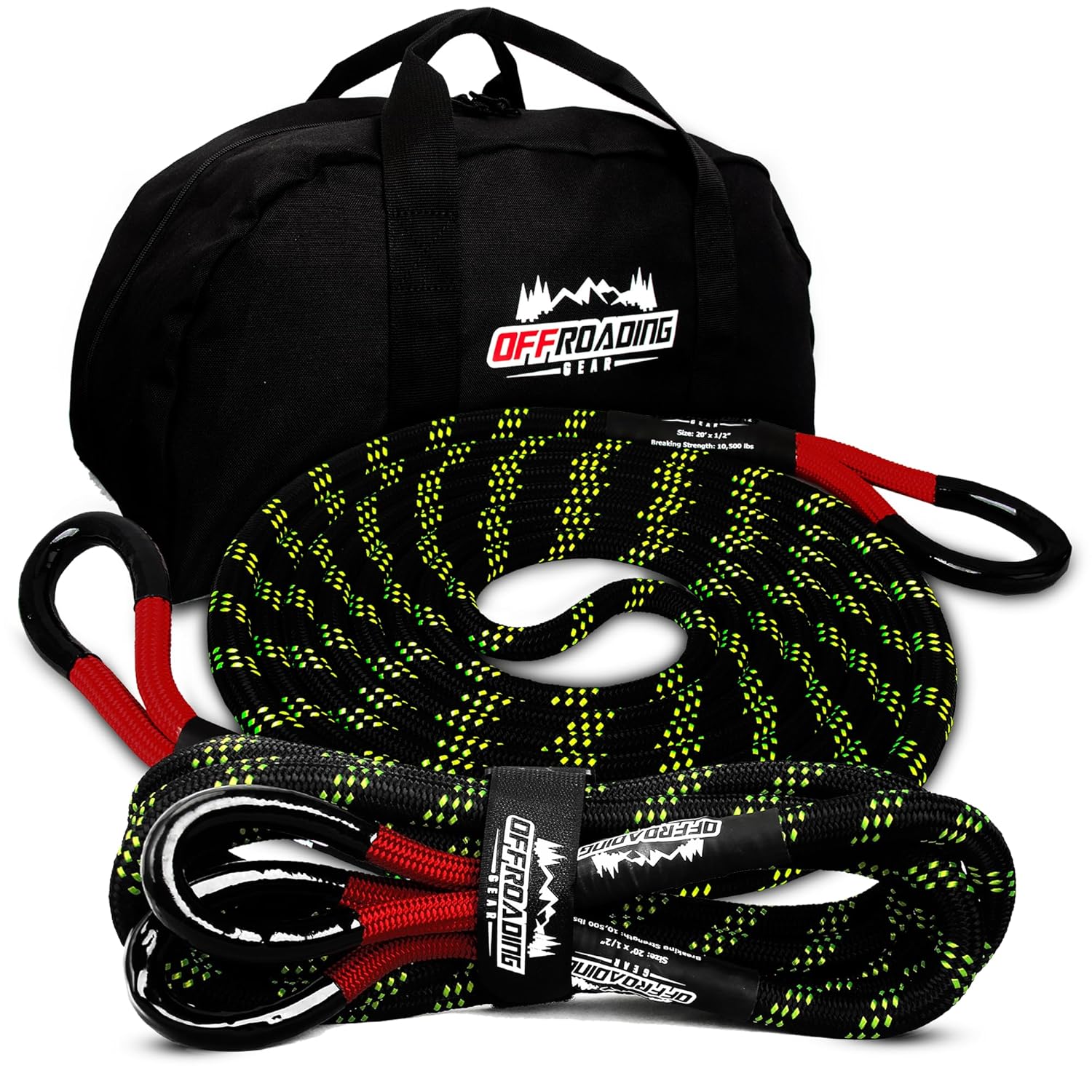
A kinetic recovery rope — sometimes called a snatch strap or kinetic rope — is made from twisted nylon that stretches roughly 20–30% under load. When a second vehicle drives forward on a taught rope, the stored energy releases all at once and yanks the stuck vehicle free. It's the difference between a static yank (which just stresses the anchor) and a progressive, momentum-driven pull.

What makes them great:

  • Diameter and length: A 7/8" × 20 ft rope handles most Wrangler-weight pulls with room to spare. The 1-1/8" × 30 ft ropes are better for heavier loads or longer spans when vehicles can't get close.
  • Speed: Once both vehicles are rigged and drivers are ready, a kinetic pull is a 30-second operation.
  • Versatility: Same rope works in sand, mud, soft dirt — anywhere a second vehicle can get enough traction to move.

The hard limit: you need a second vehicle. A kinetic rope sitting in the bed of a solo Jeep is dead weight. If your trail day is you and a buddy, it earns its place immediately. If you're running solo, it's not your primary rescue plan.

Also critical: you need rated recovery points on both vehicles. The factory front tow hooks on the JK and JL Wrangler are recovery-rated — use them. The JL and JT have integrated rear D-ring mounts under the factory bumper. The JK rear needs an aftermarket receiver hitch with a rated hitch shackle, or a dedicated rear recovery point. Never attach to a tow ball, bumper lip, or license-plate bracket — those points are not rated for dynamic loads and can fail catastrophically.

KINETIC RECOVERY ROPES

Ropes worth running

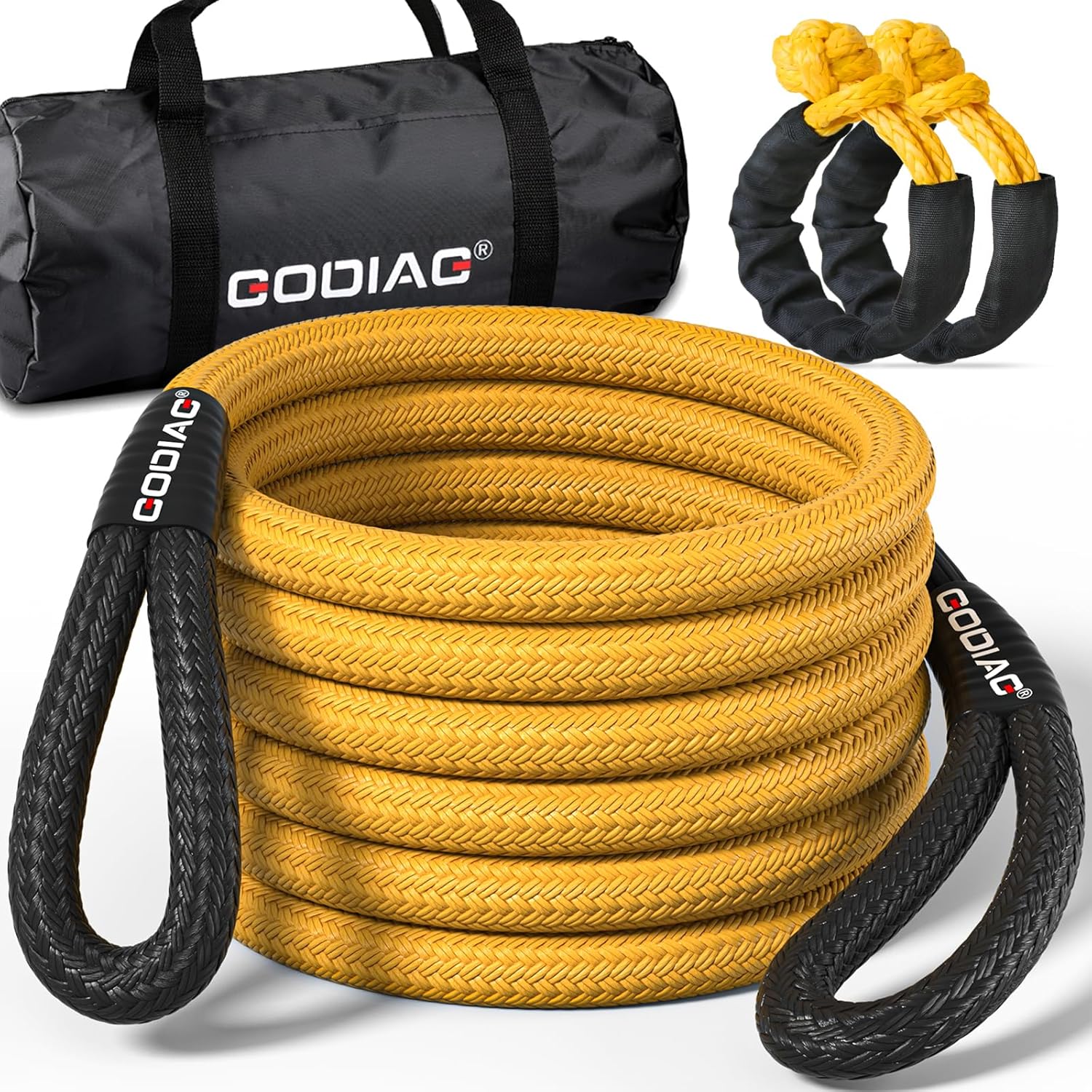
Nylon kinetic ropes for Wrangler and Gladiator recovery. Rated for the pull, packaged to actually fit in your cargo area.
See all recovery gear →

Traction boards: the solo rescue

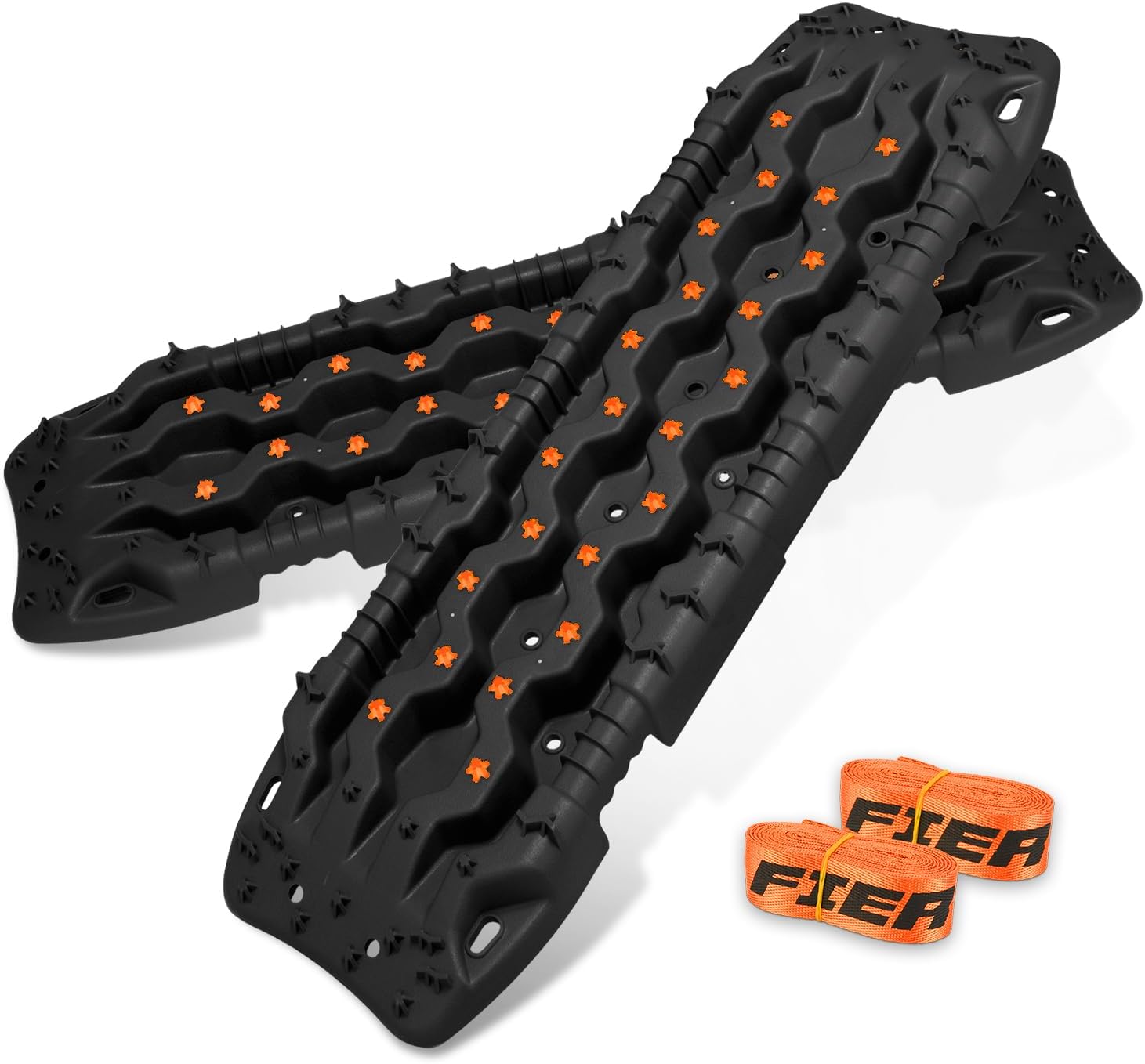
Traction boards — also called recovery boards or sand ladders — are rigid composite panels you dig under a stuck drive wheel to give the tire something to grip. You don't need a second vehicle, a rated recovery point, or anyone else's cooperation. You need a shovel (or your hands), a pair of boards, and patience.

How it works: dig out in front of each stuck drive wheel, slide a board under each tire, and drive out slowly. The board's molded tread grips the tire and gives the rubber a solid surface to climb out of the soft stuff. Most pairs are 44–48 inches long, which is enough for a Wrangler or Gladiator tire to get purchase and roll clear.

What they're good for:

  • Sand and soft dirt: Where a tire spins and digs, a board stops the dig and gets you moving.
  • Loose mud: Same principle — give the tire structure under it.
  • Solo use: This is their killer advantage. No radio call, no coordination, no waiting.

What they can't do: if you're high-centered — frame or skid plates resting on rock or dirt, wheels off the ground — boards don't help. A high-center recovery needs a hi-lift jack to lift the chassis, or a pull from a second vehicle. Boards also can't substitute for a winch if you're nosed into a creek or truly axle-deep in clay.

Shackles and rigging: the link you can't skip

The rope or the boards get you unstuck. The shackle is what connects the rope to your Jeep — and it's the link that fails if you cut corners.

There are two types worth knowing:

  • Steel D-ring shackles are heavy, highly rated, and the traditional choice. The risk: a failed steel shackle becomes a high-velocity projectile. Always drape a dampening weight (a bag, a floor mat, anything with mass) over the rope near the shackle so if it lets go, the energy goes into the ground.
  • Soft shackles are Dyneema loops rated to match or exceed steel shackles at a fraction of the weight. If a soft shackle fails, it drops — it doesn't fly. Safer failure mode, no rust, fits the same D-ring mounts. The Godiag kit combines a kinetic rope with two soft shackles in one bag, which covers the most common rig-up in a single purchase.

The rigging checklist:

  1. Attach only to rated recovery points — front tow hooks, rear D-rings, or a rated receiver adapter. Not the bumper. Not the tow ball. Not the body mount.
  2. Confirm the shackle pin is fully seated and the gate is closed (or the soft shackle loop is properly secured).
  3. Lay a dampener over the rope midspan — any mass will do.
  4. Keep all bystanders out of the pull corridor until the rope is slack and both drivers are done.
  5. After the pull: inspect the rope for fraying or heat damage before you coil it back up.
Jeep Wrangler with traction boards and recovery gear on a dirt trail
The right kit in the right order. Traction boards handle the solo get-unstuck; a kinetic rope brings the group home.

The decision tree: what to bring and when

Run through this the morning of. It takes 30 seconds and it's the difference between a story and a rescue call.

  • Solo trail day on soft terrain (sand, dirt, loose pack): Traction boards are your minimum viable kit. Carry them, know where they are, and know how to deploy them without help. A soft shackle or two weighs nothing and is worth having if a good samaritan stops.
  • Group run (two or more vehicles): At least one vehicle in the group should carry a kinetic rope. The whole group benefits, and the weight cost to any single Jeep is minimal. Every vehicle should still have boards — you may not always be in a spot where the rope vehicle can get close enough.
  • Both in the bed: Best-case scenario. A pair of traction boards, a kinetic rope, and a set of soft shackles weigh under 25 lbs combined and pack flat. If you have the cargo space, there's no reason not to run both. The boards handle the small stuff you can self-rescue; the rope is there when you need the group assist.

The one scenario where neither is enough: you're high-centered and there's no second vehicle. A hi-lift jack can lift the chassis so you can pack material under the tires — keep that in mind if your trails involve rocky ledges or off-camber situations where high-centering is realistic. That's a separate conversation, but worth knowing the gap exists.

Weight and storage on a doors-off rig

Going doors-off doesn't shrink your payload capacity. What it does is expose everything in your cargo area to the elements — so how you pack matters as much as what you pack.

Weight breakdown for a full kit:

  • Kinetic rope (7/8" × 20 ft): ~5 lbs in its bag
  • Kinetic rope (1-1/8" × 30 ft): ~8 lbs — worth it for a heavily-loaded JT or JK with a roof rack
  • Traction boards (pair, ~44"): ~15–18 lbs, flat and stackable
  • Soft shackles (pair): under 1 lb — throw them in the rope bag

Total for a complete kit: under 25 lbs. That's nothing for a Wrangler or Gladiator. Storage options:

  • Under the cargo floor: Rope bag fits cleanly; boards may or may not depending on your spare tire setup.
  • On a rear cargo carrier or rack: Boards store flat and strap down easily. Keeps the interior clear for doors-off trips where you're carrying less.
  • Behind the rear seat: Rope bag in a MOLLE pouch, boards vertical against the tailgate. Works well on the JL 4-door and JT.

One practical note: waterproof bags or a dry bag for your rope and shackles. Running doors-off means your cargo area gets wet when it rains or you ford a crossing. Nylon rope sheds water fine, but a soaked bag is annoying and soft shackles should dry before storage to avoid mildew in the fibers.

BUILD YOUR KIT

The full day-run loadout

Traction boards for the solo fix, a kinetic rope for the group pull. Both in the bed is the right answer — here's the hardware.
See all recovery gear →

STRAIGHT ANSWERS

Trail recovery FAQ.

Do I need recovery gear for a doors-off day run on dirt roads?
If you're leaving pavement, yes — and the doors-off part doesn't change that math. The gear question is which type: traction boards for solo or soft-terrain trips, a kinetic rope when you're running with a second vehicle. Both in the bed is the best answer if you have room.
Can I use a kinetic recovery rope without a second vehicle?
No. A kinetic rope needs a second vehicle to generate the kinetic pull that frees the stuck one. Solo, it's dead weight. Traction boards are the solo-capable option — you deploy them yourself with no coordination required.
What recovery points on a JL Wrangler are rated for a kinetic pull?
The factory front tow hooks on the JL are recovery-rated — use them. The JL rear has integrated D-ring mounts under the factory bumper that are also rated. Never attach to a tow ball, bumper end, or body mount; those aren't designed for dynamic recovery loads. Same logic applies to the JK front tow hooks (rear JK needs an aftermarket rated recovery point) and the JT Gladiator.
Soft shackles vs. steel D-rings — which should I run?
Soft shackles (Dyneema) are lighter, rated to match steel, and safer when they fail — they drop instead of becoming a projectile. Steel D-rings are heavier and the traditional choice; they're fine as long as you drape a dampening weight over the rope near the connection point. Either works; soft shackles are the modern preference for most Wrangler and Gladiator day-run kits.
How do traction boards actually work?
Dig out in front of each stuck drive wheel, slide a board under each tire at an angle, and drive forward slowly. The board's molded surface gives the tire grip and a ramp to climb out of the soft material. Works in sand, loose dirt, and light mud. Doesn't work if you're high-centered with wheels off the ground — that's a hi-lift or vehicle-pull situation.
How much does a full recovery kit weigh and where does it store?
Under 25 lbs for a rope, boards, and shackles combined. Boards are flat and stack on a rear cargo rack or lay under the cargo floor. The rope bag fits in a MOLLE pouch or under the seat. Weight is a non-issue for a Wrangler or Gladiator — the storage question is more about access: you want the boards out fast, not buried under everything else.
Can I use traction boards as a jack stand or ramp?
Many traction boards are rated for ramp use and can help level a vehicle or change a tire on soft ground. Check the manufacturer's rating for your specific boards — some are dual-rated for traction and ramp use, some are not. Use them for what they're rated for.
Do I need recovery gear on a doors-off run if I'm staying on well-traveled trails?
Judgment call. Groomed, high-traffic trails carry a lower stranding risk. But conditions change — a trail that was packed clay last weekend can be soft sand after rain. The minimum viable kit (a pair of traction boards) is light enough that the cost of carrying it is low. The cost of needing it and not having it is higher.

General guidance for Jeep Wrangler and Gladiator owners — not professional recovery instruction. Terrain conditions, vehicle weight, and anchor-point ratings vary; assess your own situation before any recovery attempt. As an Amazon Associate we earn from qualifying purchases.

GET UNSTUCK

Both in the bed.
Every time.

Traction boards for the solo get-out. A kinetic rope for the group pull. Under 25 lbs combined, and the one time you need them you'll have already forgotten you were carrying them.
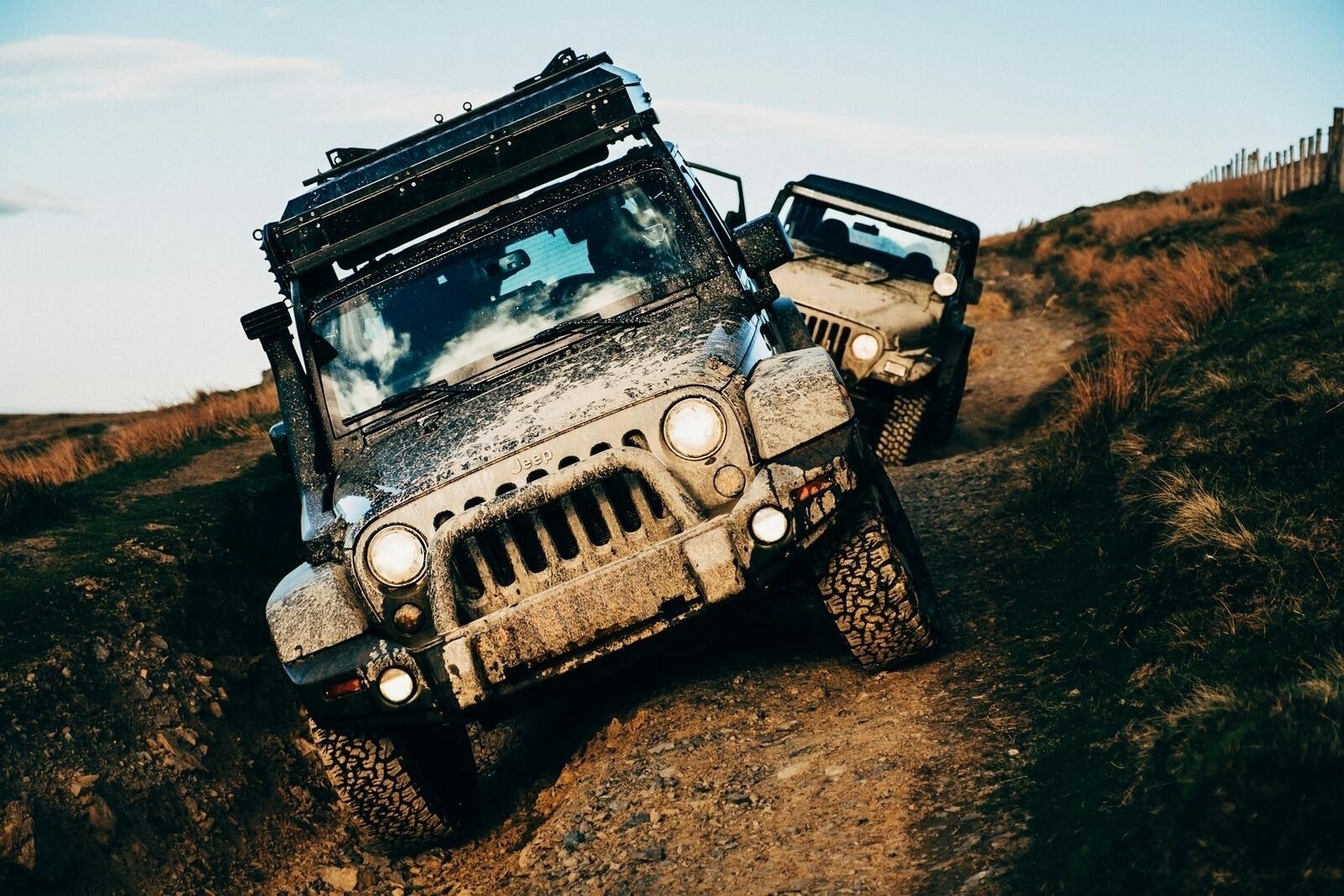
Two Jeep Wranglers on a trail at golden hour with the doors off

Doors stay home.
Shirts negotiable.