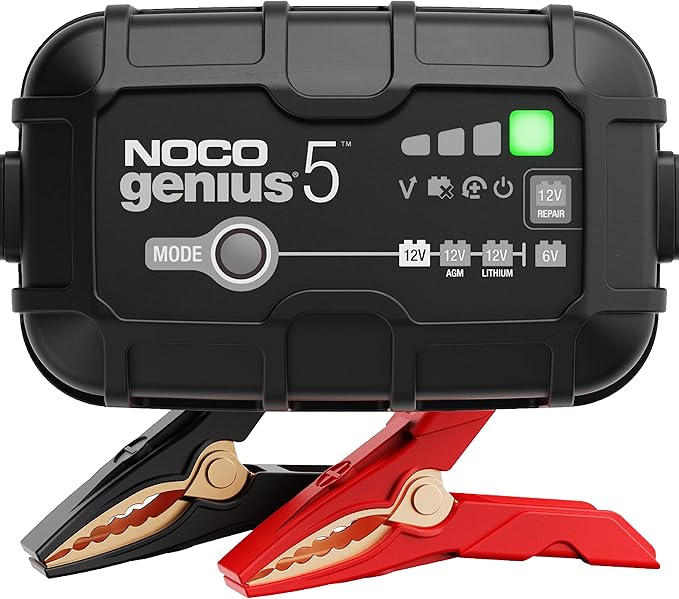
NOCO GENIUS5 Smart Battery Charger
Check price on Amazon
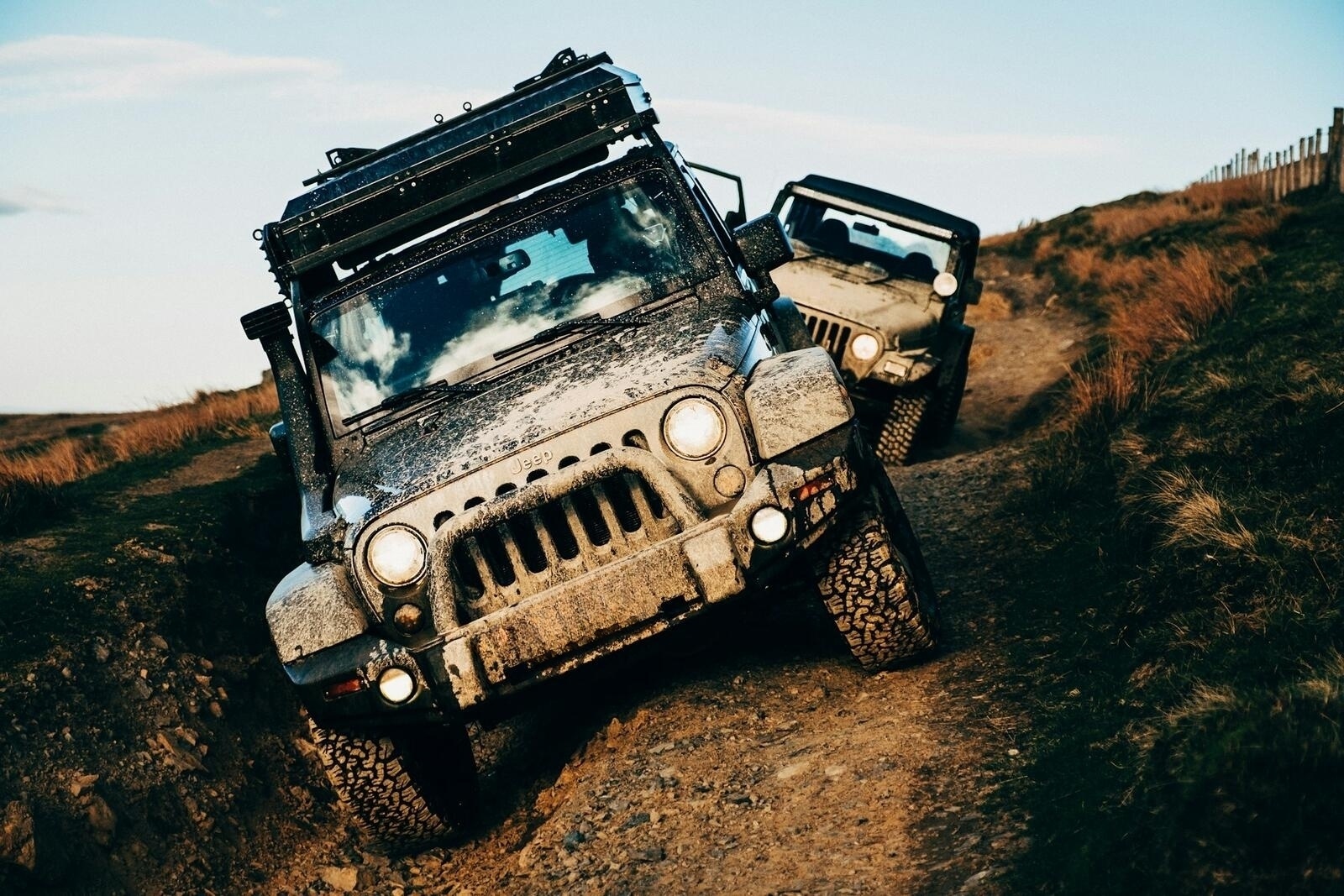
Buy →The doors are home in the garage, the top's folded back, and you're twenty miles up a two-track when the Wrangler decides today's the day. No door pocket. No cable stashed in the usual spot. Here's what minimum amps you actually need, why lithium won the format war, and how a combo jump-plus-power-bank earns its real estate in what's left of your interior.
A dead battery miles from pavement is a different problem when you're running doors-off. There's nowhere to put the gear you should have brought, the cell signal is thin, and pushing a Wrangler is not a thing people do voluntarily. The fix is cheap and pocketable. The question is which one.
A stock Wrangler JL or JK has two door pockets per side. Take the doors off and you lose four pockets at once — which is where most people were keeping their recovery essentials: phone charger, fire extinguisher, jump cables. The Gladiator JT gives up the same geometry on the front doors.
The cab doesn't disappear, but usable space shrinks to what fits in the center console, on the floor, or in aftermarket organizers. A compact lithium jump starter fits a doors-off rig better than a traditional clamp pack not because it starts the battery faster, but because it's small enough to actually live somewhere in what's left of your interior.
Spec sheets throw two numbers at you: peak amps and cranking amps. Peak is a short-burst marketing figure. Cranking amps is what matters for spinning the starter.
The 3.6L Pentastar V6 in the JK, JL, and JT runs on a factory battery in the 550-650 CCA range. The JL's 2.0L turbocharged four-cylinder is similar. In practice, a jump starter rated at 400 cranking amps handles a discharged Wrangler or Gladiator battery reliably in moderate temperatures.
Cold weather (below 20°F) raises that bar. The battery needs more to turn cold, thickened oil, and lithium cells lose capacity in the cold on top of that. If you trail in winter, look for a unit rated 600+ cranking amps and store it somewhere insulated overnight when temperatures drop hard.
Peak amp figures of 1,000-2,000A look impressive and don't say much on their own. Ask what the cranking amp (CA) rating is, not the peak. If the manufacturer lists only peak amps, that's worth noting.
The older format is a sealed lead-acid battery in a hard plastic case, typically 8-15 lbs, with cables permanently attached. They're proven, charge from a wall plug, and tolerate being left in a vehicle for months without much degradation. The downside is size: most won't fit in a standard center console and add bulk to an already lean cab.
Compact lithium-ion jump starters changed the market around 2015 and now dominate for most Jeep owners:
The tradeoff is cold sensitivity. Below 20°F, lithium cells lose meaningful capacity. A few units from NOCO and Tacklife include cold-compensating circuits; it's worth confirming before relying on one for winter trail days at elevation.
Traditional clamp packs are worth considering if you regularly trail in severe cold, keep the unit in an exposed truck bed, or want to share a jump with a buddy's diesel. Otherwise, the lithium format fits a doors-off rig better on every other dimension.
Keep the battery healthy at home, the cab organized, and the devices running on the trail. Every link goes to Amazon.


Running doors-off almost always means running more cab electronics: a phone in a mount for navigation, a dash cam for trail footage, maybe a pair of LED pods drawing from the 12V outlet. One outlet, multiple devices, no door panel to run the cables through cleanly.
A combo jump-starter-plus-power-bank handles this without adding another device to manage. The same pack that starts a dead battery in the morning charges the phone while you're moving and tops off the dash cam on the trail. The premium over a jump-only unit varies by model, and you recover that the first time you don't have to find a separate portable charger.
Look for at least one USB-C port (phones and newer cameras charge faster), an LED charge indicator so you know remaining capacity at a glance, and a case that tolerates being tossed around. A doors-off Wrangler is not a quiet commuter car.
The goal is accessible under stress, not buried under camping gear. Options that work on a JL or JT with doors off:
Don't store it loose in the bed when running doors-off. Vibration on rough trail moves unsecured items. If the bed is where it lives, a zipped pack bag attached to a cargo anchor point is the minimum.
Lithium-ion batteries over a certain watt-hour threshold are subject to hazmat restrictions on commercial shipping, not personal vehicle use. In a private vehicle on public roads, you're not subject to those freight rules.
The question worth confirming locally is whether any off-highway vehicle area or land you frequent has rules about lithium batteries in an open-air rig. Some dispersed camping areas and recreation sites have battery storage requirements. This is not common for day runs, but it varies by land management agency, so confirm with the relevant ranger district before a trip where you plan to leave the unit in the rig overnight in summer heat or at high elevation.
For road use in all 50 states, a compact lithium jump starter in a personal vehicle is not restricted.
General guidance for Wrangler and Gladiator owners. Electrical specs vary by product, engine, and temperature; confirm manufacturer ratings before relying on any unit in an emergency. Land-use rules for lithium storage vary by site — confirm with the relevant land management agency for your specific recreation area.
A compact lithium pack in the console costs less than a tow. Check the forecast before you roll, and confirm the unit is topped off before the trailhead.