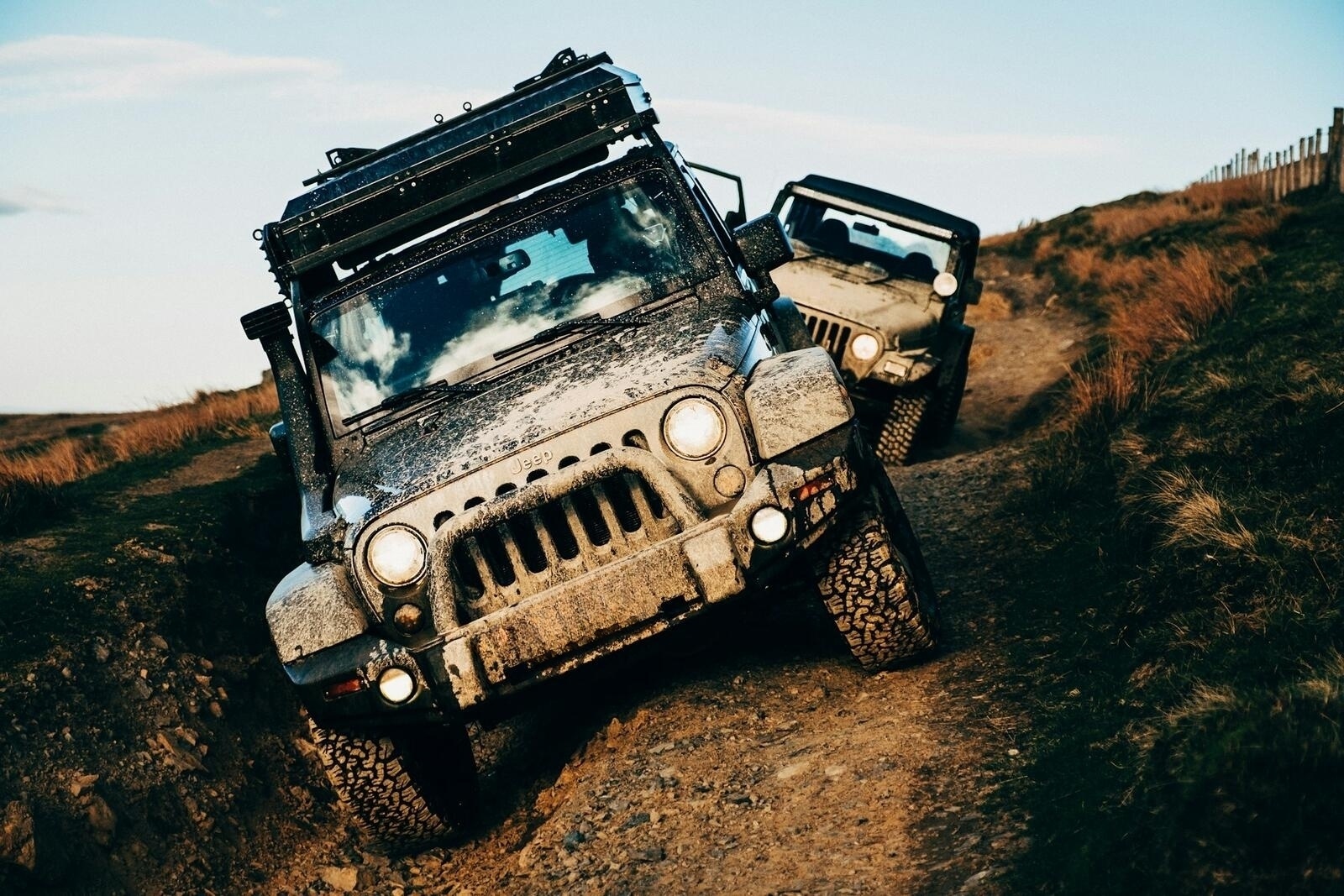
She sounds better
with the doors off.
Pull the doors off a Wrangler or Gladiator and two things happen: you get the sky back, and you lose your audio. The door speakers go with the doors, the dash speakers are aimed at a windshield you've left behind at 60mph, and the wind has entered the chat. Here's how to fix it — for good or for a weekend, with wires or without.
The wind tunnel problem is real. At 45 mph on the highway, stock audio is effectively gone — not quiet, gone. The fix isn't buying louder speakers for your doors. It's rethinking where the speakers live and how they're rated to survive the outdoors.
The wind tunnel problem
A stock Wrangler (JK, JL) or Gladiator (JT) puts its main speakers in the doors and in the dash. Pull the doors and you've physically removed half the system. But even the speakers that stay — the dash tweeters, the A-pillar fill — are tuned for an enclosed cabin. Go doors-off and that enclosed cabin no longer exists.
The physics are brutal: open cockpit plus wind rush equals roughly 70–80 dB of ambient noise at highway speed. A stock head unit pushing a dash speaker might hit 75 dB max output at your ears — which means the road noise wins. You need speakers that are mounted outside the cabin envelope, rated for weather, and genuinely loud to punch through moving air.
That's not a tweak. That's a different category of speaker entirely.
What weatherproof actually means
The word gets thrown around loosely, so here's the practical breakdown:
- Marine-rated speakers are built to survive saltwater spray, UV, and humidity indefinitely. That's overkill for most Jeep owners, but it sets the durability floor. Marine ratings mean UV-stable cones, sealed motor assemblies, and stainless or plastic hardware — nothing that rusts.
- ATV / powersports rated is the closer category for doors-off driving. These are designed for open-air vibration, dust, and rain — the exact environment a doorless Jeep creates. They're built to mount on roll bars and stay aimed at highway speed.
- IPX ratings on Bluetooth portables tell you water resistance: IPX7 survives submersion, IPX5 handles heavy rain. Either is fine for a Jeep — you're not submerging your speaker, you're getting rained on.
Dust is the killer most people underestimate. An off-road Jeep throws more fine particulate at your speakers in a single trail run than rain does in a year. Marine and ATV-rated speakers seal their motor gaps; cheap "outdoor" speakers don't.
Your three options
There are three real paths, and they solve different problems:
- Permanent roll-bar or A-pillar speaker pods. Hard-mount weatherproof speakers directly on the Jeep. These pull power from your head unit or an amp, stay on the rig, and give you consistent positioned sound aimed at the driver and passenger. Best for daily doors-off drivers who want a real audio system and don't mind a bit of wiring.
- Subwoofer upgrade in the existing enclosure. The JBL BassPro Hub fits the stock spare-tire hub location and adds clean bass that actually travels at speed. Pairs with your existing system — no door speaker needed — because bass is omnidirectional and survives open-air better than mids and highs.
- Portable Bluetooth. No wiring, no permanent mount, takes ten seconds to put in the cupholder or strap to a roll bar. You're trading fidelity and volume ceiling for flexibility. On a trail rig that only loses its doors on weekends, this is often the right call: unpack it when the doors come off, leave it home when they don't.
Most committed doors-off drivers end up running a combination: a mounted speaker solution for the midrange and highs, and a sub for the bass. Portables fill the gap for everyone else.
Speakers built for a wind tunnel
ATV-rated speaker pods, a sub that stays in the hub, and a portable that doesn't care if it rains. Every link goes to Amazon.

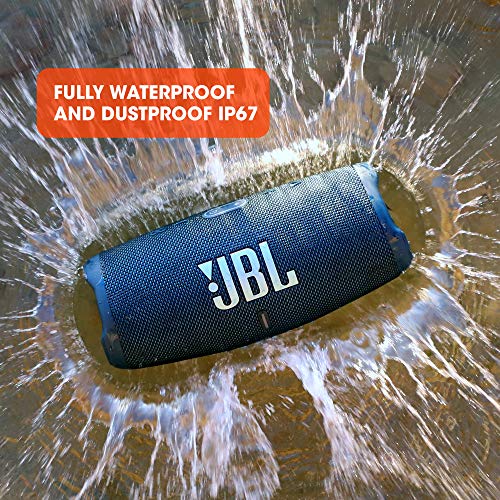
JBL BassPro Hub 11" Powered Subwoofer

JBL Charge 5 Waterproof Portable Bluetooth Speaker
Mounting hardware that survives highway speed and dust
A speaker rated for rain is useless if the mount shakes it loose at 70 mph or points it at the sky. The mount matters as much as the speaker.
- Roll bar clamps with rubber vibration isolation. A bare metal clamp transfers every vibration from the cage directly into the speaker's motor. Rubber-lined brackets absorb that energy and keep the speaker aimed. Look for two-bolt saddle clamps that tighten to a specific torque rather than "until it feels tight."
- Aim before you commit. In a doorless Jeep the sweet spot is roughly 45 degrees inward from the roll bar, pointed toward the driver's and passenger's ears. Too far inward and you're fighting each other; too far outward and you're serenading the car behind you.
- Weatherproof your connections. Heat-shrink butt connectors and dielectric grease on every exposed terminal. Salt, rain, and dust get into every unprotected crimp, and a corroded connection is how you blow a head unit channel.
- For portables: roll bar straps over cupholders. A portable Bluetooth speaker in a cupholder is loud in a parking lot. At 50 mph it's vibrating against plastic and aimed at nothing. A roll bar strap or a dedicated suction/clamp mount actually keeps it positioned and reduces road-rattle feedback into the speaker enclosure.
Daily driver vs. trail rig: which setup fits
The right setup depends almost entirely on how often the doors come off and whether the Jeep sees trails or streets.
- Daily doors-off driver (JL/JT): Go permanent. ATV speaker pods on the roll bar, wired to your factory head unit or a small amp. Add the BassPro Hub sub for bass that actually moves air in an open cockpit. One-time installation, zero setup time, consistent sound every time the doors stay home. The JL and JT have more overhead room on the roll bar — use it.
- Weekend warrior (any model): Portable Bluetooth is the honest answer. You're not running doors-off enough to justify wiring, and a good IPX7 portable handles rain, dust, and the cupholder equally well. The JBL Charge 5 is the easy pick: waterproof, long battery life, loud enough to be heard at a campsite even with wind.
- Trail rig that also street drives: Hybrid setup. Permanent ATV speakers on the roll bar for street driving, supplemented by a portable for camp use where you've parked and want to spread sound in 360 degrees instead of pointed forward.
- JK owners: The older cage geometry gives you slightly less ideal roll bar positions for speakers — the bar angle tends to point forward-down rather than inward. A-pillar pods are often the cleaner solution on a JK, mounted to the windshield frame and aimed back at the occupants.
One thing consistent across all setups: don't try to save the stock door speakers. Even the best door speaker is designed for 2 inches of air travel from cone to ear inside a closed door panel — that enclosure is gone. Replace the system, don't extend it.
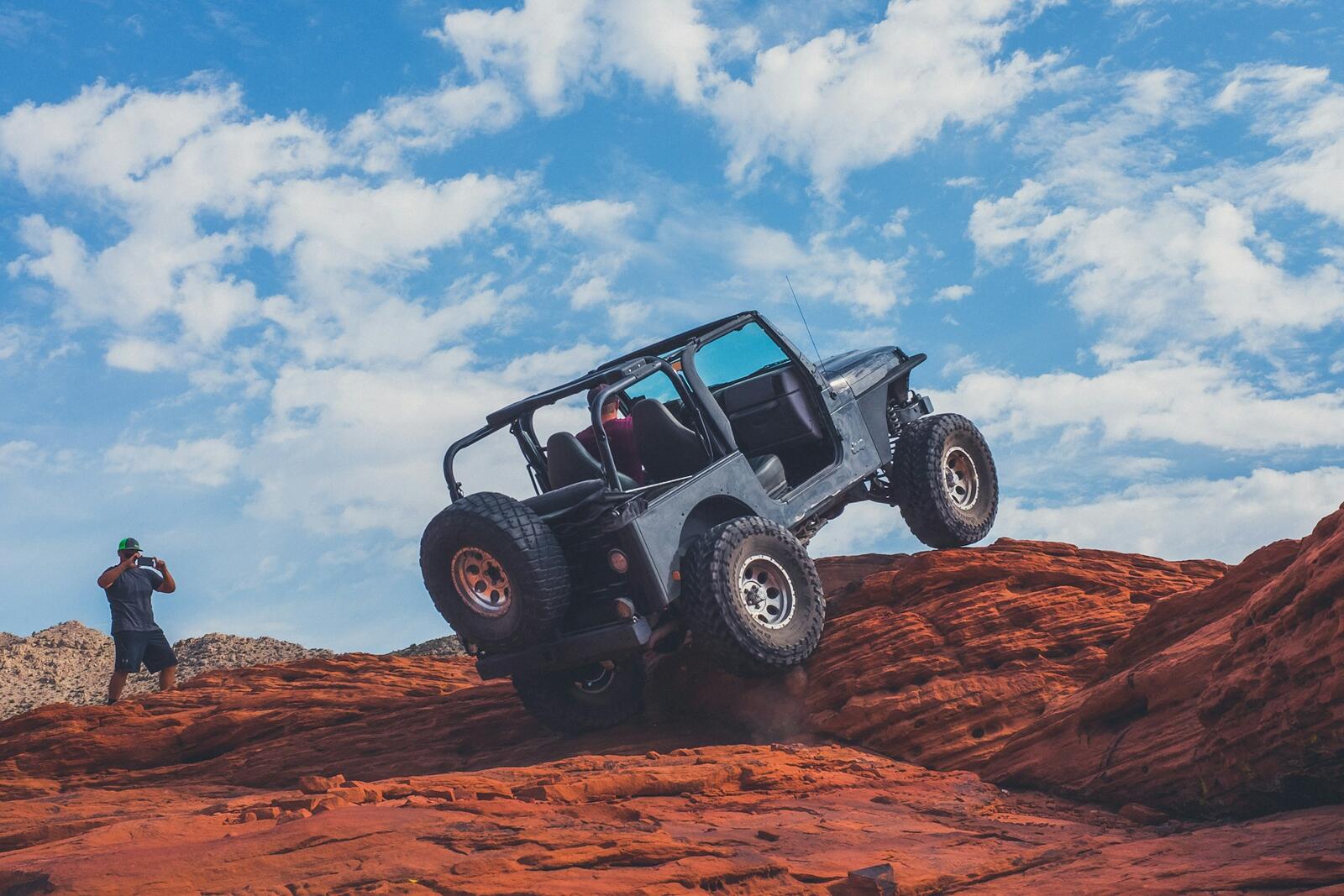
Doors-off audio FAQ.
- Can I keep my door speakers when I go doors-off?
- No — and even if you could, you wouldn't want to. Wrangler and Gladiator door speakers are mounted on the doors themselves, which go into storage with the doors. Beyond the physical removal, door speakers are tuned for a closed cabin: the door panel acts as the enclosure back. Without it, a bare speaker fires in all directions and sounds terrible even before the wind drowns it.
- How loud do speakers need to be to be heard doors-off at highway speed?
- Plan for at least 90 dB of output at the speaker to get usable volume at your ears in a 60–70 mph open cockpit. That's why ATV speakers are rated for 4x50W or more — highway wind eats headroom. It's not about sounding loud in a parking lot; it's about having enough ceiling that the gain structure works at speed.
- Are marine speakers the same as ATV speakers?
- Close, but not identical. Marine speakers are built primarily around moisture and UV survival in a relatively vibration-controlled boat. ATV and powersports speakers add heavy-vibration endurance for rough terrain. Either works doors-off; ATV-rated is a slightly better match for a trail-driven Jeep. The Pyle ATV speakers are specifically built for the open-air, high-vibration environment of a Wrangler roll bar.
- Will a Bluetooth speaker be loud enough doors-off?
- At trail speeds and camp use, yes. At highway speeds, probably not — a quality portable like the JBL Charge 5 can hit around 80 dB outdoors, which is marginal against 75–80 dB of highway wind. Portables are the right call for weekend trail use and stops; for daily highway driving with the doors off, wired ATV speakers are the honest answer.
- Does the JBL BassPro Hub work on JL and JT Wranglers?
- The BassPro Hub is designed for the JL Wrangler specifically — it replaces the spare tire bolt hub cover on the tailgate-mounted spare. JK owners have a different spare mounting and the Hub won't fit without a bracket modification. The JT Gladiator's spare setup varies by trim. Check the listing for your specific model and year before buying.
- Do I need an amp for roll bar speakers?
- Not necessarily. The Pyle ATV speakers are rated at 4 ohms and will run off a decent factory head unit's internal amplifier for moderate volume. If you want to push them to their ceiling — especially useful at highway speed — a small 4-channel amp lets you run them at full rated power without clipping the head unit. It's an upgrade, not a requirement.
- How do I run speaker wire from the head unit to a roll bar mount?
- The cleanest route in a JL/JT runs wire down the A-pillar, through the firewall grommet, and under the carpet to the center console — then up a speaker cable extension along the roll bar, protected in split loom conduit. Zip-tie to existing cage tie-in points, not to anything that flexes. Plan for about 15–20 feet of wire from the head unit to a B-pillar roll bar speaker position.
- What about running audio wirelessly to roll bar speakers?
- Some ATV speakers include Bluetooth receivers built into the pod — the Pyle units have this option. The tradeoff is battery dependency or a power lead to the pod anyway, plus Bluetooth compression. For the cleanest sound, wired is still the right answer for permanent mounts. Wireless is the right answer for portable use.
General guidance for Jeep Wrangler and Gladiator owners. Speaker fitment, hub compatibility, and wiring configurations vary by model and year — confirm specs against your specific Jeep before buying or installing.
Doors stay home.
Sound doesn't.
Pick the setup that matches how you actually ride — permanent pods for the daily driver, portable for the weekend warrior. Then check the sky before you commit either way.