As an Amazon Associate we earn from qualifying purchases. Every buy button leads to Amazon.As an Amazon Associate we earn from qualifying purchases.Full disclosure →Disclosure →
GUIDE / HARDWARE MAINTENANCE

Hardware check.
Before it checks you.

The bolt comes off clean in April. By August it won't budge. That's not bad luck. It's what happens when steel hardware lives in an aluminum hinge in a salty, humid world and gets torqued twice a month. Here's how it fails, where to look first, and the ritual that keeps a five-minute job a five-minute job.

Jeep door hardware wasn't designed to be a seasonal rotation item. It was designed to go on and get forgotten. Once you're pulling doors every weekend, you're running that hardware harder than the factory anticipated. The failure modes are totally predictable. Preventing them is genuinely simple.

Why hardware fails when you actually use it

The enemy is galvanic corrosion. Jeep door hinges are cast aluminum. The bolts are steel. Those two metals sit at different points on the electrochemical scale, and when moisture bridges them, a slow battery forms at the interface and quietly eats it. Add UV exposure, trail dust, road grime, and the micro-vibration of highway miles, and the joint that turned easily in spring is chemically welded by Labor Day.

The on/off cycle makes it worse, not better. Every removal opens a fresh oxygen and moisture path into the threads. Every reinstall works any corrosion product deeper into the joint. After enough cycles, you're not fighting a bolt anymore. You're fighting a metallic compound that has become part of the hinge. The bolt head rounds, the threads gall, and suddenly a five-minute door install is a Saturday-morning problem with a bad answer at the end.

None of this is a manufacturing defect or a flaw in the Jeep. It's just what happens when rotating hardware meets real atmospheric conditions and real use frequency. The fix is changing the chemistry at the joint before it changes you.

The three weak points

Not all hardware is created equal. These are the three pieces that fail most often on frequent doors-off Jeeps:

  • Hinge bolts: the main event. Steel threading into an aluminum casting, torqued repeatedly, exposed to everything the road and sky throw at it. JL/JT hinges use a T-40 Torx fastener; JK hinges are the same family. The bolt shank is where galvanic attack concentrates, and the thread engagement in the casting is what strips if you overtorque or if corrosion has reduced the effective thread contact area.
  • Door-limiting straps (also called check straps or door stops): the fabric webbing frays with UV exposure and flexing, especially at the sewn ends. The metal anchor hardware at each end corrodes at the bracket weld. JL/JT owners: the strap anchor inside the door jamb is a mud magnet on trail days, and the debris packs in and holds moisture against the bracket.
  • Mirror clamps: if you run hinge-mount doors-off mirrors, the clamp saddle and clamping bolt are another steel-on-aluminum pairing, sitting low on the Jeep where they catch road spray from below. They get overlooked because they're not structurally load-bearing, right up until the clamp won't release or the clamping bolt rounds.

The prevention habit (ten minutes, once a season)

Most seized hardware stories end with "I should have done this in the spring." Here's what "this" actually is:

  1. Anti-seize on hinge bolt threads, every install. A thin coat of copper or nickel anti-seize on the bolt shank isolates the metal pair and gives you something to actually break loose later. Don't glob it. Wipe the shank with a gloved finger. One important note: anti-seize reduces thread friction, which means the same torque figure produces higher clamping force. Multiply your target torque by roughly 0.65–0.75 (or follow the correction factor on the anti-seize product); overtorquing anti-seized bolts into aluminum is how you pull threads out of the casting.
  2. Hand torque, not an impact gun. Consult your factory service manual for the hinge bolt torque spec for your model year. A hand torque wrench gives you feel and a definitive click; an impact driver gives you "tight enough" and occasionally gives you a drill-out situation. The difference in effort is about thirty seconds. The difference in outcome can be hours.
  3. Mid-season torque check. Bolts don't have to fall out to cause problems. Half a turn of loosening is enough to let moisture in and restart the corrosion cycle. If you're in a coastal area, a humid climate, or simply going in and out every weekend, a quick torque check at the halfway point of your doors-off season takes five minutes and costs nothing.
  4. Inspect door-limiting straps annually. Hold each strap up to light and look for fraying at the sewn ends and rust bloom at the metal anchor. Fuzzy webbing or a corroded bracket means the strap is closer to failure than it looks. Replace it before it goes on trail. A blown check strap with an open door on a sidehill is not the story you want to tell.
  5. Store hardware in a labeled pouch. This sounds too basic to include, but "I'll remember where I put the bolts" has sent more than a few Jeep owners back to the dealer for replacement hardware. A small canvas pouch or a labeled zip-lock bag ("FRONT LEFT HINGE," "REAR RIGHT HINGE") takes thirty seconds to prep and prevents cross-threading the wrong bolt into the wrong hole when you're putting doors back on in the dark before a road trip.

Mirror clamp care: the overlooked one

Hinge-mount mirror clamps fail the same way hinge bolts do, just at a smaller scale. A few specifics:

  • Wipe the hinge surface before clamping. Grit between the clamp saddle and hinge face acts as a grinding compound over a season of rattling down washboard roads. Twenty seconds with a rag makes a real difference.
  • Use PTFE-based or dry-film lube on the clamp contact faces, not on the clamping bolt. A light film reduces metal pickup and makes the clamp easier to break loose. Avoid oil-based lubricants on the contact surface; they attract trail dust and turn into an abrasive paste.
  • Snug the clamping bolt to the manufacturer's spec, no further. Too loose and the mirror creeps at 70 mph; too tight and you deform the clamp saddle or the hinge casting over repeated installs. There's a narrow sweet spot, and a small torque wrench finds it.
UPGRADE YOUR MIRROR MOUNTS

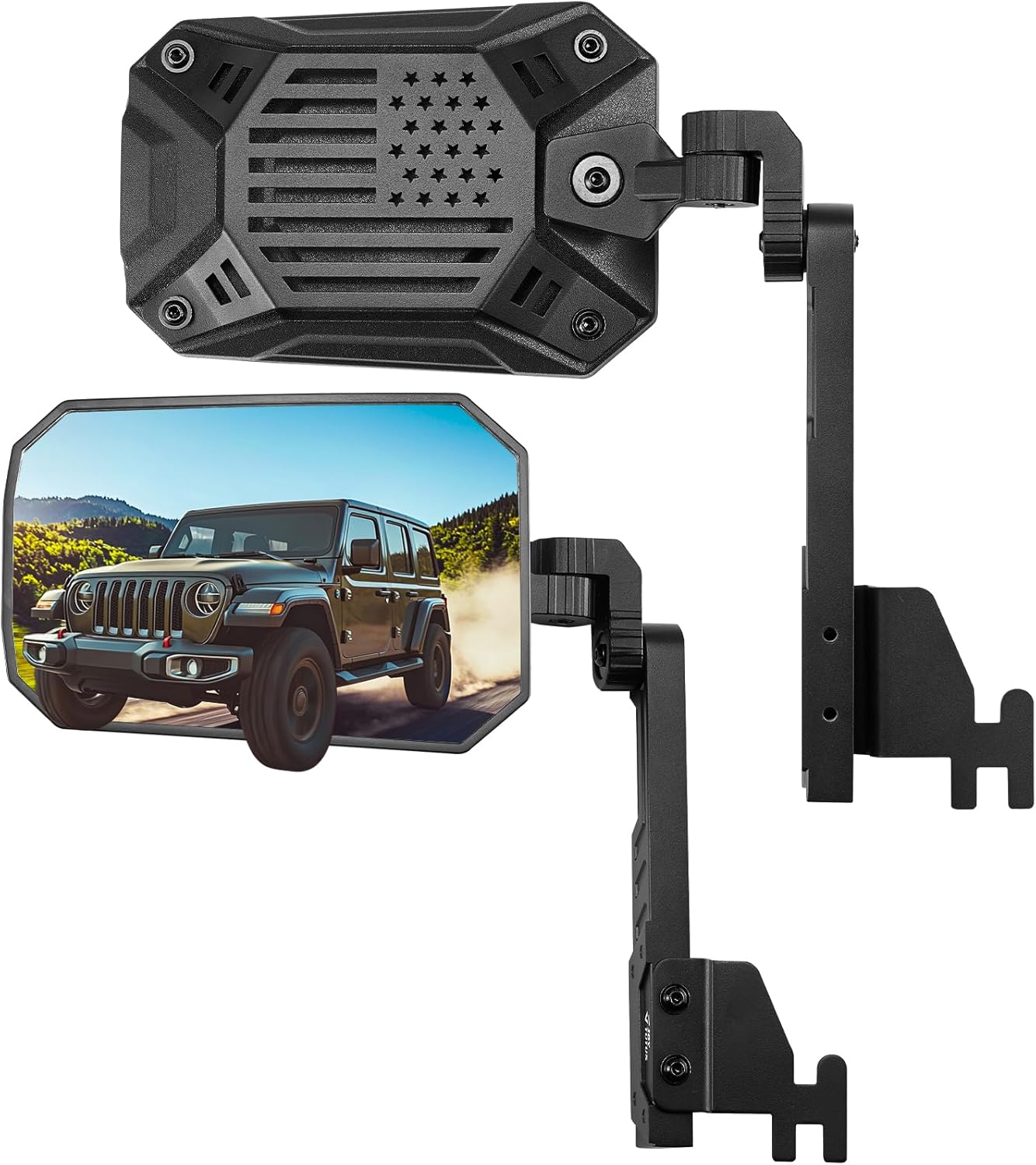
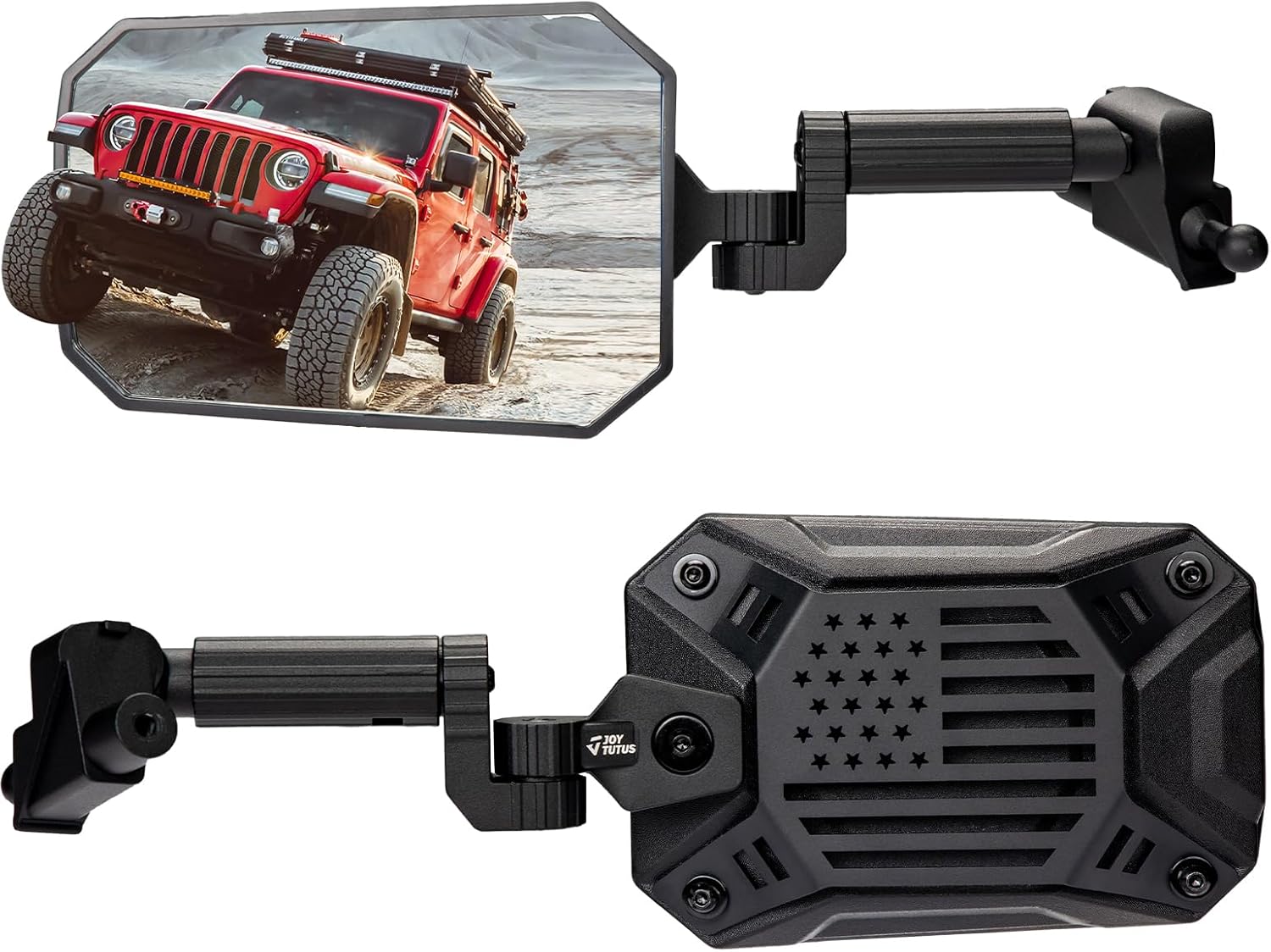
Quick-release mirrors: fewer torque cycles, less wear

A receiver bracket stays on the hinge; the mirror head clips in without tightening any clamping bolt. Every link goes to Amazon.
See all doors-off mirrors →

Already seized? Here's the order of operations.

If a bolt genuinely won't move, the sequence is penetrating oil, time, and patience, in that order. Apply a quality penetrating lubricant (PB Blaster, Kroil, or similar) generously around the bolt head, let it wick in overnight if you can. Repeat the next morning. A breaker bar with a well-fitting T-40 Torx gives you torque without rounding; a worn or undersized bit will strip the head and make every subsequent option worse.

Heat helps. A heat gun (not an open flame near painted body panels) expands the aluminum casting slightly and can break the corrosion bond at the thread. Apply heat to the casting around the bolt, not to the bolt head itself. You want the aluminum to move, not the steel.

If the Torx head rounds before the bolt breaks free, you're in extraction territory: a bolt extractor set with reverse-thread biting edges, or (if it's truly stripped flush) a shop with a proper mill. That's the expensive version. The cheap version is the anti-seize you buy once and apply every single time going forward.

One rule: never fight it with a screwdriver or a close-but-not-right bit. Rounding the head forecloses every easier option. Use the right tool or stop and get it.

The upgrade path: reduce the cycle count

If you're pulling doors more than a few times a month, the long game is reducing how often the hardware takes the stress. Two upgrades change the math significantly:

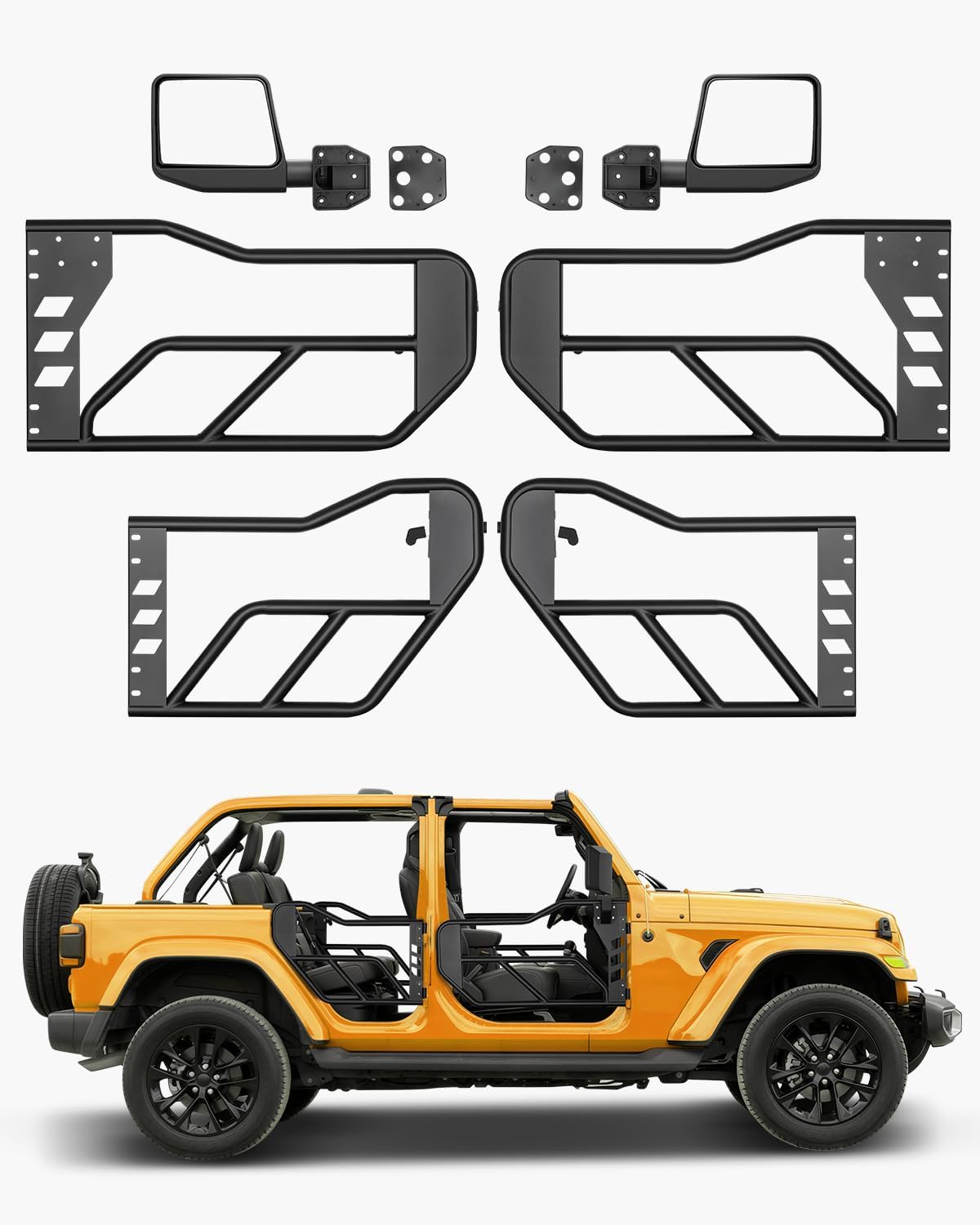
  • Quick-release mirror mounts: the bracket stays on the hinge permanently; only the mirror head moves. Fewer torque cycles on the clamping hardware means longer service life, no re-aiming every reinstall, and less corrosion at the contact surface. If you hate re-adjusting your mirrors every time the doors go back on, this one pays for itself in the first month.
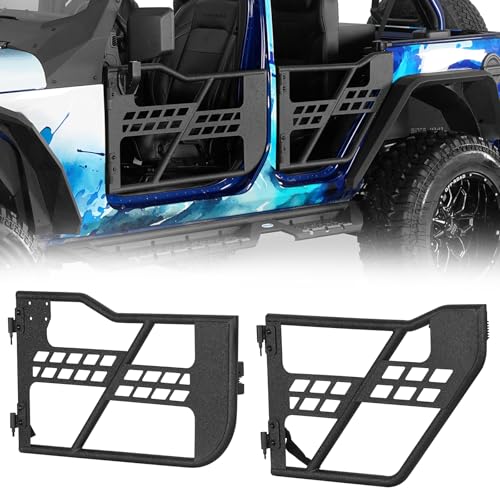
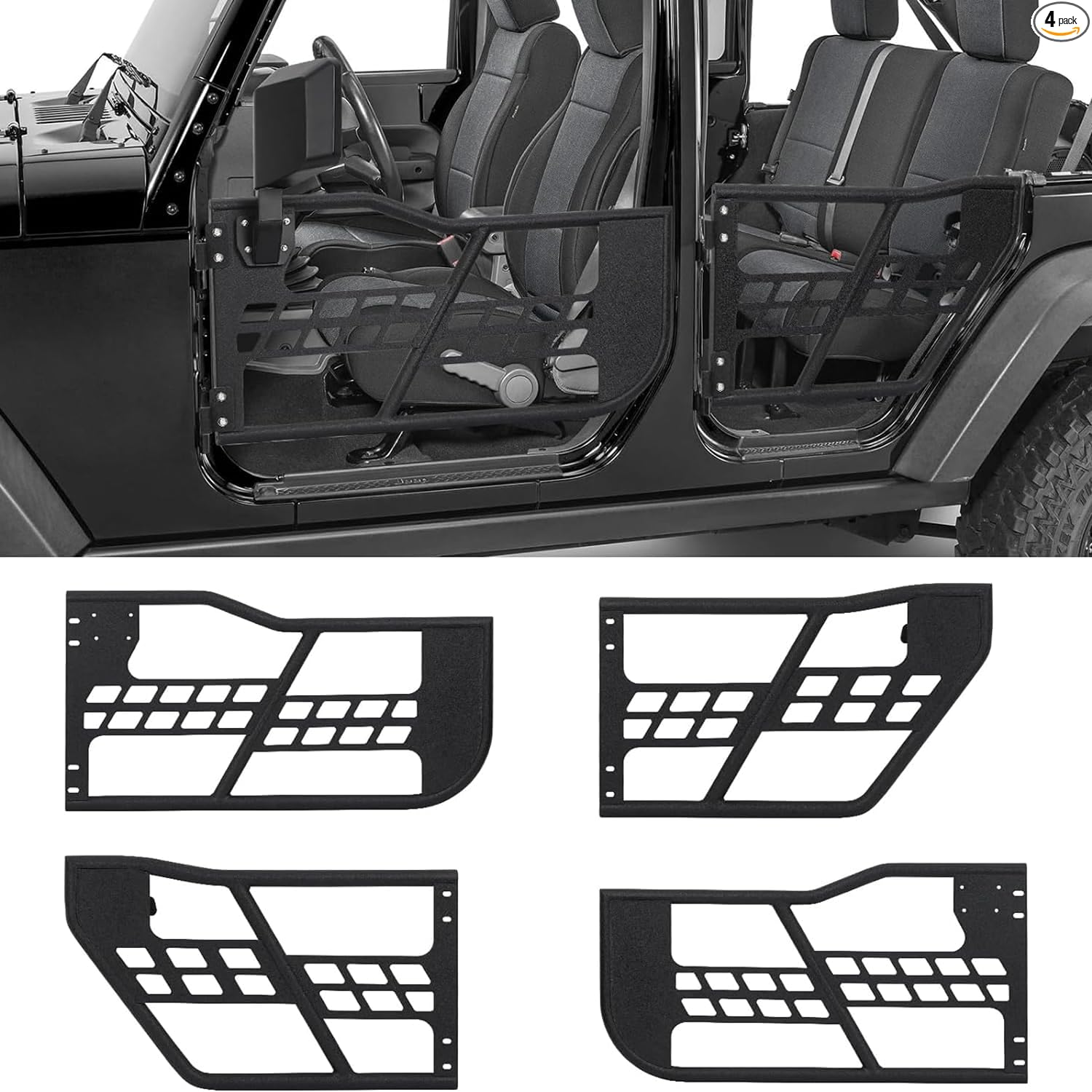
  • Tube half-doors: the nuclear option, and the one a lot of frequent doors-off owners eventually land on. Tube doors stay on the Jeep. The door-limiting strap problem disappears. You never touch hinge bolts more than once at installation. You still get side protection and wind management on the highway, and you keep most of the open-air feel without the hardware rotation. The tradeoff: you lose the full door's weather sealing and glass, which matters in cold climates or frequent rain.
THE TUBE DOOR ESCAPE HATCH

Stay on the Jeep. Full stop.

Tube half-doors stay mounted: no hinge bolt rotation, no check strap stress, no ritual. Every link goes to Amazon.
See all Jeep doors →

STRAIGHT ANSWERS

Doors-off hardware FAQ.

What causes Jeep door hinge bolts to seize?
Galvanic corrosion between the steel bolt and the cast-aluminum hinge. When moisture bridges the two metals, a slow electrochemical reaction builds up a corrosion product at the thread interface and repeated on/off cycling works that product deeper into the joint each time. The result is a bolt that feels fine going in and immovable coming out.
Should I use anti-seize on Jeep door hinge bolts?
Yes, for most owners who remove the doors regularly. A thin coat of copper or nickel anti-seize on the bolt shank isolates the steel-aluminum interface and gives you something to break loose later instead of a fused joint. Important: anti-seize reduces thread friction, which affects clamping force so apply a torque correction factor (typically 0.65–0.75× the published spec) or you risk overtorquing into aluminum and pulling threads.
What's the torque spec for JL Wrangler door hinge bolts?
Check your factory service manual for the spec on your specific model year and trim. Don't rely on forum numbers; they vary, and the consequence of overtorquing aluminum is stripped threads in the hinge casting. A torque wrench and the correct FSM spec is the right answer here.
How often should I check door hinge bolts if I remove the doors frequently?
At minimum: before the doors-off season starts and once mid-season. If you're in a coastal, humid, or high-salt environment, or if you're doing more than a handful of cycles a month, add a visual inspection every few installs. Loose bolts accelerate corrosion by opening a fresh moisture path, so catching them half a turn loose is much better than finding them stripped later.
What do I do if a Jeep hinge bolt is already seized?
Penetrating lubricant (PB Blaster, Kroil) applied generously and given time (overnight if possible) breaks down a large percentage of seized joints. A breaker bar with a well-fitted T-40 Torx, not an impact driver or a worn bit, gives you the torque without rounding. Heat from a heat gun (not an open flame) applied to the casting around the bolt can expand the aluminum and help. If the head rounds before the bolt moves, you're into bolt-extractor or machine-shop territory.
How long do Jeep door-limiting straps last?
It depends heavily on UV exposure, trail use, and how often the doors are fully opened to their stop. Inspect the webbing at each end for fraying and the metal anchor for rust annually. Coastal owners or those with heavy trail mileage may see wear sooner. Replace them when you see fraying or a corroded bracket. A failed strap on trail is an unpleasant situation.
Do tube doors eliminate hinge bolt maintenance?
Largely, yes. Tube half-doors stay mounted to the Jeep, so you're not pulling hinge bolts on a regular rotation. The initial installation is the only time you engage the hinge hardware repeatedly. You also eliminate the door-limiting strap stress cycle. The tradeoff is less weather sealing and no door glass.
What's the best way to store Jeep door hardware?
A small labeled pouch or zip-lock bag per door ('FRONT LEFT,' 'FRONT RIGHT,' etc.) with the bolts, washers, and any mirror hardware kept together. Store them in the same place every time. Mixing hardware between hinges risks cross-threading a bolt that wasn't sized for that casting.

General maintenance guidance for Jeep Wrangler and Gladiator owners. Torque specifications, part compatibility, and product recommendations vary by model year and trim, so always confirm specs against your factory service manual before performing vehicle maintenance. We're enthusiasts, not mechanics, so confirm anything safety-critical with a qualified shop.

FIVE MINUTES NOW

Seized bolts wait
for no one.

Anti-seize, a torque wrench, and a labeled bag. That's the whole list. Sort it once at the start of the season and your door-pull stays a five-minute ritual, not a Saturday-morning extraction job.
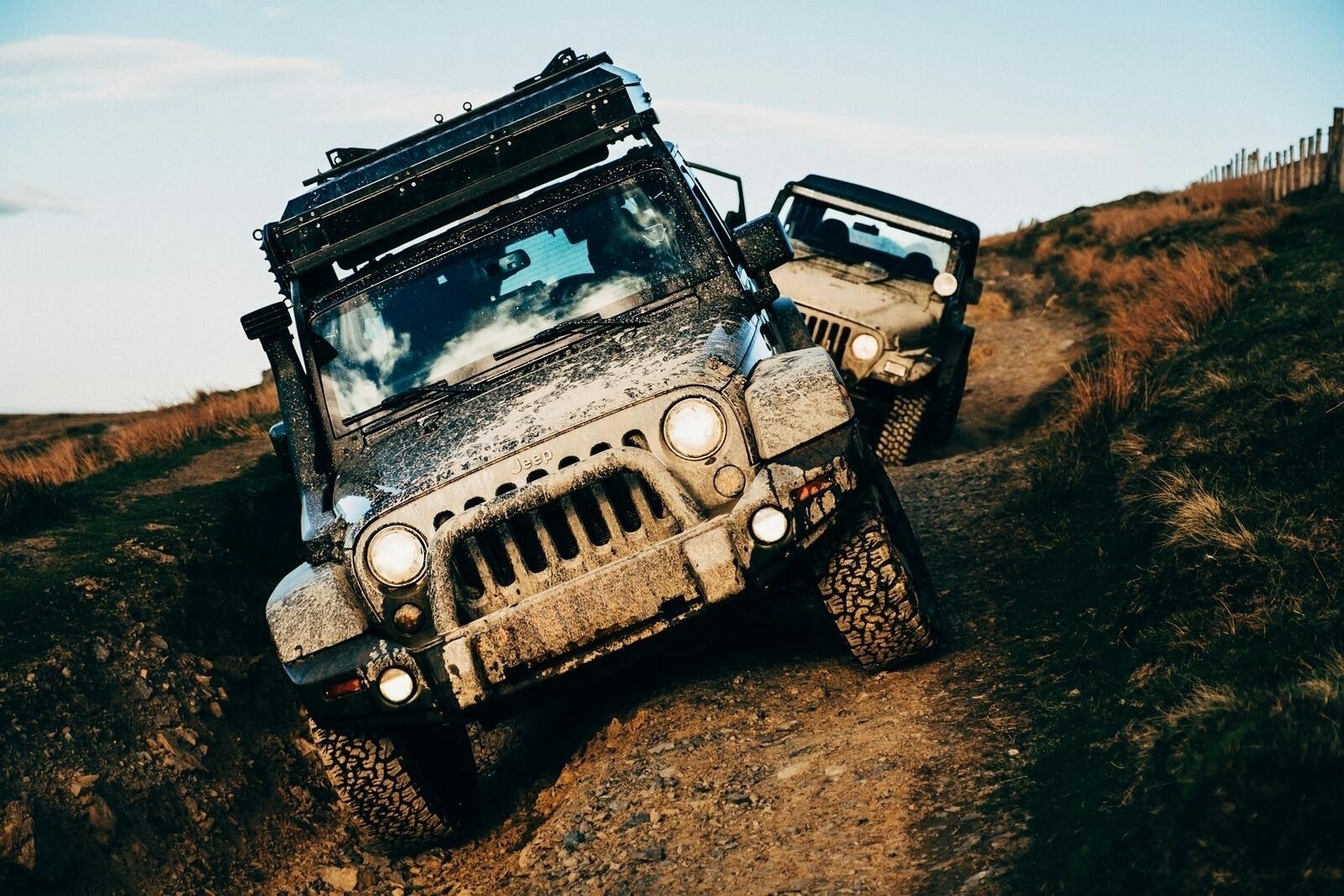
Muddy Jeep Wrangler on a dirt trail with the doors off

Keep it turning.