As an Amazon Associate we earn from qualifying purchases. Every buy button leads to Amazon.As an Amazon Associate we earn from qualifying purchases.Full disclosure →Disclosure →
GUIDE / HINGE PIN REPLACEMENT

Hinges take the hit.
Fix them before
the door does.

Every time you pull and rehang the doors, the hinge pins and bushings take a few more thousandths of wear. Here is how to know when the wobble is fixable with a grease gun and when it is time to swap in a new pin kit.

PART OF THE GETTING DOORS OFF SHELFSee all 10 guides →

JL and JT hinges are engineered for weekend warriors who pull the doors maybe twice a year. If you are on them once a month, the factory pin and bushing setup is on a faster clock than Jeep planned for.

Read the symptoms

Grab the bottom corner of a door and try to move it perpendicular to its swing arc. On a healthy hinge the door should feel planted; you should get essentially zero lateral movement. Any play at all means the pin-and-bushing clearance has opened up past the point where lubrication will close it back.

Three things to check in order:

  • Vertical play: lift up on the door with both hands. If it moves more than a couple millimeters before the hinge takes the load, the bushing is gone.
  • Door sag: a door that hangs lower than it used to, hits the striker off-center, or needs lifting to latch is showing the same wear in slow motion.
  • Scraping on reinstall: if the door chatters or binds as you set the pin, the pin or the bore has worn out of round. Greasing won't fix geometry.

Light surface corrosion on an otherwise tight pin is a grease problem. A pin with visible grooves, or a bore that is egg-shaped when you pull the pin, is a replacement problem.

Grease it or replace it?

The JL and JT door hinges have no grease fitting from the factory. There is nowhere to push fresh grease into the bore without pulling the pin. What most people call greasing the hinges is spraying a dry-film lubricant or penetrating oil into the gap around the knuckle, which helps with surface corrosion and squeaks but does nothing for worn clearance inside the bore.

  • Grease it: pin is smooth, bore shows no visible wear, the joint is tight but stiff or squeaky. Pull the pin, wipe it clean, apply a thin coat of white lithium or synthetic grease, reinstall.
  • Replace it: measurable play in the joint, visible scoring on the pin, door sag, or scraping on reinstall. A grease coat on a worn pin delays the noise by one weekend and nothing more.

If you are pulling the doors once a month or more, the greasing window is short. Most frequent-removal owners skip straight to replacement and move to a greaseable kit so they can actually maintain it going forward.

What to buy

Three categories on the market, all sold as pin-and-bushing sets:

  • OEM-spec steel kits: exact-fit replacements using factory dimensions and plain steel pins. Lowest price. Durability matches or slightly exceeds the originals, which is fine if you pull the doors a few times a year.
  • Aftermarket stainless kits: 304 or 316 stainless pins with UHMW or Delrin bushings. Stainless resists the surface corrosion that accelerates wear on steel pins, and the slicker bushing material reduces friction at the pin. Worth the premium if you are removing the doors more than monthly.
  • Greaseable conversion kits: add a Zerk fitting to the hinge knuckle so you can pack fresh grease into the bore without pulling the pin. More involved install (some require drilling), but it changes the maintenance equation entirely. Pull the doors every weekend? This is the right setup.

Buy for your model year. JL (2018-present) and JT Gladiator (2020-present) share hinge geometry; JK (2007-2018) takes a different pin diameter and should not swap between them. Check the listing for your exact year before ordering.

JK vs. JL/JT fitment

The JK uses a 1/2-inch diameter hinge pin. The JL and JT moved to a 9/16-inch pin when the platform changed in 2018. These are not interchangeable. An OEM-spec kit for a JL will not fit a JK; most aftermarket stainless kits list both and ship the right size if you select your model, but read the listing, because some generic kits cover only one generation.

The JL and JT also use a plastic bushing sleeve that floats inside the knuckle. The JK hinge knuckle has a slightly different tolerance from the factory, and the bushing geometry differs. This matters most when buying a greaseable conversion: confirm the kit is built for your specific platform, not just labeled "Wrangler."

READY FOR AN UPGRADE

Tube doors skip the whole equation

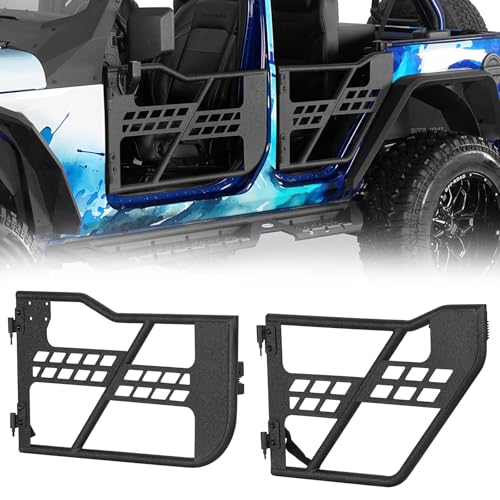
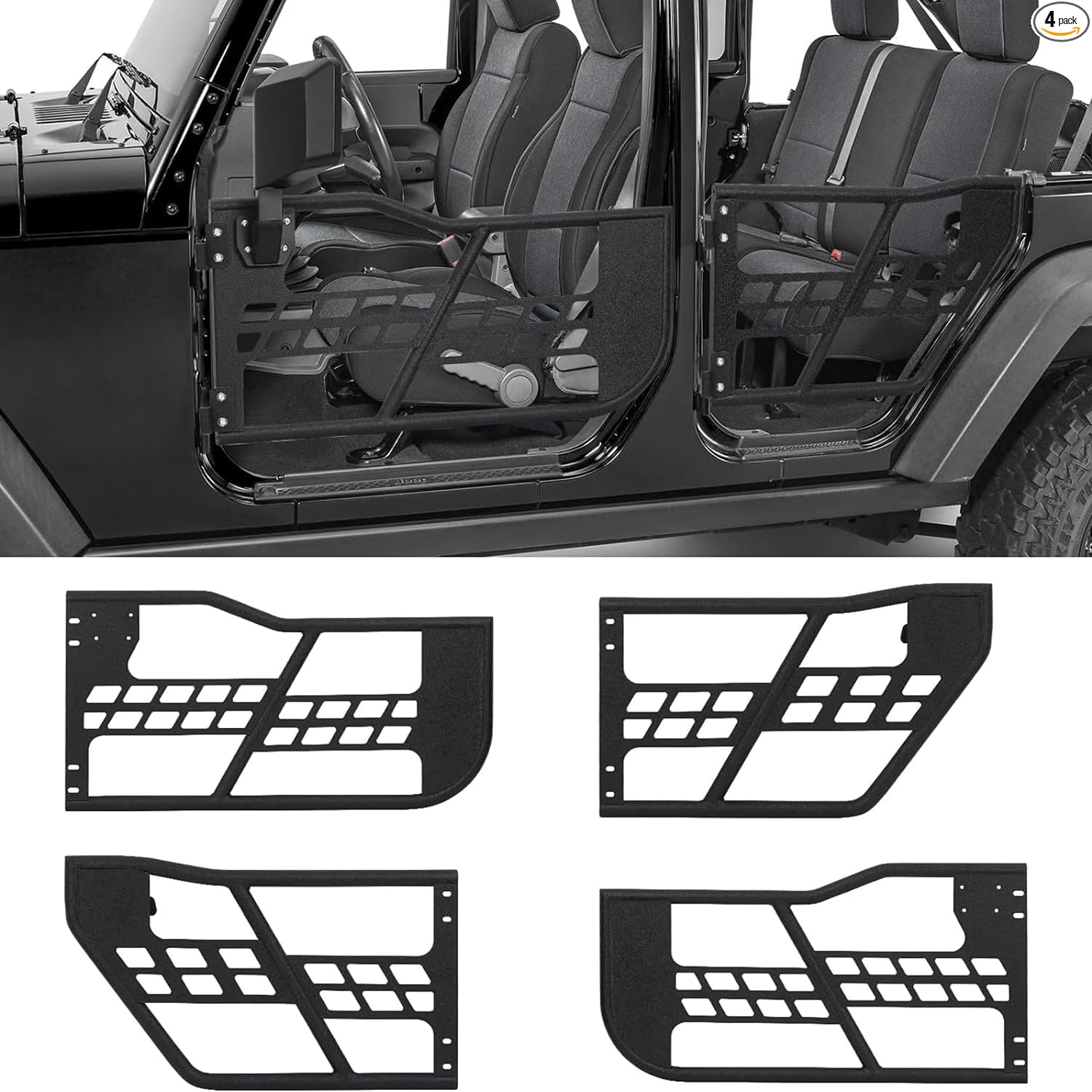
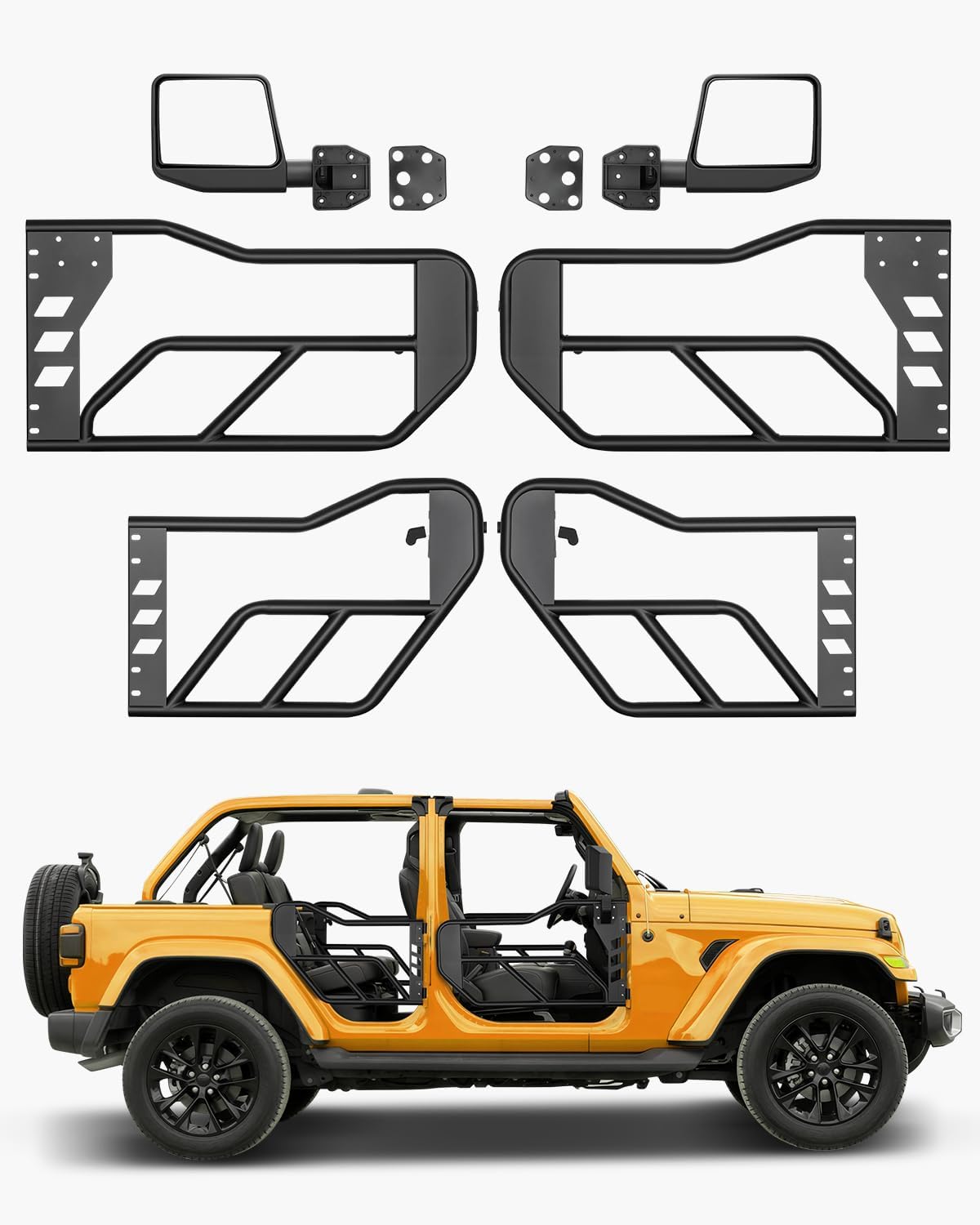
If the stock doors and their hinges have been beaten up long enough, tube doors are a clean exit. No full-door weight on the pins, easier to pull solo, and they stay out of the garage all season.
See all tube doors →

Reinstall right

New pin, new bushing, clean bore. In that order. Before the pin goes in:

  1. Clean the bore with a rag and brake cleaner. Any grit left in there starts grinding the new bushing from the first swing.
  2. Seat the bushing fully before the pin goes in. A bushing that is cocked even slightly gives you a tight spot in the swing and makes you think the pin is the problem.
  3. Apply grease to the pin before installing. Packing grease around the gap after installation does not reach the contact surface inside the bore.
  4. Hang the door and run through the full swing before calling it done. The door should open and close without binding and sit flush with the body. If it does not, the pin is not fully seated or the bushing is off.

Torque the hinge bolts to spec when you button up. JL door hinge bolts take 25 ft-lb. Under-torqued bolts let the hinge shift against the pillar over time and accelerate pin wear faster than a worn bushing ever would.

Keeping them alive longer

With a standard steel or stainless kit: pull the doors, pull the pins, wipe them clean, regrease, reinstall. Once per season minimum; once a month if you are running doors-off regularly.

With a greaseable conversion: pump one or two shots of grease through the Zerk before reinstalling the doors, every two or three removal cycles. The bore stays packed and you never have to pull the pin for routine maintenance.

Storage matters too. If the pins sit in the knuckles for months with the doors off and the bore exposed to weather, surface rust starts fast on steel pins. A light coat of grease before storage and a pin-protector plug (several kits include them) keep the bore clean through the off-season.

WHILE THE DOORS ARE OFF

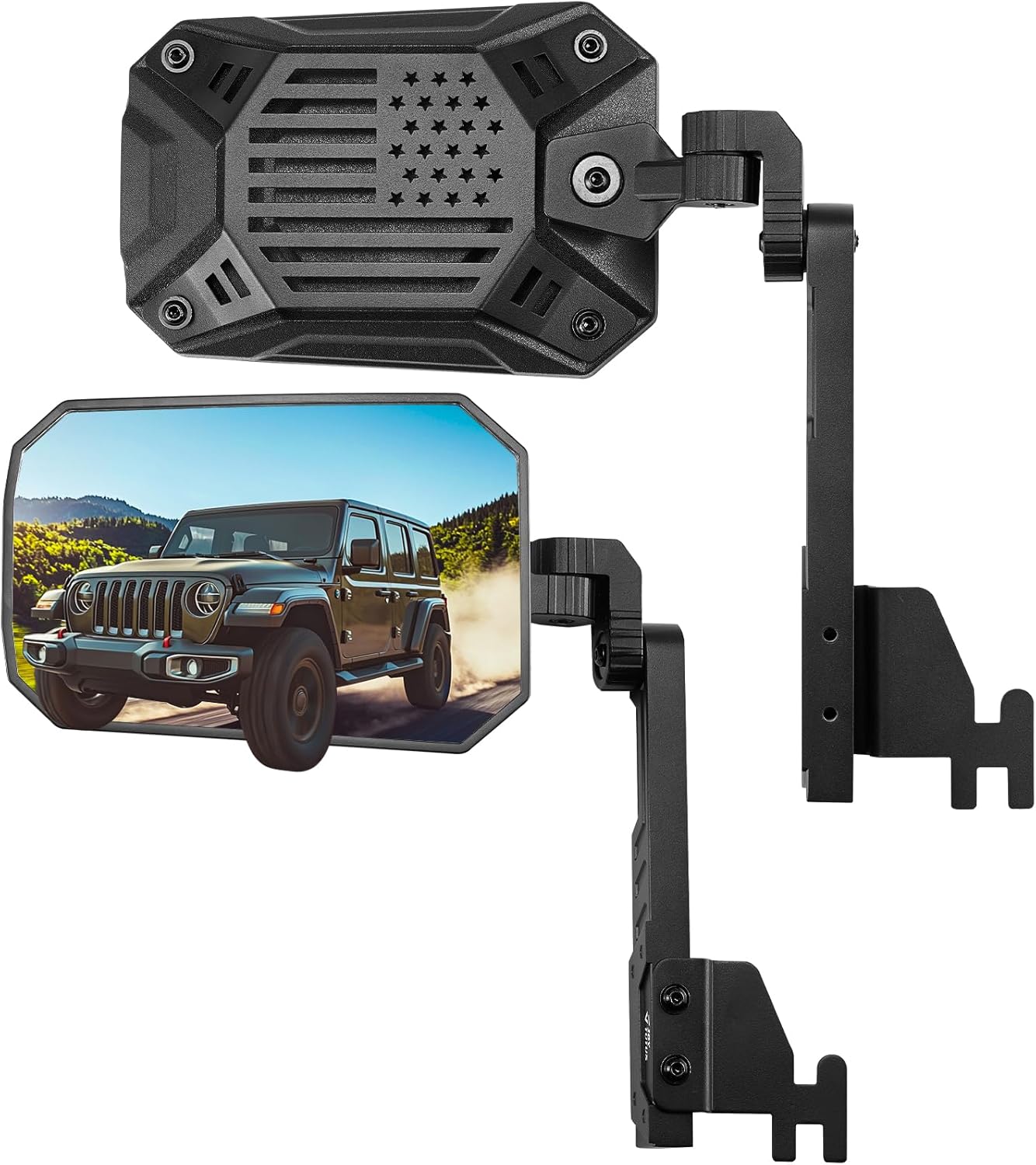
Sort your mirrors at the same time

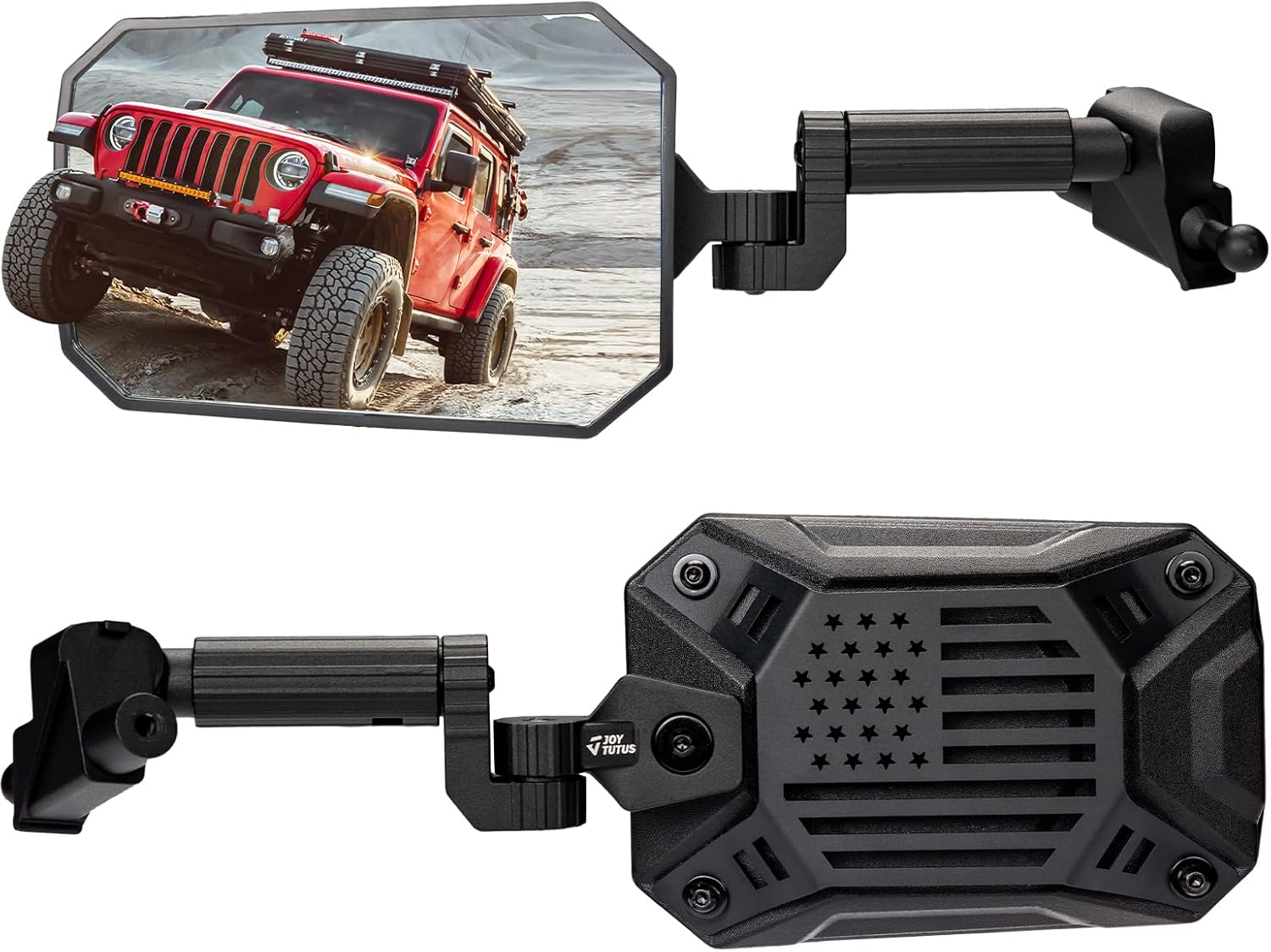
You are pulling the doors anyway. If your doors-off mirrors are missing, bent, or held on by hope, now is the time.
See all doors-off mirrors →

STRAIGHT ANSWERS

Hinge pin FAQ.

How do I know if my Jeep door hinge pins are worn out?
Grab the bottom corner of the door and try to move it perpendicular to its swing. If you feel play, the bushing clearance is gone and greasing won't help. Door sag, off-center striker contact, and scraping or binding when you reinstall the door are all the same problem showing up in different ways.
Can I just grease worn hinge pins instead of replacing them?
If the pin is smooth and the joint is tight but stiff or squeaky, yes. If there is measurable play or visible scoring on the pin, a grease coat delays the noise by a weekend at most. Worn clearance doesn't close back up with lubrication.
Do JK and JL/JT door hinge pins interchange?
No. The JK uses a 1/2-inch diameter hinge pin; the JL and JT Gladiator use a 9/16-inch pin from the 2018 redesign onward. Most aftermarket kits list both and ship the right size if you select your model, but confirm before ordering.
What is a greaseable hinge bushing conversion and is it worth it?
A greaseable conversion kit adds a Zerk fitting to the hinge knuckle so you can pump fresh grease into the bore without pulling the pin. Worth it if you remove the doors regularly. The install is more involved than a straight pin-and-bushing swap (some kits require drilling), but ongoing maintenance drops to a few grease gun shots per removal cycle.
How often should I replace the hinge pins on a doors-off Jeep?
Depends on how often you pull the doors. A few times a year: inspect annually and replace when you see play or scoring. Monthly removal: inspect every few pulls. A stainless kit with greaseable bushings will outlast a plain steel kit and give you more warning before it needs attention.
What torque spec should I use for JL door hinge bolts?
25 ft-lb for the JL door hinge bolts. Under-torqued bolts let the hinge move against the pillar, which accelerates pin wear faster than the bushing wear you were just trying to fix. Confirm with your factory service manual for your specific model year.
Do I need special tools to replace door hinge pins?
Not for most kits. A pin punch or drift to drive out the old pin, a rubber mallet, brake cleaner for the bore, and grease for the new pin cover the standard install. Greaseable conversion kits that require drilling need a drill and the correct bit size, specified in the kit instructions.

General maintenance guidance for Jeep Wrangler and Gladiator owners. Torque specs and hardware dimensions vary by model year; confirm with your factory service manual before wrenching.

KEEP THE DOORS MOVING

Pull them easy.
Put them back easier.

Sort the hinges once, grease them right, and door removal goes from a wrestling match to a two-minute ritual. Check the forecast before you commit to the morning.