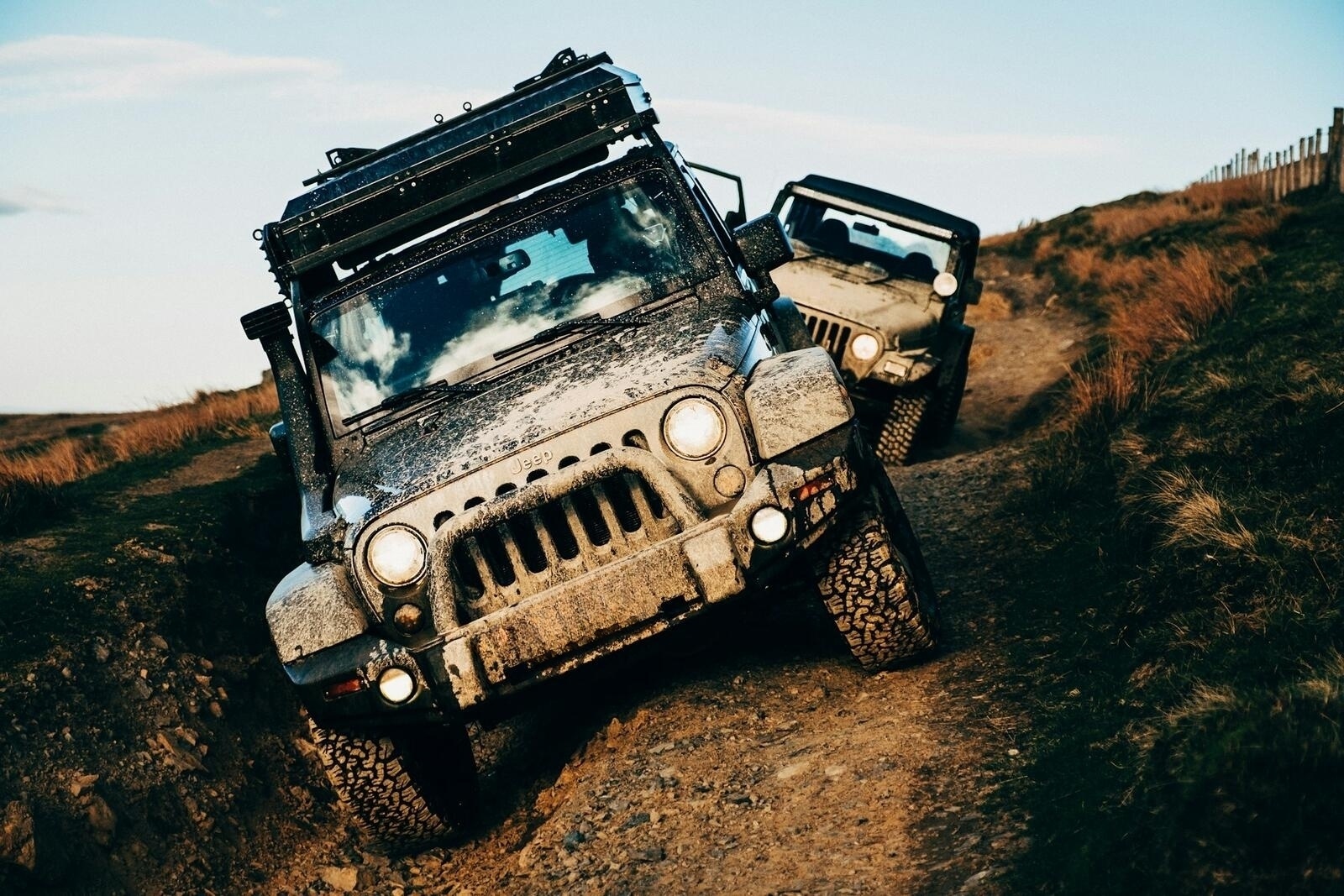
Cold out.
Keep rolling.
Road salt does more damage to an exposed Jeep in one winter than UV does in three summers. Here is what to do before the first freeze: protect the lower body, contain the wet gear, and treat the hardware that holds the whole doors-off rig together.
Winterizing a Wrangler or Gladiator is not just about putting the doors away. It is about protecting the surfaces that will take salt spray and freeze-thaw cycles for the next five months. This guide covers what fails on doorless rigs over winter and what to do about it before the damage starts.
Why winter is harder on a doorless rig
A Wrangler or Gladiator with the doors on has a few layers between the road and the vulnerable parts: the door panel blocks salt spray from reaching the lower rockers and hinge pockets directly, the window glass cuts down on wind-driven moisture, and the door seal keeps sustained water ingestion from reaching the cabin floor and pillars.
Take the doors off and all of that is gone. The exposed hinge pockets become open cups that hold road water and salt right where the factory paint is thinnest. The rocker panels — already the lowest point of the body — get direct spray from every puddle and every salted highway mile. The interior sees whatever weather blows in sideways. None of this is catastrophic in one season, but it compounds fast, and the repairs it produces are not cheap.
Salt and the rust cycle
Road salt accelerates the electrochemical reaction that already wants to happen when iron, water, and oxygen meet. It lowers the electrical resistance of water and speeds up oxidation by an order of magnitude compared to plain moisture. On any salt-treated road, what takes years in a humid garage can happen in one winter.
On a Wrangler or Gladiator, the areas that sit closest to the spray zone are the rocker panels, the hinge pockets, the door striker plates, and the exposed undercarriage. Most of this is reachable with basic prep before salt season starts:
- Wash the entire undercarriage and lower body before the first road salt application in your area. Salt stacked on existing grime is more aggressive than salt on a clean surface.
- Treat hinge pockets and striker plates with a wax-based rust protectant or dry-film corrosion inhibitor. WD-40 is a moisture displacer, not a barrier coating. It evaporates and leaves a residue that captures more grit than it repels. A dedicated rust inhibitor is a different product.
- Inspect the lower rocker panels for any chips or scratches in the factory paint. Bare metal going into a salt winter needs a touch-up coat or a rust converter before the season starts, not after.
- Flush and dry the hinge pockets after every salt-road drive during the season, not just at the end of it.
Armor that earns its keep in winter
Rock sliders and undercarriage protection do double duty in winter — they give you a step and put powder-coated steel between the road spray and your lowest body panels.


Westin Aluminum Oil Pan Skid Plate for JL/JT
Rock sliders in winter: more than a step
Rock sliders are usually sold as trail protection, but they earn real return in winter too. The lower rocker panels on a JL or JT are the most exposed sheet metal on the vehicle — they sit at tire level, they face the road directly, and they are the first thing that takes a salt-water rooster tail every time a passing truck hits a wet patch at highway speed.
A powder-coated steel slider bolted over those panels puts a sacrificial layer between the metal that matters and the road spray that is trying to reach it. The slider takes the impact and the salt. The factory rocker stays cleaner underneath. On a Jeep that runs through winter, that tradeoff makes more sense than it does in July when the only hazard is a granite ledge.
On the JL 4-door (JLU), it is a direct bolt-on with no drilling required. The JK uses different hinge and body geometry, so confirm your model year and door count before ordering. Rock sliders also stay on through winter — no reason to pull them — just rinse the mounting hardware periodically so salt does not sit in the bolt pockets for months.
Keep winter gear in bounds
Muddy boots, wet recovery straps, and four months of trail grime need somewhere to go. These two keep the mess contained and the cabin from becoming a biohazard by February.
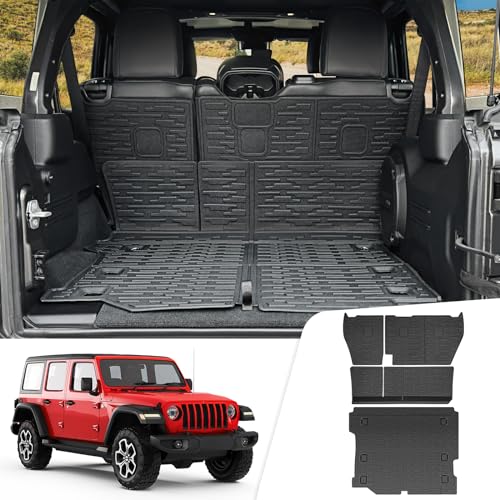
Jeep JL 4-Door Cargo Liner + Seat Back Protector

Jeep JL Center Console Organizer & Side Tray (4-Piece)
Interior prep for the wet season
With the doors off, there is no barrier between the cabin and whatever winter throws sideways. Snow blows in. Rain blows in. Wet trail gear comes in on your boots and your bags. The factory carpet and seat fabric were not designed for sustained exposure to all of this, and by February a neglected interior looks like a dog sled.
The fix is containment. A custom-molded cargo liner in the rear turns the cargo area into a waterproof tray you hose out instead of scrub. Raised TPE edges trap water and mud before they reach the carpet underneath. A console organizer keeps the things you reach for constantly out of the loose-gear shuffle that happens every time you load and unload in a cold parking lot.
Two JL fitment notes worth knowing: the UTIIY cargo liner fits 4-door JL/JLU models from 2018-2025 only, and the console organizer is custom-molded for the 2024-2025 JL/JLU shifter console. If you are on an older JL, confirm compatibility before ordering.
The door decision: winter-off or winter-on
Some Jeep owners run doors off year-round. Others put them back on when temperatures drop. Neither is wrong, but each has implications for winter prep.
- Running doors-off through winter: You get the full exposure described above — rockers, hinges, cabin — every drive. The prep work in this guide is your management plan. Wash the undercarriage regularly. Treat the hinge pockets. Keep a liner in the cargo area. It is a manageable commitment if you stay consistent.
- Putting the doors back on for winter: The doors add back a protection layer, but the hinges and striker plates on a JL and JT need inspection before reinstall, especially if they have been sitting in a garage with any humidity. Surface rust on hinge faces makes reinstall harder and increases wear on the door check strap over time. Clean and treat them before the doors go back on.
- Storing the doors for the season: The off-season storage guide covers that routine in full, including hardware organization, padded storage, and the spring check-out sequence.
One model note: on a JK, the door hinges are external and more exposed by design. On the JL and JT, the hinge pockets are slightly more recessed, but they still collect moisture. The prep is the same across generations, the pace of rust is the same, and the cost of ignoring it is the same.
The pre-winter walkthrough
Work through this once in October, before the first frost in your area.
- Full undercarriage wash. Hit the lower body, rocker panels, hinge pockets, and undercarriage with a pressure washer before salt season starts. Get the summer trail mud out first.
- Inspect rockers and lower body. Look for paint chips, scratches, or any bare metal. Touch up with rattle-can touch-up paint or apply rust converter to exposed spots. A chip that is cosmetic in summer becomes a rust crater by March.
- Treat hinge pockets and striker plates. Clean, dry, and apply a wax-based rust inhibitor or dry-film protectant. Repeat after any heavy salt exposure during the season.
- Lubricate door hardware. Hinge pins, check strap pins, and any T-bolt hardware should get a light treatment with a dry-film lubricant at the start of the season, not just when things start to seize.
- Install the cargo liner. For a 4-door JL, this is the single highest-return interior prep item for winter. Muddy boots and wet gear will find the cargo area every single drive.
- Organize the console. Winter driving means more gear in the cabin: gloves, hand warmers, a trail card, extra layers. Without somewhere to put it, it ends up in the cupholder or on the floor.
- Condition soft-top seals if you are running a soft top. Cold hardens rubber faster than UV does. A silicone-based rubber conditioner applied before winter keeps door seals and top seals pliable through the cold months and extends their life significantly.
Winter prep FAQ.
- Does road salt really do that much damage to a Jeep?
- Yes, faster than most people expect. Road salt accelerates rust by lowering the electrical resistance of water on the metal surface. On a doorless rig where rocker panels and hinge pockets are directly in the spray zone, one winter of neglect can start surface rust that takes real effort to stop. The prep is minimal compared to the repair.
- Can I run my Jeep doors-off through winter?
- You can. It is cold, and you will need proper cold-weather gear for yourself, but the Jeep itself can handle it with the right prep: treat the hinges and rockers before salt season, keep the interior protected with a liner, and flush the undercarriage regularly. Some owners do it year-round without issues.
- Will rock sliders actually protect against road salt spray?
- Yes, meaningfully. The slider puts a powder-coated steel barrier between the road spray and the factory rocker panel. The slider picks up salt and grime on its outer surface; the rocker panel behind it stays cleaner. Rinse the sliders themselves periodically so salt does not sit in the mounting hardware for months.
- Do I need to remove rock sliders for winter?
- No reason to. They are designed to stay on the vehicle and are more useful in winter than in summer in salt-belt states. Keep them clean — salt sitting in the mounting hardware causes the same corrosion you are trying to prevent on the rockers.
- What is the best way to protect Jeep door hinges in winter?
- Clean the hinge pockets with water and dry them after every salt-road drive. Apply a wax-based rust inhibitor or dry-film corrosion protectant to the hinge pins and pocket faces at the start of the season. This is different from WD-40, which displaces moisture but does not form a lasting barrier. Check for surface rust at the end of winter and address it before it pits the hinge faces.
- Does the cargo liner fit all JL models?
- The UTIIY cargo liner fits 2018-2025 JL/JLU 4-door models only. It does not fit the 2-door JL or JK models. Confirm your door count and model year before ordering.
- Is winterizing different on a JK versus a JL or JT?
- The approach is the same: treat hinges, protect rockers, contain interior moisture. The JL and JT have slightly more recessed hinge pockets than the JK's external hinges, but both collect moisture in winter. The JL interior is more refined and responds better to regular maintenance. Product fitment differs by generation, so always check before buying.
- When should I start winterizing my Jeep?
- Before the first road salt application in your area, which in most of the US salt belt happens anywhere from mid-October to late November. In warmer or dry climates, the focus shifts to prep for cold-weather driving rather than salt protection. Either way, October is the right window to work through the checklist.
General guidance for Jeep Wrangler and Gladiator owners, not professional mechanical advice. Salt exposure, rust rates, and winter conditions vary by region and driving habits. Inspect your vehicle regularly and consult a qualified shop if you find rust or corrosion that requires structural assessment.
Prep once.
Roll all winter.
Treat the hinges, armor the rockers, contain the wet gear. One afternoon in October buys you five months of driving without watching for rust. And when the weather gets dicey — check the forecast first.