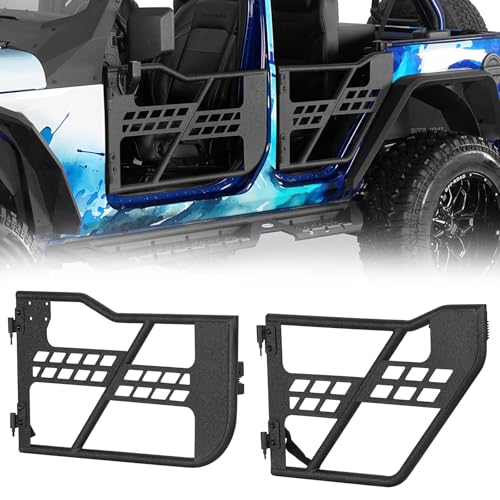
Hooke Road Front & Rear Tubular Half Doors (JL/JT 4-Door)
Check price on Amazon
Buy →You want the wind without the full exposure. Between factory Jeep half doors and aftermarket steel tube doors, the right answer depends on how you actually use the Jeep — not which forum post you read last. Here's the comparison that cuts through it.
Factory half doors and aftermarket tube doors solve the same problem from opposite ends of the budget. Both give you a mirror mount and a grab bar. After that the tradeoffs split pretty sharply, and the answer depends on whether this Jeep spends more time on pavement or trail.
Both options bolt to your stock door hinges and give you something where the full door used to be. That's where the similarity ends.
OEM half doors — sold by Jeep as Mopar accessories for the JL — are the lower sheet-metal half of the factory door body. They use the original hinge hardware, carry over the factory mirror, and look like the Jeep came with them. You pay the premium for that fit and finish.
Aftermarket tube doors are open steel frames that replace the full door. No sheet metal, no weatherstripping on the upper section — just a tubular structure with a latch that meets your factory striker and a mirror mount you have to fill. The appeal: a fraction of the price and noticeably lighter weight on and off the trail.
If you drive a JK (2007–2018), factory half doors aren't a straightforward dealer option the way they are for the JL — you're largely in aftermarket territory regardless of budget. JL (2018+) and JT Gladiator (2020+) owners have the widest choices on both sides.
Jeep's Mopar factory half doors for the JL ship with the factory mirror intact, proper lower door seals, and the same body finish as the rest of your paint. On power-window trims, the window regulator and switch come along. Pull the full door, bolt the half door on, and the result looks factory because it is.
The catch is price. Mopar half doors cost substantially more through a dealer for a front pair — often more depending on your trim — and a full four-door set is a significant purchase. Used sets do appear on forums and Facebook Marketplace for less, but availability is inconsistent and prices vary by generation and color.
They also weigh more than tube doors, take longer to pull because of the full latch and seal system, and take up more garage corner real estate while you're riding around doorless on the weekends.
Steel-frame replacements that bolt to your stock JL hinges. All links go to Amazon.
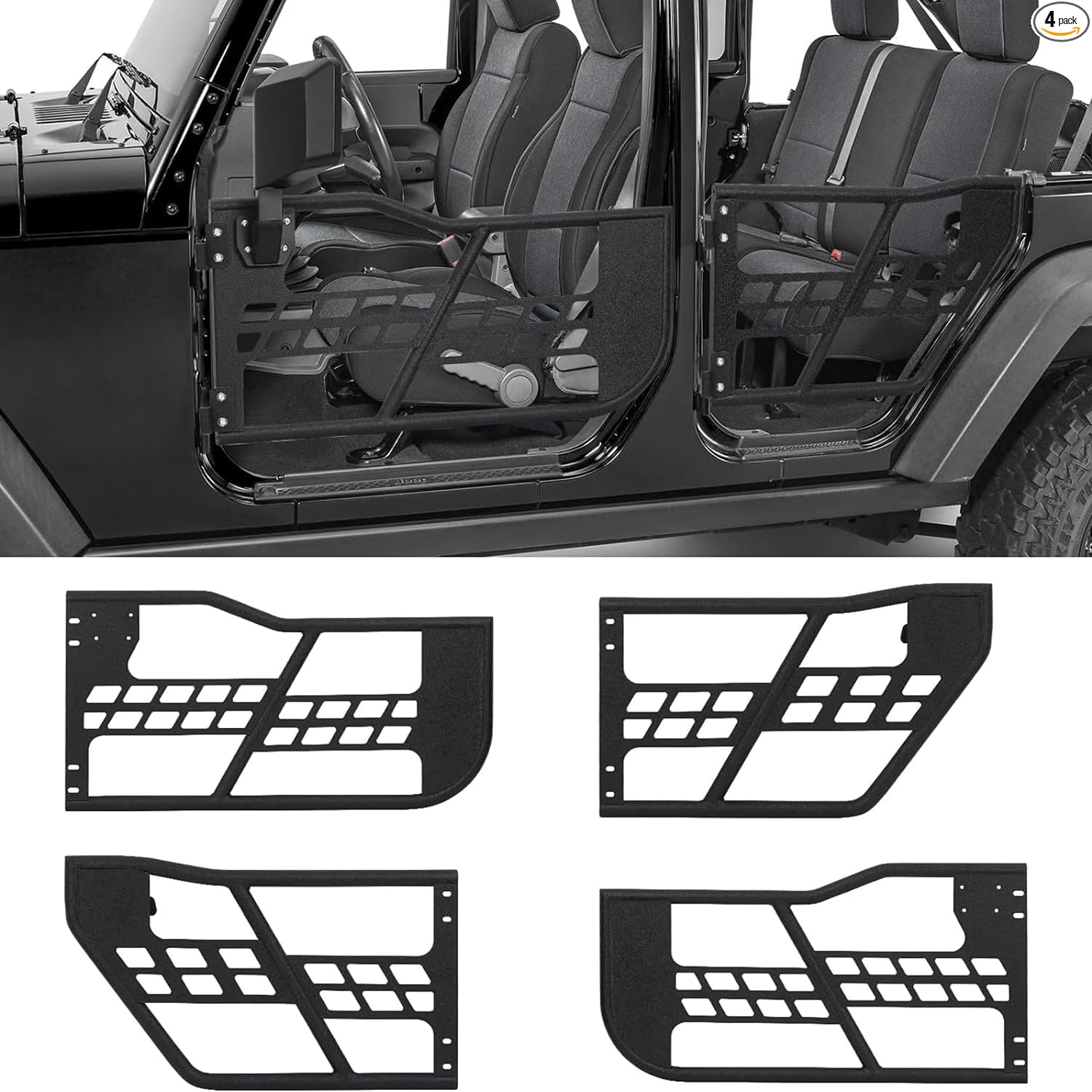
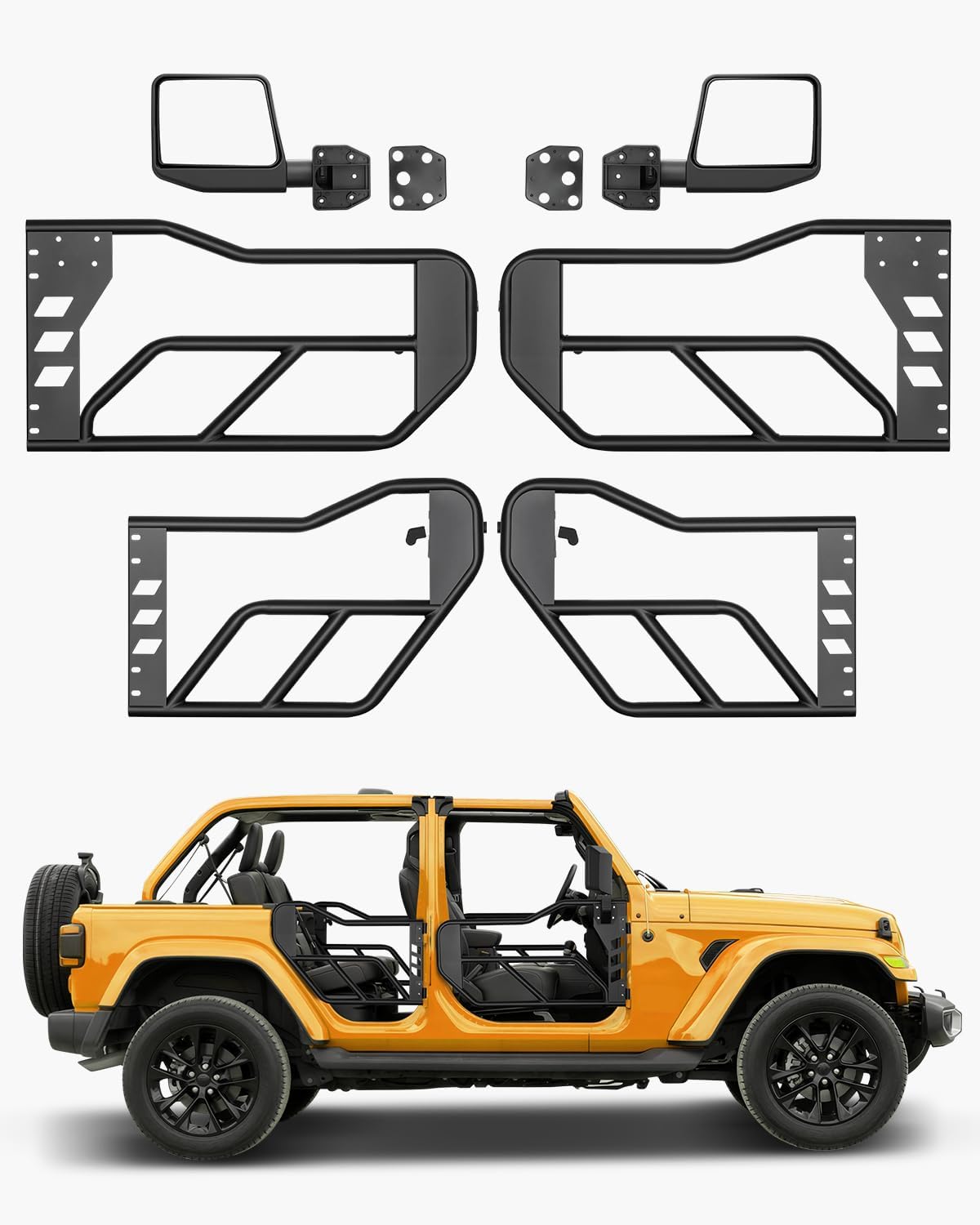
Aftermarket tube doors for the JL cost much less for a full four-door set, which is roughly the price of a single factory half door from the dealer. You get a steel tube frame, a working latch that connects to your factory striker, a mirror mount, and varying weld quality depending on the brand.
The Hooke Road set includes front and rear doors with installation hardware. The MERXENG fat-tube set is a lower-cost option and uses a wider-diameter upper tube for a chunkier aesthetic; mirrors aren't included. The VEVOR set ships with DOT mirrors already mounted, which removes one item from your install list.
They're lighter than full doors, and in most cases lighter than factory half doors too. That matters if you're storing a set in the garage between swaps. Because there's no sheet metal or door panel, they also pull off and go back on faster once you've run the process a few times.
The tradeoffs are real: no upper weatherstripping means wind and rain reach you from above the beltline more freely. Latch feel and panel tolerance won't match factory. Some cheaper sets flex more than you'd want on a washboard. And if the set doesn't include mirrors, that's an additional line item.
This is where the two options diverge most practically for street use.
With factory OEM half doors on a JL, your factory mirror stays attached to the door. Swap the full door for the half door and your mirror situation is unchanged. You're street legal everywhere that requires a driver's-side mirror without thinking about it. (Confirm your own state's vehicle code for the specifics — requirements vary.)
With aftermarket tube doors, you need to fill the mirror mount yourself unless the set ships with mirrors. Most states require at least a driver's-side mirror; many require both sides. Some tube door sets include basic mirrors — the VEVOR set includes DOT mirrors front and rear. Others (Hooke Road, MERXENG) do not include the mirror head.
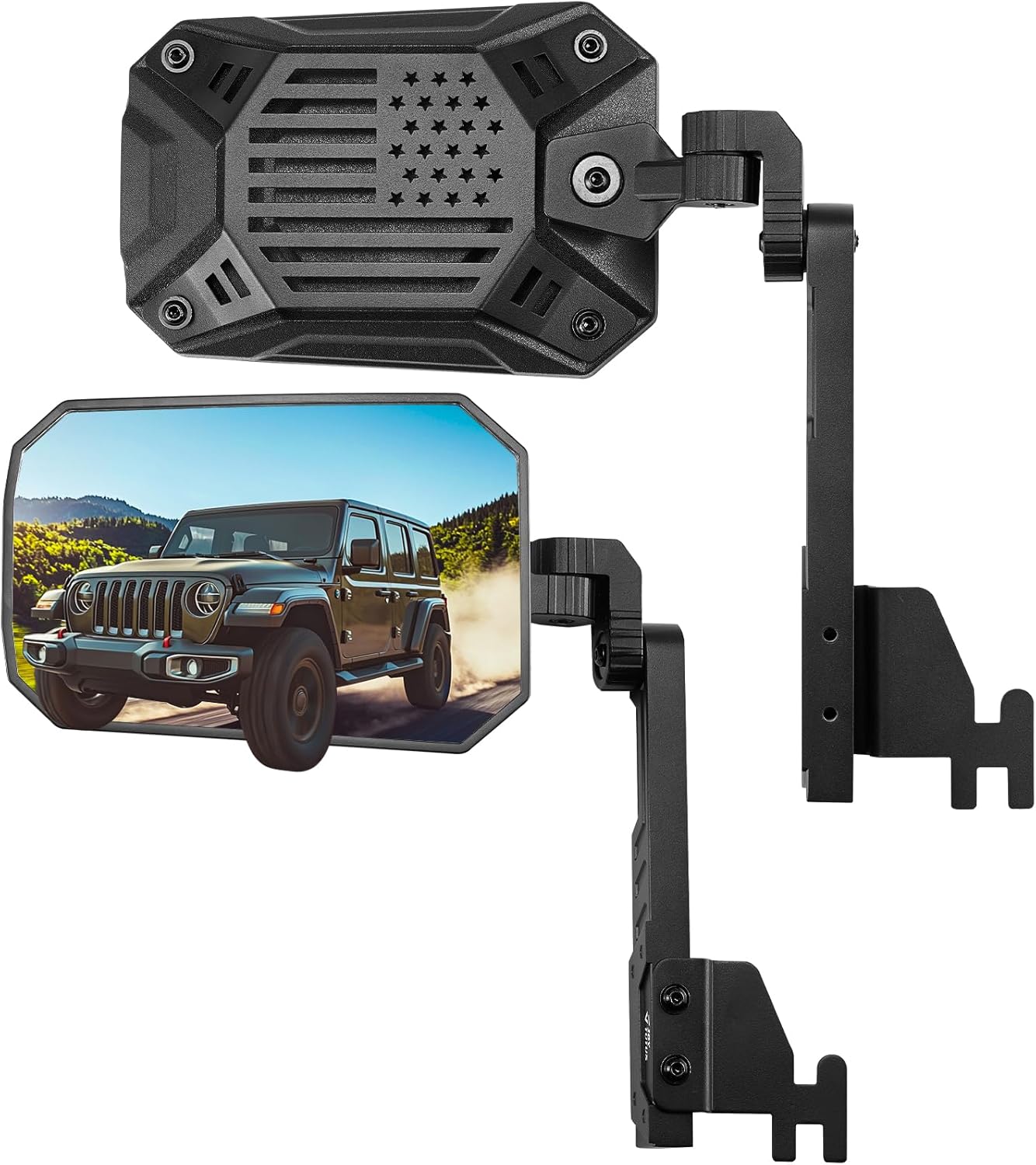
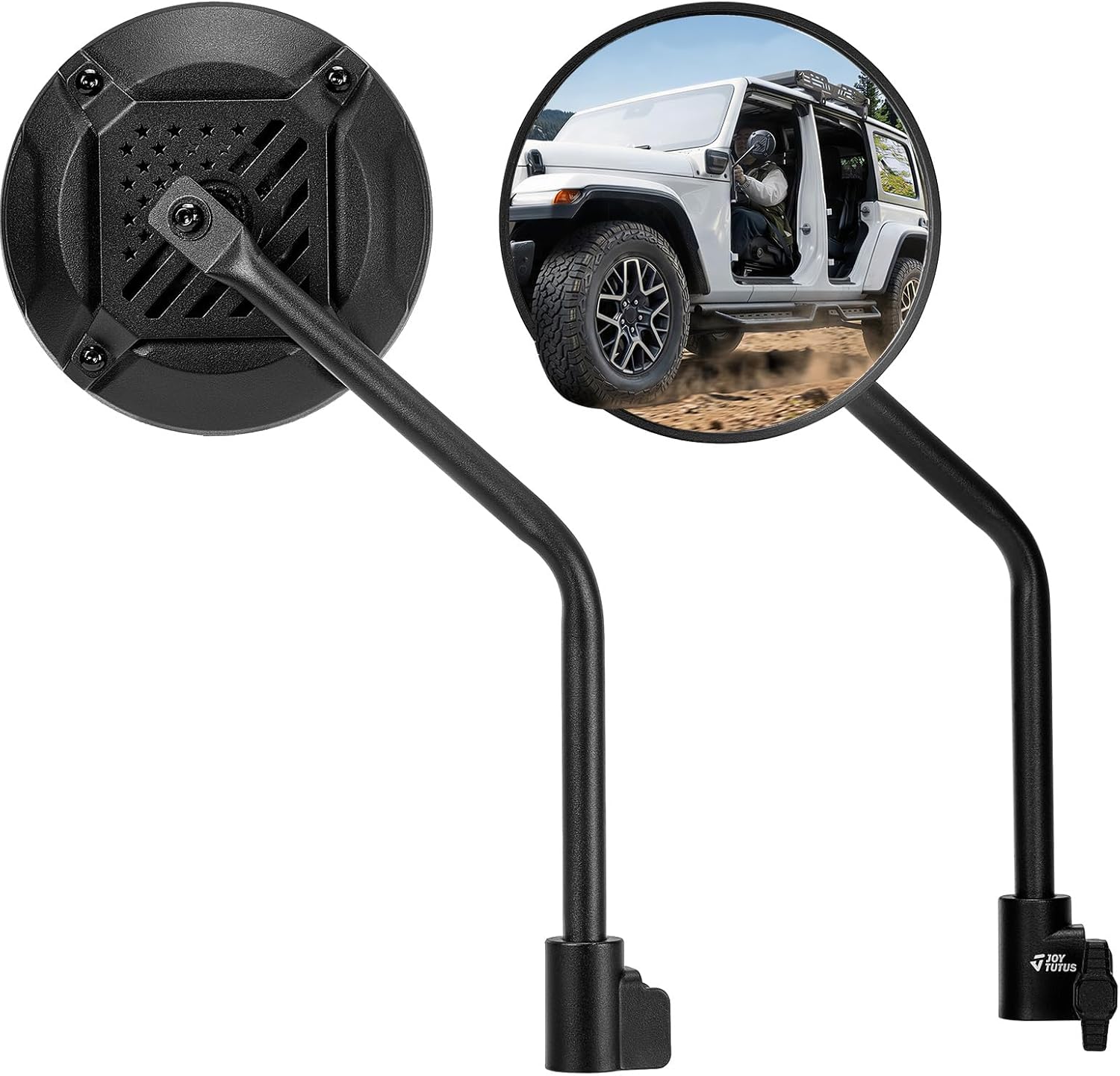
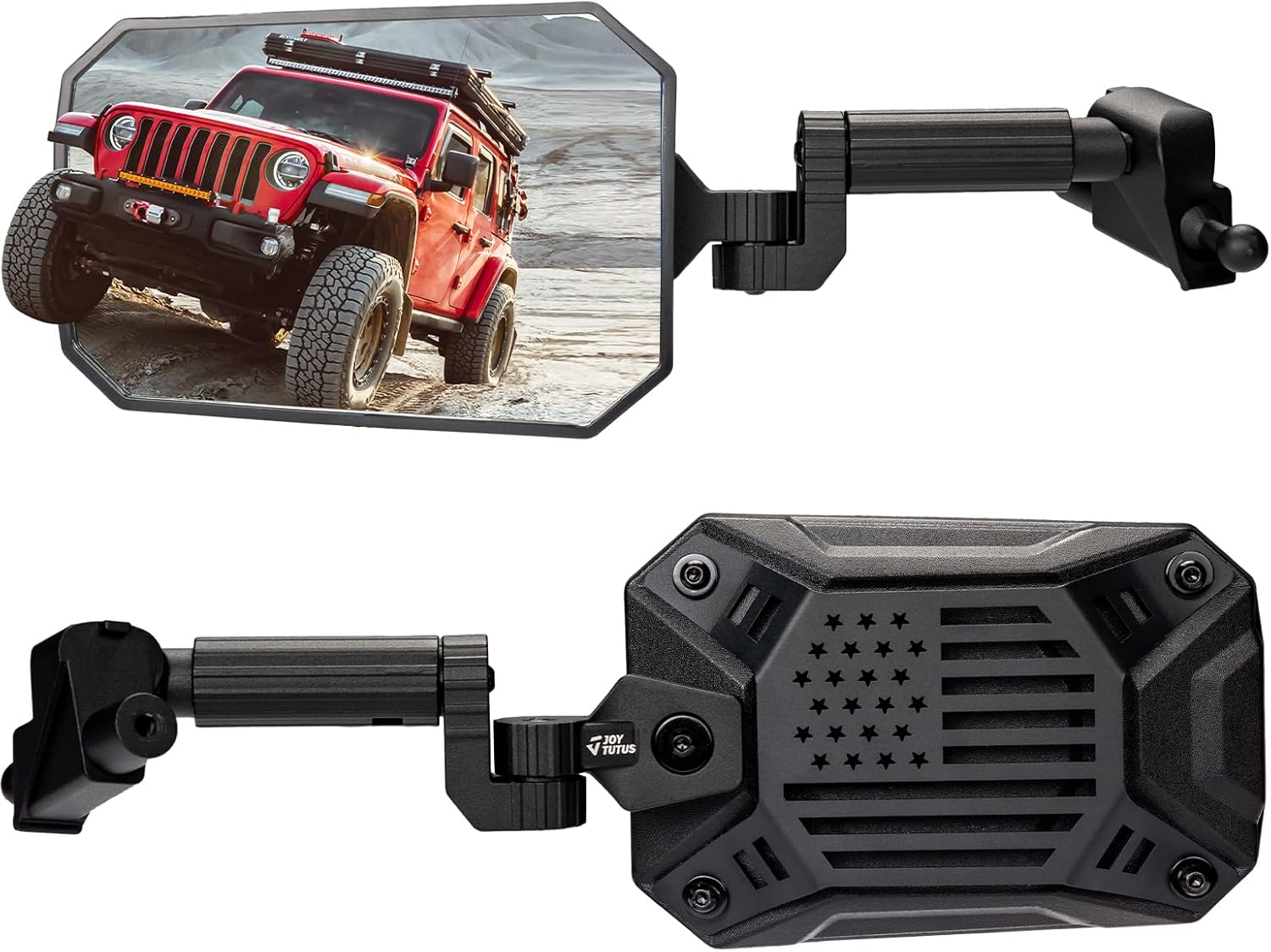
If your tube door set doesn't include mirrors or the included ones feel marginal, a solid hinge-mount or quick-release pair is the right follow-up purchase. The hinge position on most tube doors accepts the same mirrors that work on a bare hinge when you go fully doorless, so if you already have a set dialed in, you may not need to buy again.
Hinge-mount and adapter mirrors for when your tube doors don't include them. Every link goes to Amazon.
Both options give you a lower structure where the full door used to be. What you get above the beltline is very different.
OEM half doors have a proper door seal on the lower section. Water, mud, and low wind pressure stay mostly out below the beltline. Above it, you're open — same as tube doors.
Aftermarket tube doors have the lower tube frame but no weatherstripping. At trail speeds it barely registers. On the highway you'll notice wind wrapping in from the lower opening in ways a sealed factory door doesn't allow. Rain comes in more freely.
For both options: regular highway miles in variable weather means you'll feel the elements. Neither option fully insulates you from what you signed up for. They just shift where the wind enters.
OEM Jeep half doors use the same hinge bolts as the full doors, a door check strap, and a latch cable on power-window trims. The process mirrors full door removal but without the glass and wiring complexity. Budget 20–30 minutes for a clean four-door swap the first few times, less once you have a routine.
Aftermarket tube doors are a simpler pull. No wiring, no power window cable, typically just hinge bolts and the latch. Once you've run the swap a couple of times, a four-door set comes off in under 30 minutes with hand tools.
Neither is as fast as a bare-hinge doorless setup with quick-release hardware, but both get you into a workable rhythm fast enough that swapping on a Friday night isn't a project.
On the trail, aftermarket tube doors have the practical edge. Lighter weight changes how the Jeep carries itself through off-camber sections. The open tube frame gives your spotter a clean line of sight to your rear corners. And if a branch or rock catches a tube door, replacing a tube-door piece hurts considerably less than a damaged Mopar half door or a dinged full factory door.
On pavement and at highway speeds, factory OEM half doors win on mirror integration, panel fit, and the read they give in a parking lot. If you commute or cruise on weekends and go doors-off mostly in good weather, the quality gap is real and visible. The factory product looks like it belongs because it does.
The honest split: trail-first rigs are better served by aftermarket tube doors. Daily drivers that occasionally go off-road are better served by OEM half doors — if the budget is there.
Four questions close this out:
No wrong answer exists here. Both options get you the same core thing: the wind, a grab bar, and a legal place to mount your mirrors.
General guidance for Jeep Wrangler JL and Gladiator JT owners. Mirror and equipment laws vary by state, pricing changes, and fitment notes should always be confirmed against your specific model year and trim. Not legal or mechanical advice.
Pick your setup and stop reading forums. If budget is the question, tube doors at a fraction of the factory price get you the same wind and the same grab bar. Sort the mirror situation before you pull out of the driveway.