
KKIKK Paracord Grab Handles (2-Pack, Roll Bar)
Check price on Amazon
Buy →Pull the doors off a JL or JT and you have removed the door frame most passengers would grab first. The five stock handles that remain are foam-and-fabric units that get slippery when wet and peel within a season. Three categories of replacements exist, and the right one depends almost entirely on how rough the terrain gets.
The doors-off crowd figured out the grab handle problem the hard way: you do not notice how often a passenger reaches for something until there is nothing worth grabbing. Three categories, three use cases.
The JL Wrangler and JT Gladiator come with five grab handles from the factory: two on the A-pillars, two on the B-pillars, and one in the rear cargo area. They are thin foam over a plastic core, covered in fabric that peels away from UV and gets slick with any moisture.
With the doors on and the Jeep parked in a garage most of the week, this is a minor annoyance. Doors-off on a trail, it changes character. The door frame your passenger reflexively reaches for is gone. The A-pillar handle is the closest substitute, and if it is slippery from sunscreen or a water crossing, they are reaching into nothing.
Three categories of aftermarket handles address this, at different price points and for different uses.
Paracord grab handles swap onto the same roll-bar mounting points as the stock units. A loop of 550-lb paracord replaces the foam-and-fabric original. No drilling, no extra hardware beyond what comes in the pack, and the install takes about five minutes per handle.
The grip is the real upgrade. Woven 550 paracord has texture you can hold onto when wet, it does not deteriorate in UV the way the OEM fabric does, and it does not peel. The 550-lb rating refers to the tensile strength of the cord itself, which is far beyond any load a passenger puts on a grab handle.
A two-pack is usually the least expensive option. That covers the two roll-bar positions where most passengers actually reach. For a pavement-driven or light-dirt Jeep where the concern is comfort and longevity, paracord is where most owners stop.
Roll-bar paracord grab handles: drop-in swap, fits JK through JT, no drilling. Every link goes to Amazon.
Billet aluminum handles bolt to the same roll-bar points as the stock units. The grip surface is machined or knurled metal, and most include a rubber or silicone insert to keep the aluminum from getting too hot in direct sun.
The structural difference from paracord is rigidity. Aluminum does not flex under lateral load. When a passenger is bracing hard on a side-hill or a sudden drop, a rigid handle gives better purchase than a loop of cord. For moderate to aggressive trail use, that matters.
Cast aluminum costs less than machined billet with anodized finish. Most list JL and JT fitment; some cover JK as well. Search "JL grab handles billet" on Amazon to find current options. The fitment notes are accurate enough that you can shop by model and year.
Paracord vs. billet is mostly a terrain question, not a budget question.
On pavement and light dirt, paracord is enough. A passenger on a street-driven Jeep is bracing gently, not loading the handles against rocks. Paracord grips, lasts, and costs less than a tank of gas. Replacing a worn set two years from now is the same conversation.
On moderate to aggressive trail terrain, billet makes more sense. When a passenger is actively holding on through a rock crawl or a steep technical descent, the rigidity of aluminum and the bite of a machined grip surface give more confidence. Paracord can slip through wet fingers; knurled aluminum does not.
For a trail rig with passengers in serious terrain, some owners add roll-bar-mounted tube handles that clamp directly to the cage with U-bolts. These are larger and more substantial than any stock-point replacement. Search "Jeep JL roll bar tube grab handles" for what is currently available. They install without drilling.
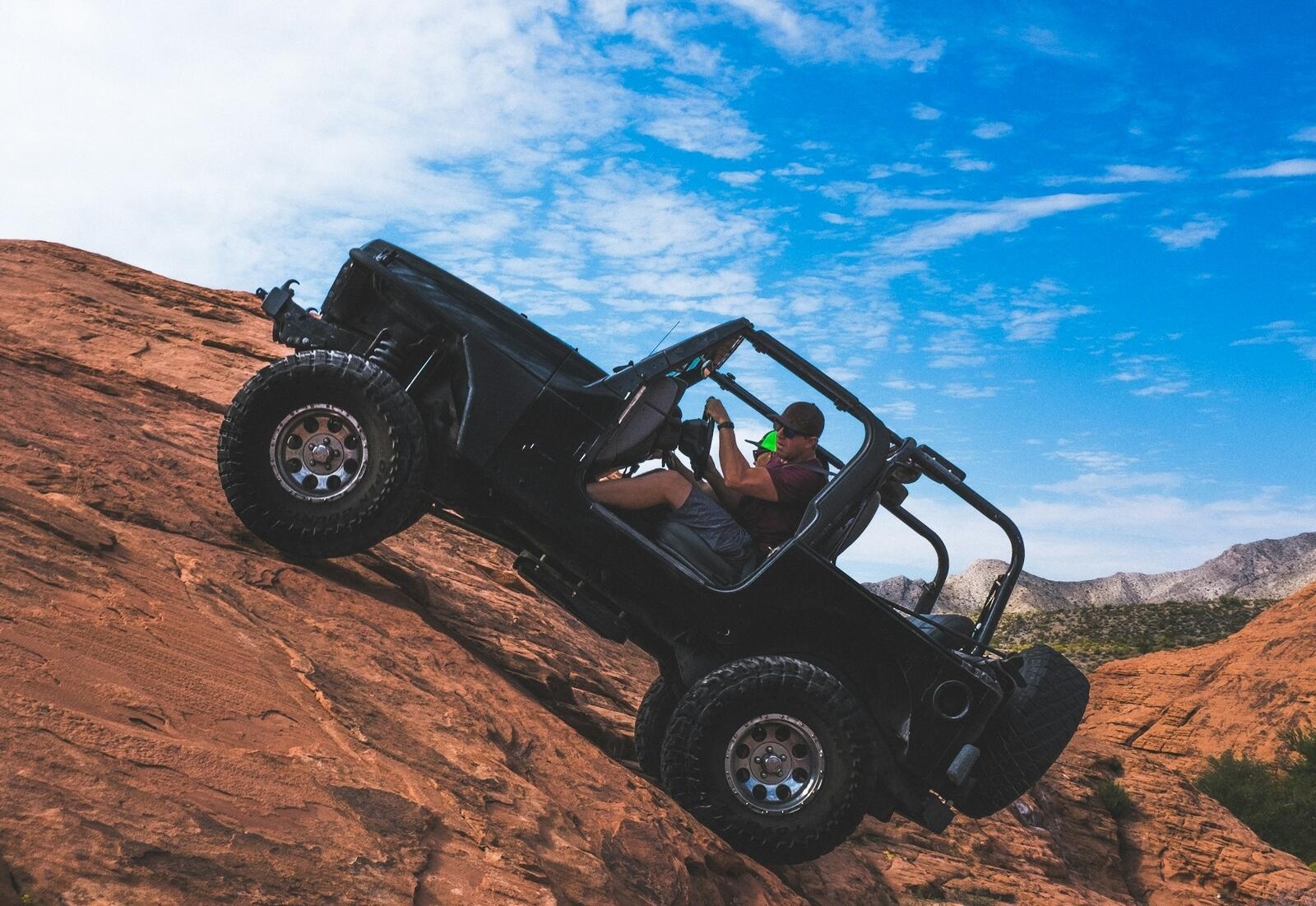
All three options use the same attachment points on the roll bar. The stock handles use a loop-and-clip system: the attachment strap feeds through the bar on the cage and clips or buttons closed. Paracord handles use the same method, so the swap takes about five minutes and requires no tools.
Billet handles typically use a bolt-through mount with a washer and lock nut, or a strap with a screwed-down keeper plate. The hardware comes in the box. A Phillips screwdriver or small socket set handles it.
Torque the fasteners so the handle cannot rotate along the bar. A grab handle that spins away from a reaching hand on a trail is worse than no upgrade at all.
Replace all five at once if the OEM units are aging. They are all from the same production run and probably the same condition. Two new handles and three slippery originals is not a real upgrade.
General guidance for Jeep Wrangler JL and Gladiator JT owners. Fitment varies by year and trim; confirm before buying. Grab handles are a grip comfort upgrade, not a certified safety restraint system.
The stock handles are the cheapest fix on a JL or JT that actually changes something for a passenger. Paracord for the street rig, billet for the trail rig. Swap them before the next time someone reaches for a grip and finds nothing worth holding.