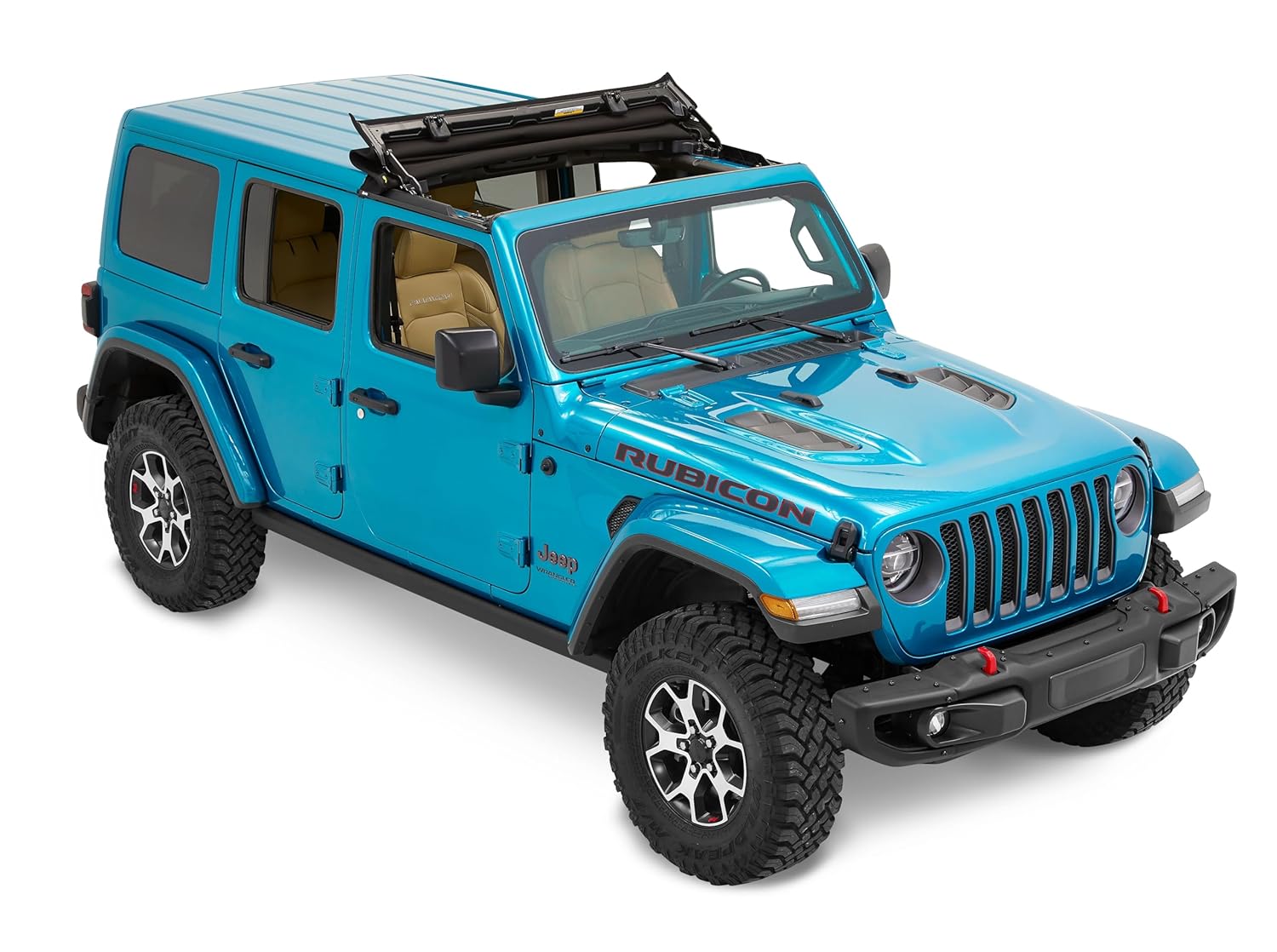
Bestop Sunrider for Hardtop
Check price on Amazon
Buy →The sky doesn't care that you pulled the doors off this morning. When it turns, you need a top you can deploy fast, something on your body, or both. What actually works and what's wishful thinking, by category.
Doors-off in the rain isn't a rookie mistake. It's a judgment call, and rain often shows up uninvited. The question is whether you've got the gear to stay dry, or at least get home without wringing out your seat.
With the doors on, a factory Wrangler handles rain reasonably well: door glass intercepts the angle, seals keep the worst of it out of the cabin. Take the doors off and both are gone. Rain doesn't only fall on you from above. At speed, wind-driven rain comes in from the side, right through the opening where the door used to be.
A top helps with vertical rain. It doesn't do much with the sideways spray you pick up at 50 mph. The JK, JL, and JT are all the same way on this: open sides mean open sides. The gear that actually addresses it falls into four things: something over your head, something on your body, something protecting the cabin interior, and optionally some structure on the side opening itself.
Your first line of defense when the sky turns. The Bestop Sunrider flips forward over the front seats in under a minute without getting out of the Jeep. A frameless soft top takes 5-10 minutes but seals the whole cabin. Keep one of these stowed on any day the forecast is uncertain.
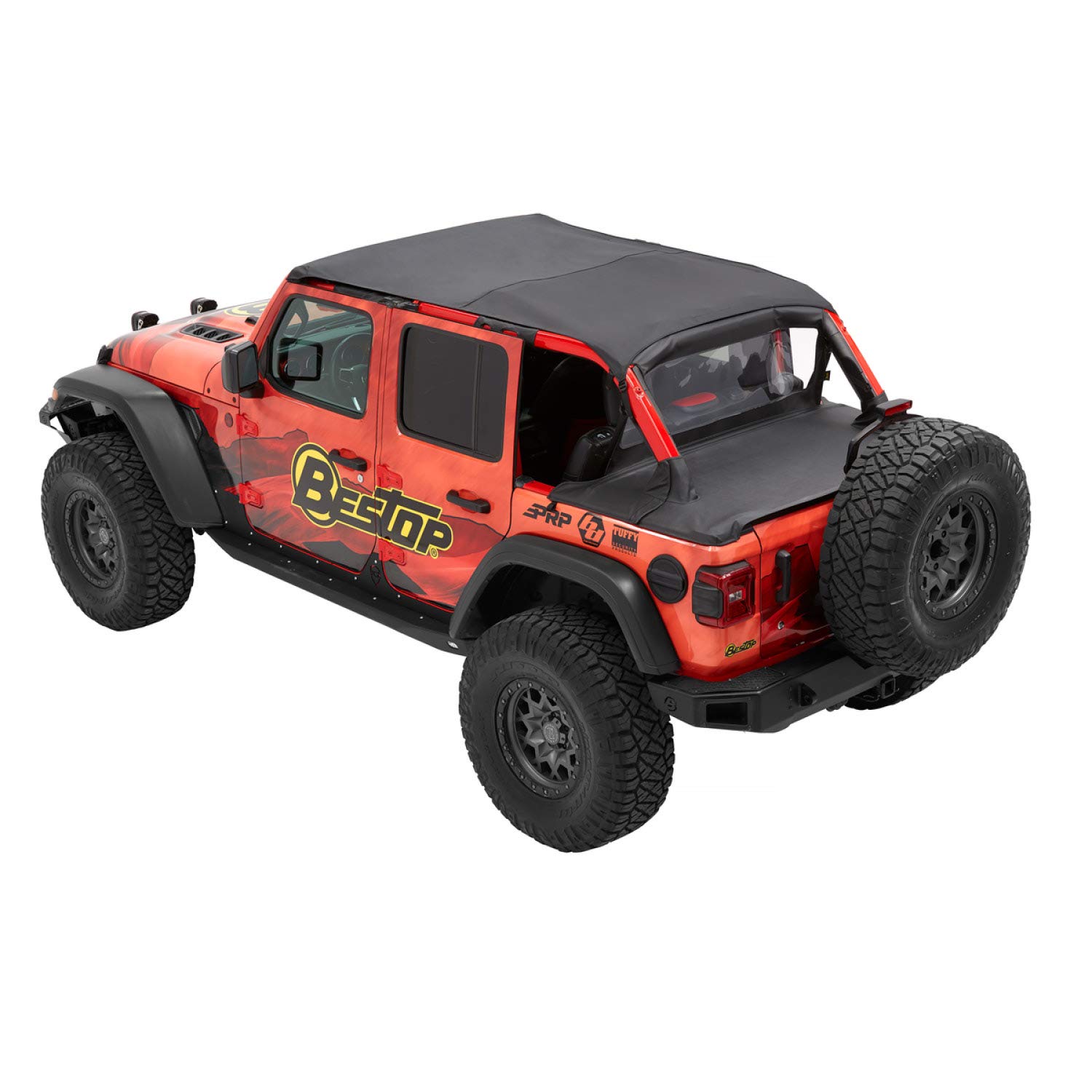
The Bestop Sunrider for Hardtop is the fastest deployable option on a JL or JK hardtop: it replaces the factory freedom panels and folds forward over the front seats in under a minute without stopping. In light-to-moderate rain, you can be covered before the next light. It doesn't seal as tight as a full soft top at the rear edges, but the speed-to-coverage tradeoff is hard to beat on a hardtop Jeep. There's no equivalent for the JT Gladiator.
A frameless soft top takes longer, usually 5 to 10 minutes the first few installs, and requires pulling over and stopping. The payoff is better coverage of the whole cabin and a tighter rear seal against sustained rain. If there's any chance the weather turns on a longer drive, having one folded in the cargo area is cheap insurance.
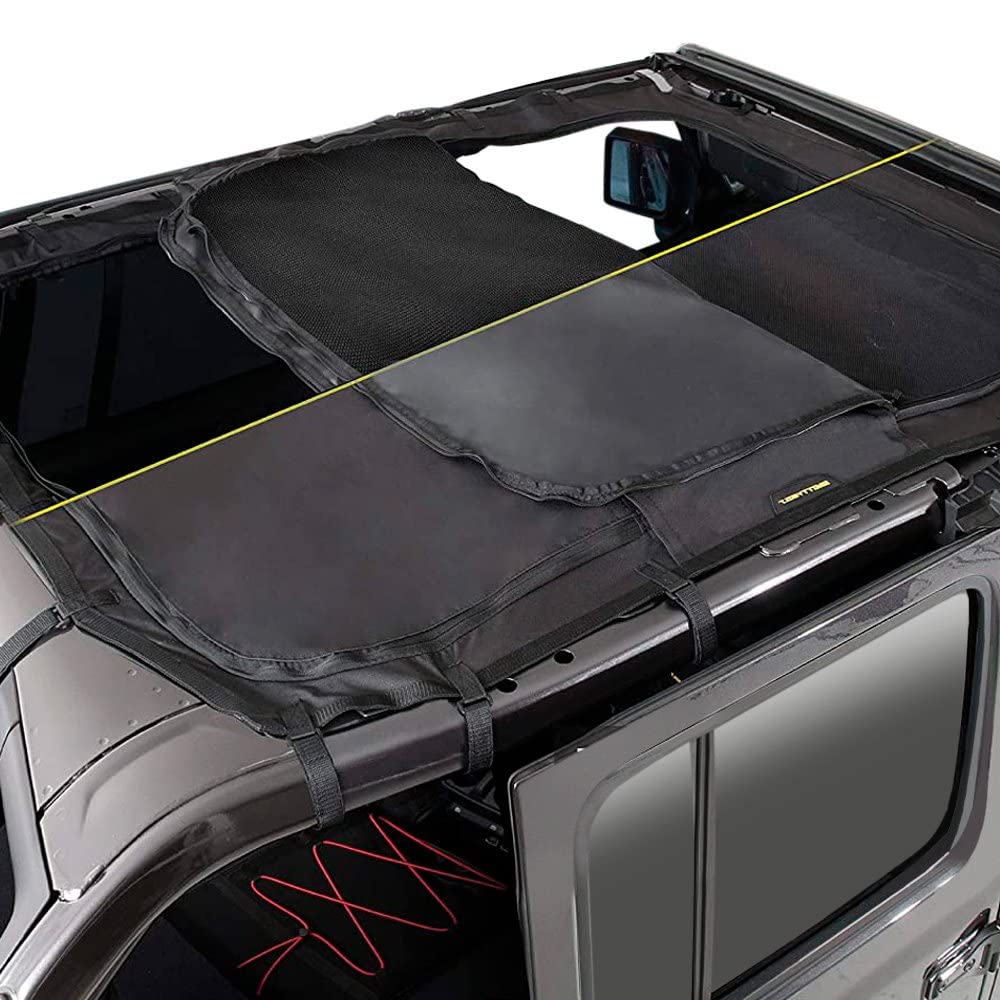
The Smittybilt shade top is fast and covers the front seats, but it's a sun shade with skylights, not a rain top. In a light drizzle it helps; in real rain, water still comes through. Worth knowing before you reach for it in a downpour.
A deployable top handles the ceiling. It doesn't handle the sides. At speed, wind-driven rain still gets through the door opening regardless of what's overhead, and in a hard rain even a good top lets moisture in around the edges.
A packable waterproof jacket stored under a seat or in the rear bin is the backup plan that takes up almost no space. The word to check on a jacket label is waterproof, not water-resistant: water-resistant fabrics soak through in 20 minutes of steady rain. If you're doing a day out with any uncertainty in the forecast, one per seat is worth it.
Ponchos are cheaper and easier to throw in the back as a backup, but they don't seal around the wrists and they catch wind badly at highway speed. On a moving vehicle, a packable rain jacket is more useful than a poncho every time.
Open sides mean the cabin gets wet regardless of what's overhead. A cargo liner, rear bin, and console organizer keep water and mud out of the places that take days to dry. They earn their keep on any doors-off day, not just rainy ones.
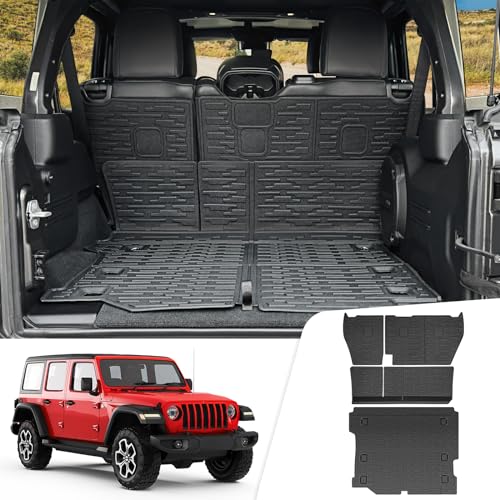


Cloth seats are the obvious target. Water soaks in fast and takes hours to dry, and a wet interior in a closed garage after a rainy day will smell like mildew by morning. A cargo liner or seat cover doesn't stop every drop, but it means pulling out waterproof material at the end of the day instead of pressing towels into foam.
The cargo area is the second thing. With the rear doors off as well, the cargo floor is exposed from two directions. A liner with raised edges catches most of it and protects the carpet underneath, which is nearly impossible to dry once it's soaked through.
The console and electronics tend to get overlooked. The stock JL and JT center console has a drain plug in the cupholder tray, but water still pools in crevices. Phones, chargers, and anything else in the console are at real risk in hard rain. A waterproof organizer, or a zip-lock bag as a minimum, is a habit worth building.
A little, in specific conditions. Not much in others.
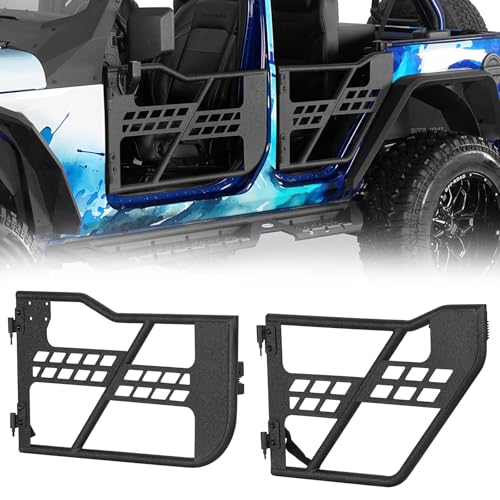
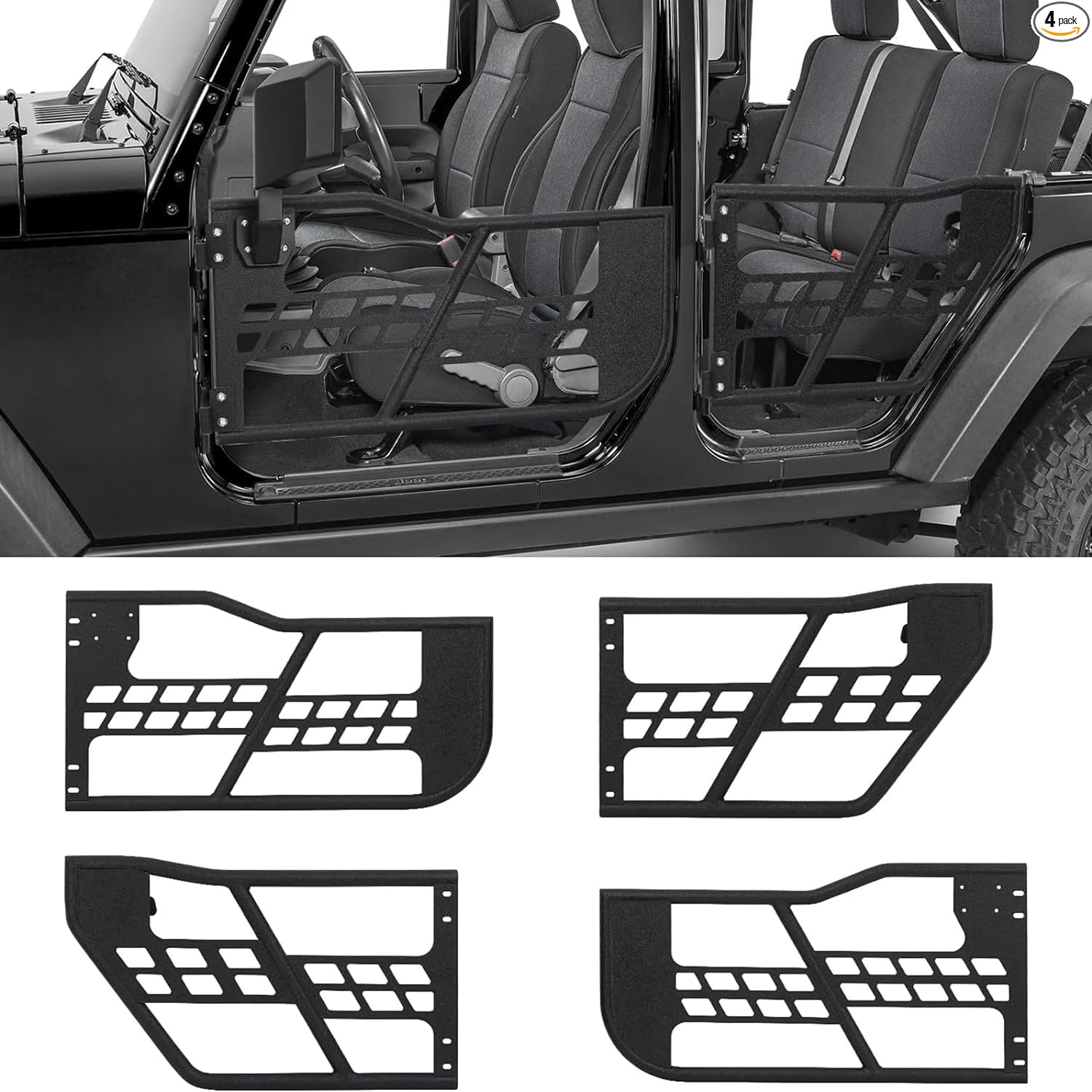
Tube doors cover the lower portion of the door opening with a frame and often include a lower net or panel. In a straight-down light drizzle at low speed, they block some road spray from the wheels and catch some rain coming in at the bottom of the opening. That's real.
In actual rain at highway speed, the open frame above the belt line is where water gets in, and tube doors don't address that. Wind-driven rain at 55 mph still comes through the open upper portion of the frame. Some tube doors include a mesh upper section, which reduces airflow and wind noise but doesn't stop water.
Tube doors are worth running for airflow, trail brush protection, keeping passengers contained, and a more open feel than full doors. Rain protection is not the reason to buy them. If you already have them installed when rain starts, they make a small difference. Combine them with a top and rain gear rather than counting on them alone.

Not rain gear on their own, but better than a fully open door opening in light rain and road spray. Excellent for trail protection and airflow. The rain benefit is real but secondary — combine with a top for actual coverage.
Rain intensity matters more than rain itself. A Wrangler with a deployable top and waterproof jackets on board can handle a lot. A doorless Jeep with no top and no gear is a different situation.
The doors-off forecast tool scores the week for your area and calls each day based on wind, temperature, and precipitation. Free, nothing stored on our end. Check it before you commit to a day out.
General guidance for Jeep Wrangler and Gladiator owners, not safety or legal advice. Weather conditions vary, and driving in heavy rain or a storm carries real risk regardless of top or gear setup. Use your judgment on the day.
Check the sky before you commit. The doors-off forecast scores the week for your area and calls each day on precipitation, wind, and temperature. Free, nothing stored on our end.