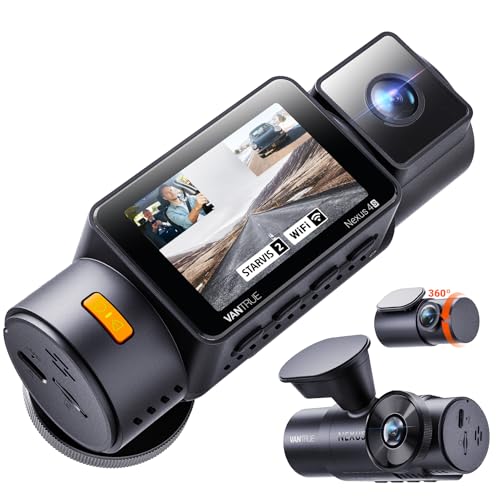
Vantrue N4S 3-Channel Dash Cam with GPS & Wi-Fi
Check price on Amazon
Buy →Pull the doors off and the mount options most dash cam guides recommend disappear with them. Door-frame brackets and side-window clips are both gone. What stays is the windshield. Get the suction right, the camera sealed against trail dust, and the loop recording tuned for washboard roads, and you have footage worth keeping.
Most dash cam buying guides are written for sedan drivers. The install is different on a doorless Jeep, the specs that matter are different, and the camera that holds up is different. This is the doors-off version.
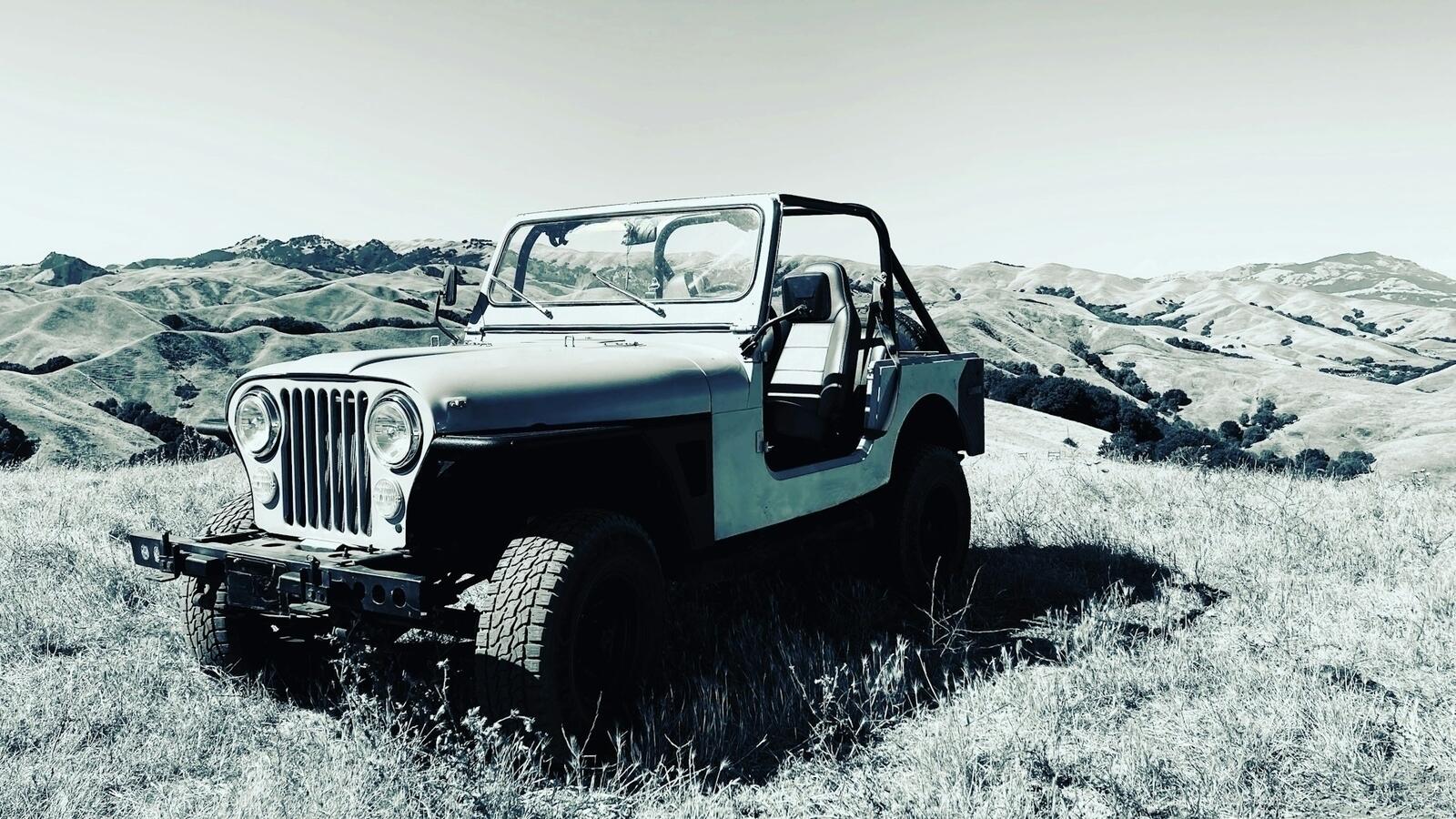
On a standard car install, you have options: windshield suction, a clip over the rearview mirror, an A-pillar bracket, a side-window mount. On a doors-off Jeep, most of those disappear. The door frame is gone. The window glass on the sides is gone. What you have is the windshield, and that is where the camera is going.
The suction cup becomes the whole mount in a way it usually is not. Cheap suction mounts fail under sustained vibration, and a Jeep running washboard trail road generates a lot of it. The camera also sits in a more exposed position, with no door glass or B-pillar to buffer wind and dust from the sides. A poorly sealed unit will have grit in its lens housing before you get back to pavement.
The four specs that separate a capable camera for doors-off use from one that fails on a trail:
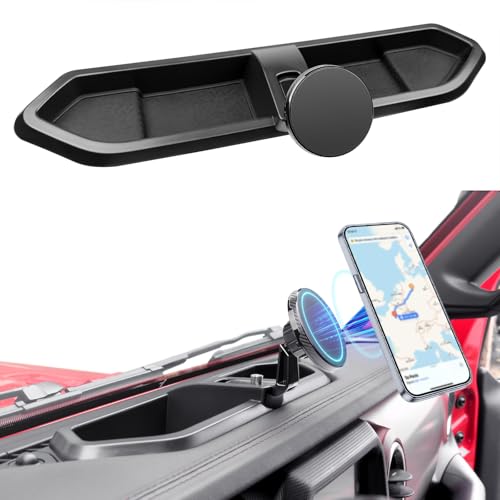
The sealed 4K benchmark for open-air Jeep use, plus a versatile JL/JT device mount for secondary electronics. Every link goes to Amazon.
For a doors-off Jeep where the windshield is the only anchor and the camera runs in open air, the N4S is the current 4K benchmark. The front camera records at 3840x2160 at 30fps and carries an IP67 weatherproof rating on the front housing, which means dust and light rain do not reach the sensor. It uses a Sony STARVIS 2 image sensor for low-light recording, which matters when you are pulling off a wooded trail after sunset.
Other features worth knowing: GPS logging overlays speed and location on the footage, Wi-Fi lets you review and pull clips from your phone without removing the card, and the three-channel setup covers front, interior, and rear. For a doors-off Jeep, the front channel does most of the work, but the interior channel captures what the open cabin sees around you on trail.
Two things to dial in before a trail run: the N4S runs warm under sustained summer recording, so a shaded windshield position helps. The default G-sensor sensitivity is calibrated for smooth roads. Drop it one step before leaving the pavement or it will lock a clip every few hundred yards on rough terrain.
The windshield is the only stable mounting point on a doors-off Jeep. Mount behind the rearview mirror, centered, so the camera occupies the already-blocked zone and does not add to your forward sightline obstruction. This also keeps it out of direct sun on desert runs and reduces heat soak on the camera body.
The suction mount that ships with most cameras works on clean glass in temperate conditions. On a trail rig, the glass accumulates grime and the mount takes more sustained vibration than it was tuned for. Clean the glass at the mount point with isopropyl alcohol before each trip, press and lock the mount, and check it before rolling. Adhesive-backed mounts are more permanent and more stable, but harder to relocate.
On older JK Jeeps with a fold-down windshield, the hinge hardware limits where you can place a mount near the top of the glass. Measure the clear zone before committing to an adhesive pad position.
Parking mode needs continuous low-current power. With the ignition off, the cigarette lighter socket cuts power on most Jeeps, so a plug-in camera shuts down immediately and records nothing while parked.
A hardwire kit runs a fused cable from the camera to the fuse box. One tap goes to a fuse that is live with the ignition on (for normal recording) and one to a fuse that stays live with the key out (for parking mode). The kit includes a low-voltage cutoff set to a threshold around 11.6V to 12V that shuts the camera off before the battery drops too low to start the Jeep.
On a JL or JT, the fuse boxes are accessible under the hood and in the driver's-side footwell. The Vantrue N4S uses a standard mini-USB input and Vantrue sells a compatible hardwire kit. Third-party kits with voltage cutoff also work provided the termination matches your camera input.
An OBD-II power adapter is the simpler alternative: plug into the OBD port and it delivers the same always-on logic without opening the fuse box. Easier to install, slightly messier in the cabin. The OBD port position on a JL (below the steering column) can crowd the footwell if you do not route the cable cleanly.
General guidance for Jeep Wrangler and Gladiator owners. Dash cam placement rules and related laws vary by state and change over time. Confirm your local vehicle code before installation.
One mount, one sealed camera, one hardwire kit. Sort it before the next run and roll with proof of whatever happens out there.