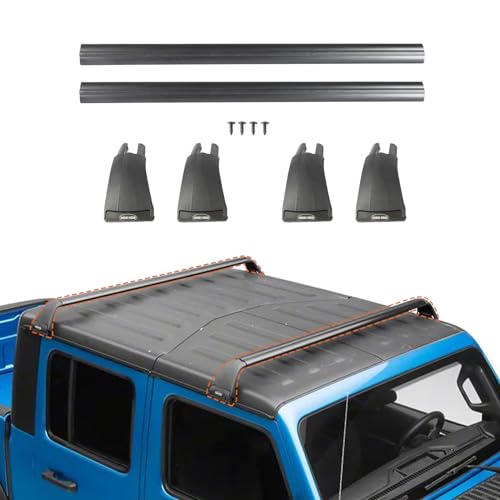
Hooke Road Roof Rack Cross Bars (JK/JL/JT Hard Top)
Check price on Amazon
Buy →With the doors back on, the roof rack equation gets cleaner. Wind turbulence hammering an open cockpit is off the table, so the decision comes down to load capacity, fitment, and how much you actually need to carry. Here is how to get it right the first time.
Crossbars give you a clean, flexible 150-lb platform that mounts in under an hour. A full overland rack gives you 220 lb or more and rails to bolt on lights, an awning, or a rooftop tent. The right call depends on what you are actually hauling. For the same decision with the doors off — where wind turbulence changes everything — see the roof rack guide for doors-off Jeeps.
A doors-off Jeep at highway speed is an open wind funnel. Everything bolted to the roof feeds directly into that experience, and a large platform rack can make a highway run genuinely loud — the leading edge throws turbulence straight into the open cockpit. That one constraint drives most of the rack calculus for doorless builds.
With the doors on, you get those sealed panels back. Road noise is contained, turbulence stays outside the cabin, and the rack on the roof is less of a quality-of-life variable. The decision shifts: now the primary questions are load capacity, fitment for your exact model year, and what you need to mount up there.
Wind noise does not disappear entirely with the doors on. At highway speed, a large flat platform still adds some buffeting and cabin roar, just far less than a doorless setup. That is worth knowing before you bolt on the largest platform available and wonder why the highway feels louder than it used to.
A crossbar system mounts two lateral bars across the hard top, clipping to the factory roof tracks. No mesh platform, no side rails — just a load-rated surface to attach racks, cargo boxes, kayak saddles, light bars, or a basket. For most Wrangler and Gladiator owners who want a roof setup without committing to a full overland build, crossbars are the right place to start.
A bolt-on cargo basket paired with crossbars handles most practical use cases for weekend trips and trail days. The basket drops onto the bars in minutes and adds real storage surface without the weight, cost, or noise of a full overland platform.
150 lb of dynamic capacity, bolt-on install, and a basket that adds cargo surface without the full-rack cost. The practical foundation for most builds.
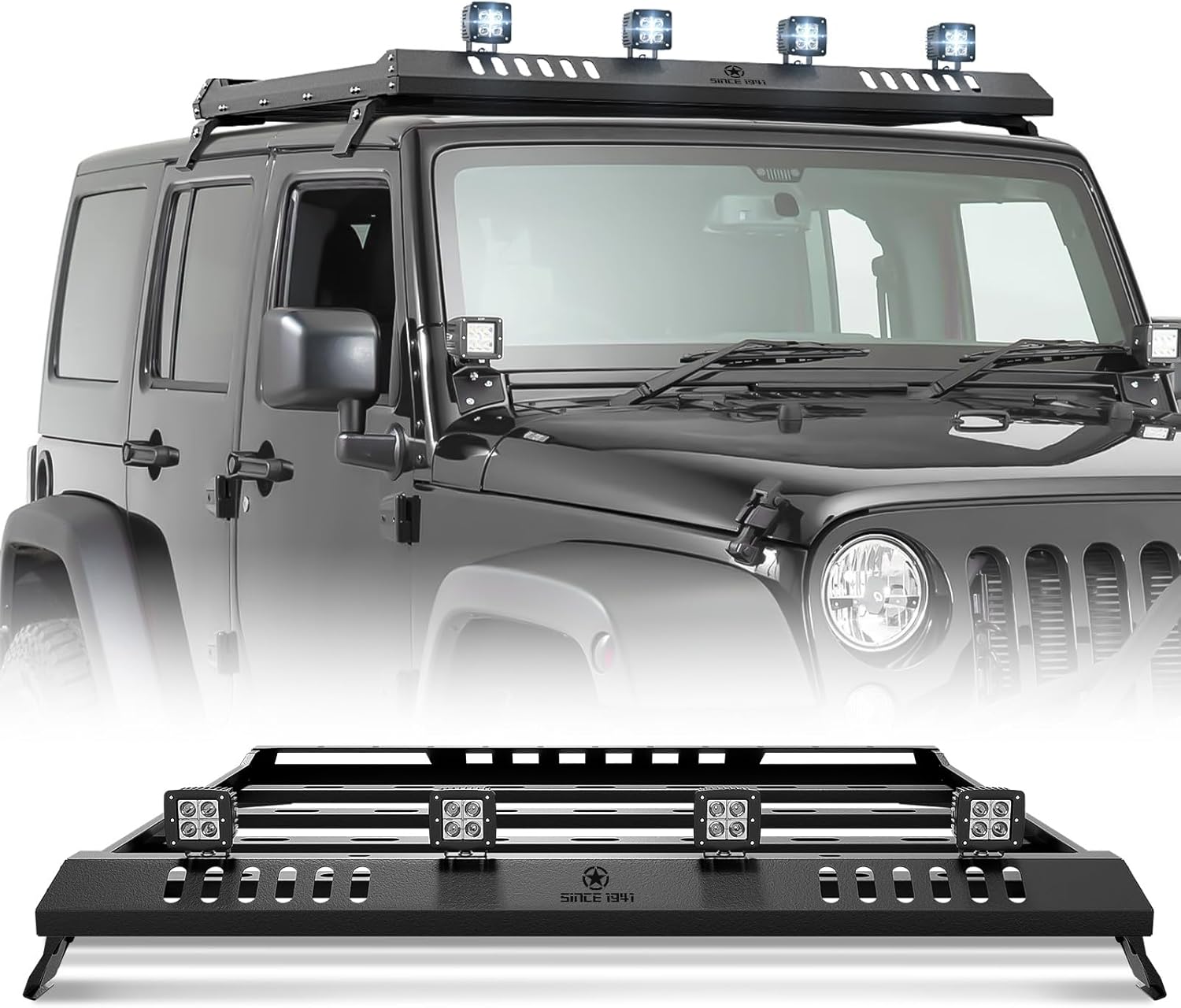
A full overland roof rack is a welded steel or aluminum platform that gives you a continuous, walk-on load surface. Roof tents, coolers, a 5-gallon fuel can, lights along the rails, a high-lift jack mount — this is the setup for multi-day builds that genuinely need the room.
With the doors on, the noise penalty is real but manageable. A full platform adds turbulence at highway speed that you will notice — cabin roar increases, particularly above 60 mph. An aluminum rack with a wind fairing on the leading edge cuts this significantly compared to a bare steel platform with a flat front. If highway miles matter to you, the fairing earns its cost.
For a Jeep that does serious multi-day overland trips and needs the cargo real estate, a full overland rack earns its cost and weight penalty. For weekend trail days where a loaded cargo box gets the job done, crossbars do it at a fraction of the price.
220 lb of dynamic capacity, C-channel rails, and a front wind fairing. The right call when you genuinely need the room.
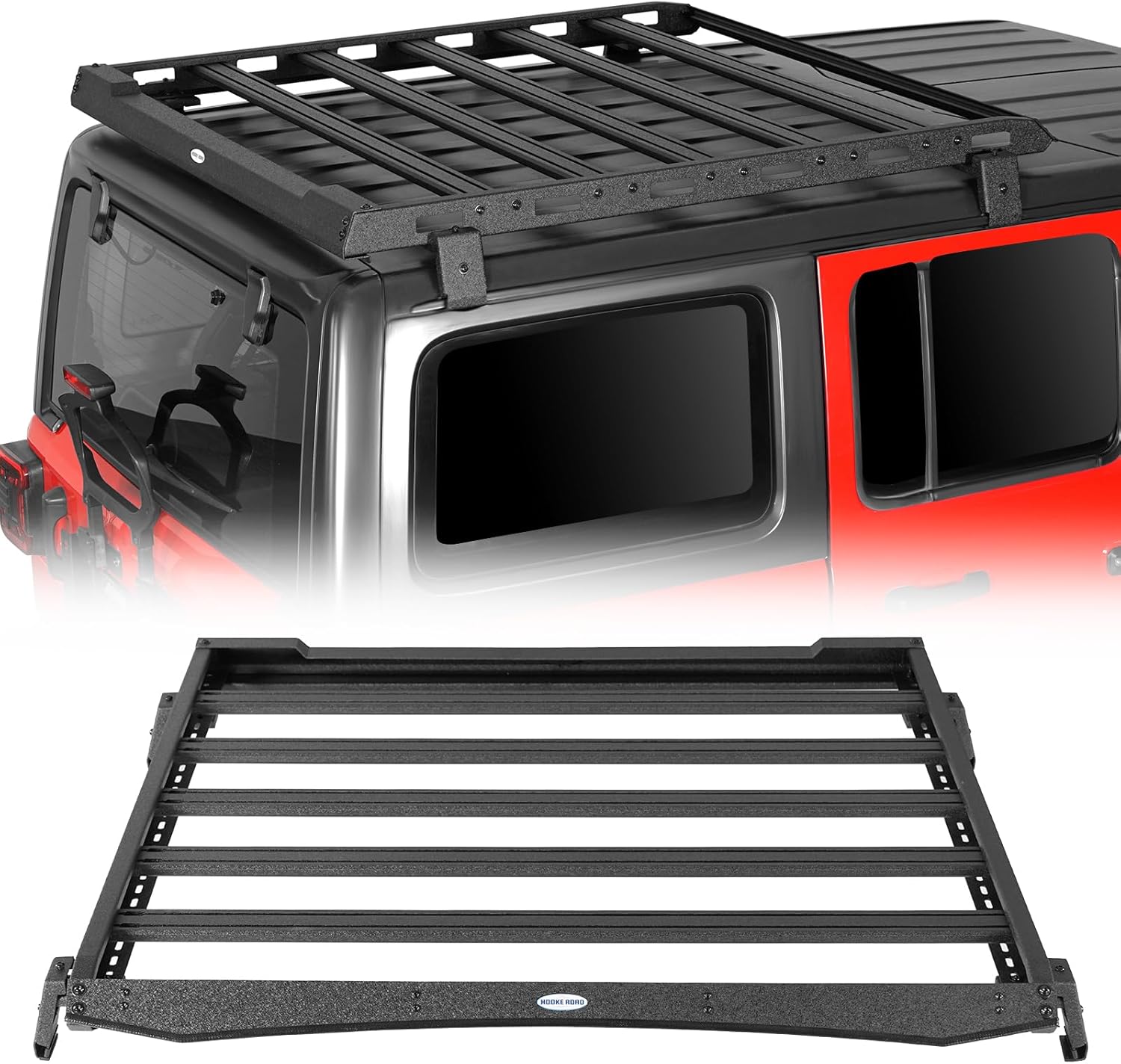
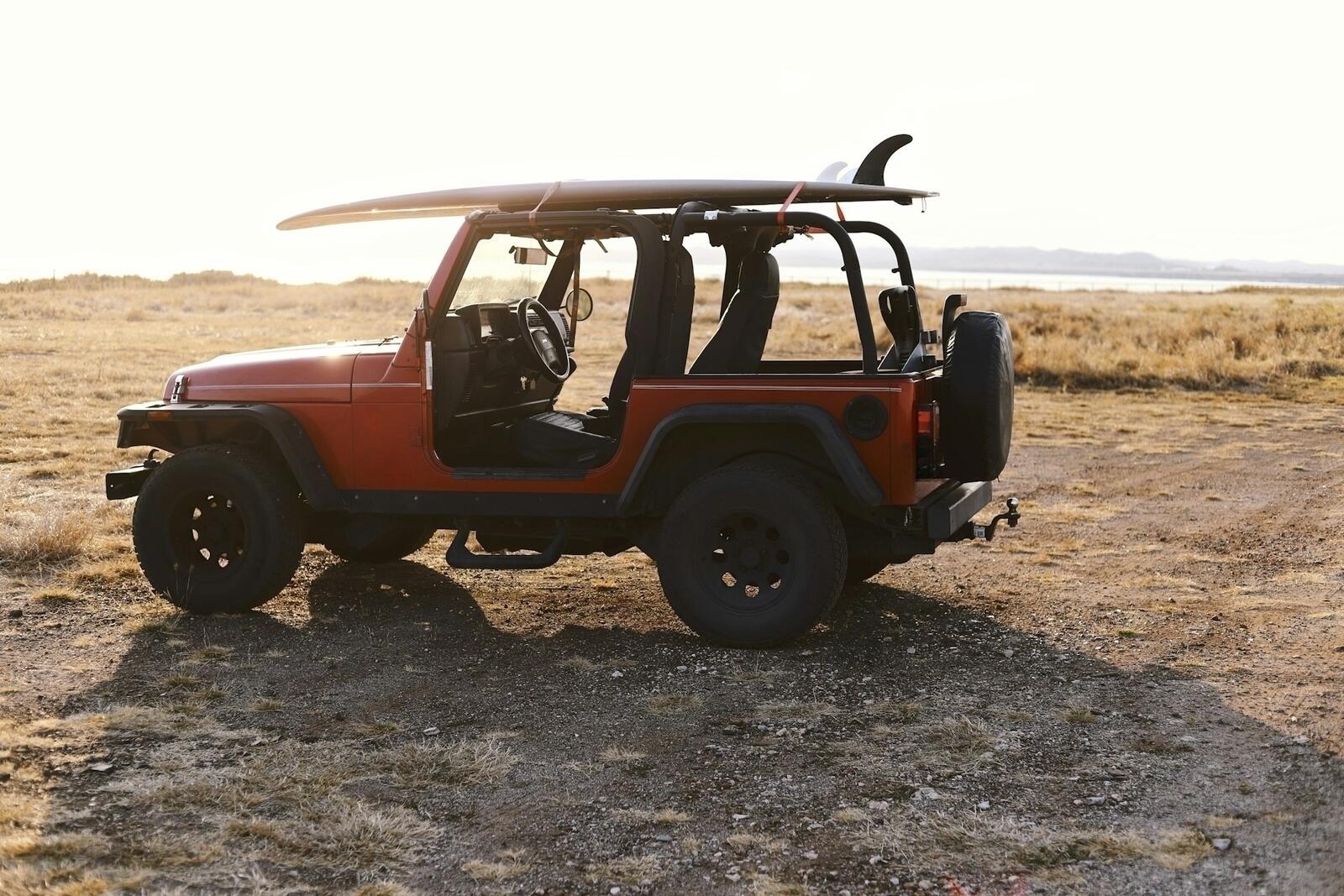
Every roof rack ships with two numbers: a static load rating and a dynamic load rating. The static rating is how much weight it holds when the Jeep is parked. The dynamic rating is how much it can carry while moving, accounting for road vibration, braking, and cornering forces. The dynamic number is almost always lower. Always use the dynamic rating when figuring out how much you can carry on the road.
The other number to know is the factory hard top's own load limit. Your rack's capacity is only as good as what the mounting points can support. Jeep's factory hard top mounting channels have their own spec — most JL and JT hard tops are rated around 150 lb in motion. Check your owner's manual and make sure your loaded rack stays within both the rack's dynamic rating and the hard top's limit.
The Wrangler JK (2007 to 2018), the Wrangler JL (2018 to present), and the Gladiator JT (2020 to present) have different roof rail spacing, body dimensions, and hard top geometry. A rack spec'd for a JL will not fit correctly on a JK, and vice versa. Most quality aftermarket racks are model-specific or sold in JK and JL variants.
Check fitment against your exact model, body style, and year before ordering. A 2-door JL has a shorter roofline than a 4-door JLU; the Gladiator JT is longer. Most rack manufacturers list these variants explicitly in the fitment section. If your combination is not listed, contact the manufacturer before buying.
The doors on a Wrangler or Gladiator are sealed panels with weather stripping, and they do real work keeping road noise out of the cabin. With them installed, a roof rack adds far less interior noise than it would on a doorless Jeep.
At highway speed, a large flat platform still creates turbulence at the leading edge that translates to a dull roar inside. An aero-profiled front fairing cuts this significantly. Round or aero crossbars are quieter than square-profile bars at the same speed. If you do consistent highway miles at 70 mph or above and wind noise is a concern, the fairing on a full overland rack is worth having.
At trail speeds, it is essentially a non-issue on any setup. Wind noise from a roof rack only becomes relevant at highway speed, and it scales with the size of the load surface. Crossbars with an open cargo basket add less than a solid platform rack under most conditions.
General guidance for Jeep Wrangler and Gladiator owners. Load ratings, fitment, and installation requirements vary by product and model year — confirm against the manufacturer's specifications before loading a rack.
Pick the setup that matches how you actually use the Jeep, check your load ratings before you leave the driveway, and pull the doors when the weather holds. The forecast calls the week for free.