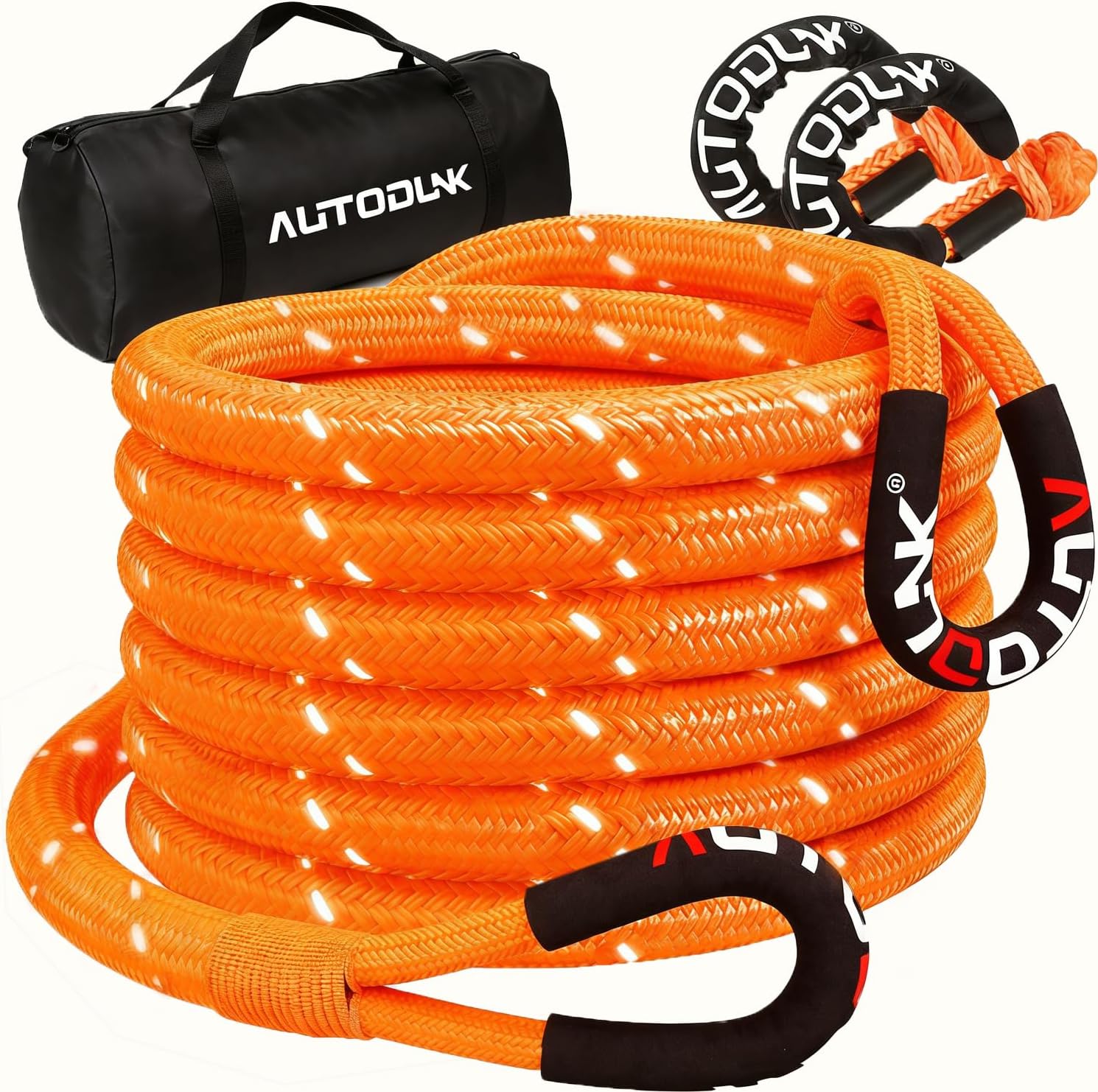
AUTODUNK 1-1/8" × 30 ft Kinetic Rope Kit
Check price on Amazon
Buy →Every Jeep owner staring at their first recovery kit faces the same stack: an entry-level kinetic rope, a mid-tier pair of traction boards, or premium versions at a higher price. The right answer depends on which piece you're looking at. On one of them, buying cheap is a real gamble. On the others, the budget option usually holds.
Recovery gear sits in a duffel in the back until the moment you desperately need it. That's a bad time to find out your kinetic rope's rated load was aspirational.
Walk into any trail-prep conversation and someone's comparing an entry-level Amazon kinetic rope to a premium name-brand one. The question matters, but framing it as "cheap vs. expensive" misses what you actually need to know: different pieces of recovery gear have different failure modes, and some are a lot more consequential than others.
A soft shackle that fails at load in a static tug is an inconvenience. A kinetic rope that parts under tension during a high-speed recovery is a different problem entirely. Traction boards that crack on a cold morning are annoying; a board that bends in half when the tire clips its edge is genuinely dangerous. The stakes vary by category, and that's what this guide is actually about.
A kinetic recovery rope is not a tow strap. The whole engineering point is controlled stretch: the rope absorbs energy as it loads, then releases it as a slingshot pull that moves a buried Jeep without the jolt of a static line. If the rope doesn't stretch properly, or fails at load, the physics get dangerous. That's why this category deserves actual scrutiny before you buy.
Two numbers matter: break strength and stretch percentage. A stock JL Wrangler weighs roughly 4,000 lbs; a JT Gladiator is closer to 4,700. A kinetic rope for either should be rated well above that (20,000 lbs and up is standard for trail use) and needs enough stretch to do the kinetic work. Ropes that omit stretch specs, or list a break rating that's suspiciously round and unsupported, often perform more like a stiff strap than a kinetic rope. The energy transfer you're counting on isn't there.
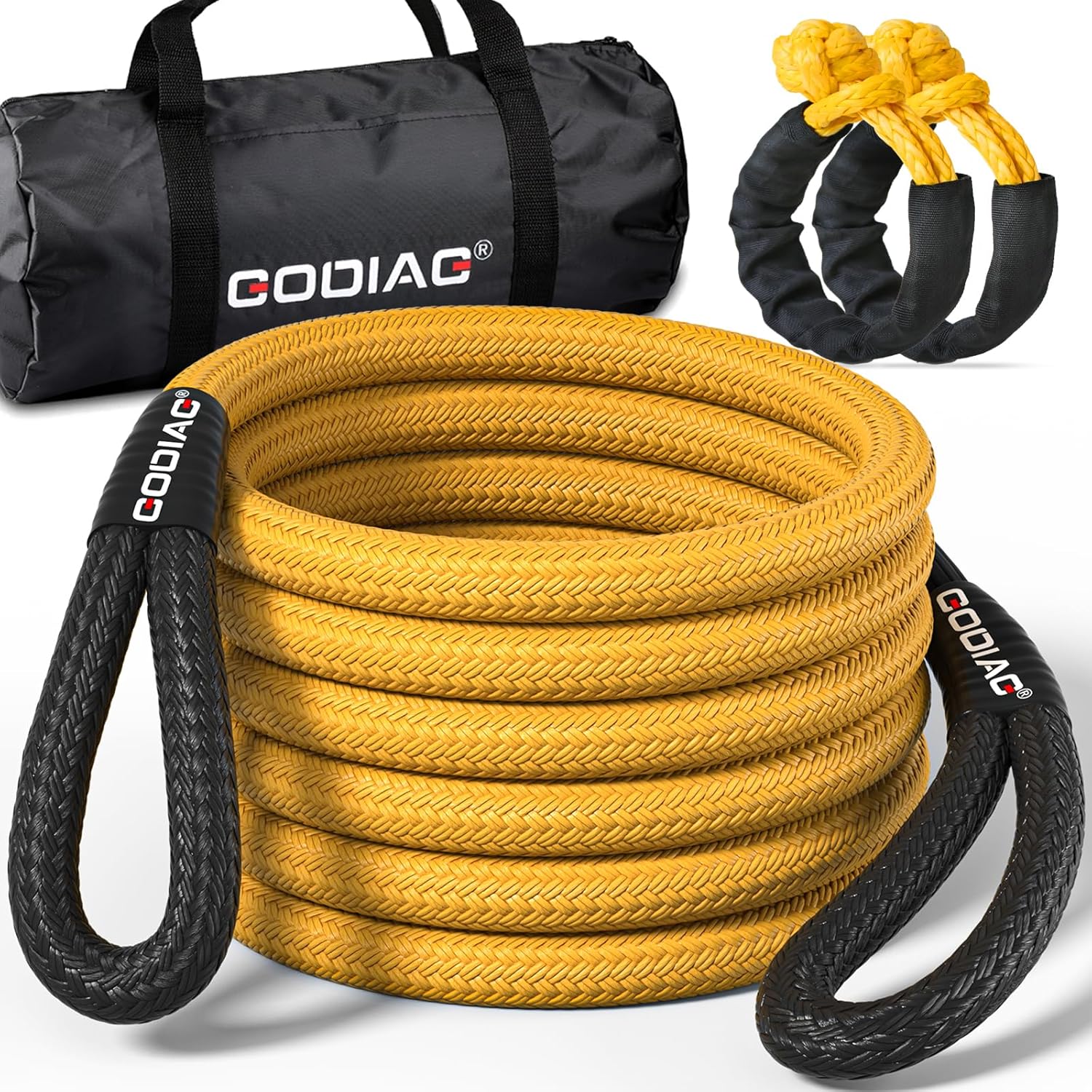
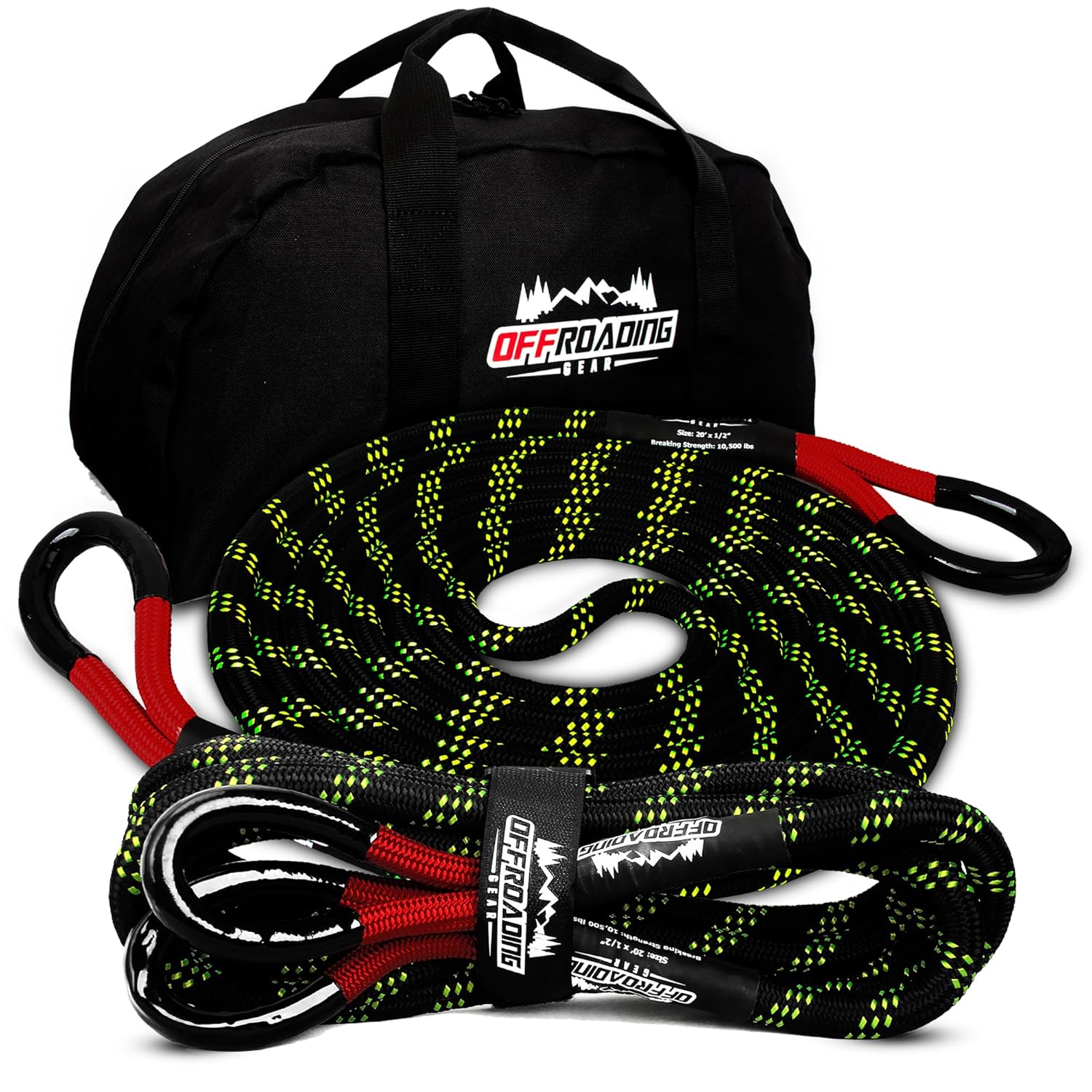
The AUTODUNK 1-1/8" × 30 ft kit includes two soft shackles, which matters because proper termination hardware is part of a safe recovery setup. The GODIAG 1" kit also bundles soft shackles and avoids metal hardware entirely, which reduces the risk of a flying chunk of steel if something parts. The Offroading Gear 7/8" × 20 ft rope publishes a 28,600 lb break rating on the listing, which at least gives you a number to hold the manufacturer to. At this price tier, all three are usable starting points.
The case for spending more on a kinetic rope comes down to materials consistency and third-party test data. Premium ropes use controlled nylon blends and back the specs with test documentation. If you're running technical trails regularly or pulling heavier rigs, that peace of mind is worth the price gap. For occasional weekend runs in a stock or mildly built Jeep, a well-rated budget rope checked against the two specs above is a workable call.
Budget kinetic ropes with the specs published. Every link goes to Amazon.
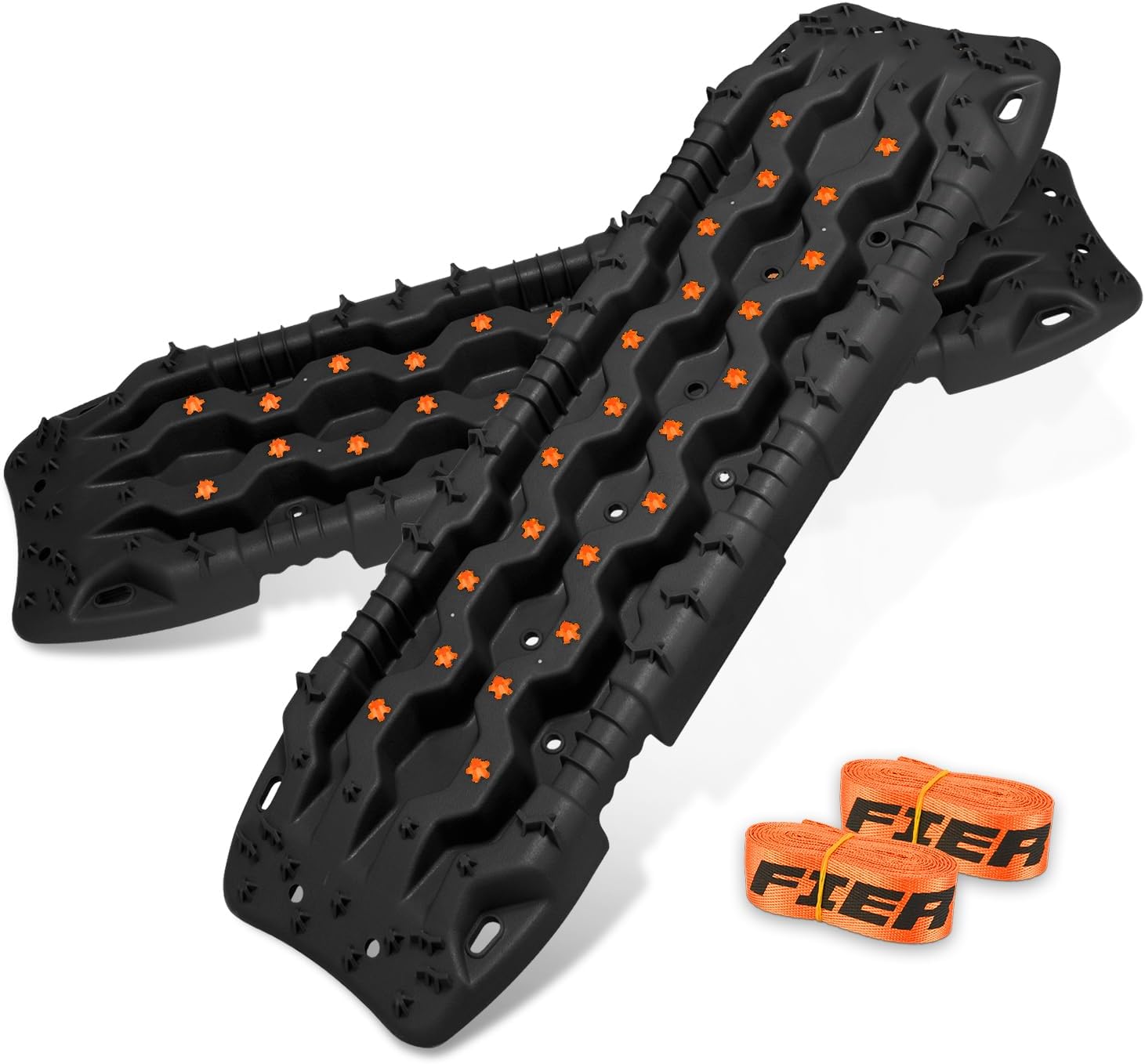
Traction boards are where the budget calculus flips a bit. The failure mode on a cheap board is structural: thin walls crack in cold weather, flimsy ladders bend when a tire loads the edge, and slick undersides mean the board walks away from the recovery surface instead of staying put. None of those failures are catastrophic in the way a kinetic rope failure is, but a board that breaks under your front tire when you're trying to drive out of a wash is useless exactly when you need it.
The GEN3 Traction Boards from Fieryred (44.88" × 12") sit at a reasonable mid-tier: the 44" length gives a tire enough of a run to build momentum, the 12" width covers most Jeep tire footprints, and the surface pattern does the job in sand, mud, and loose soil. For an occasional-use pair, these aren't a compromise pick. They're a sensible one for a Wrangler or Gladiator that hits trails a few times a season.
Where the premium boards earn their price is stacking weight and high-frequency use. If you're doing serious overlanding, loading the boards under a heavy JT with a full rack, and using them on every trip, the heavier-duty construction matters. For a JL day-tripper that gets stuck once a year, paying a premium is difficult to justify on the merit.
One JK note: if you're running 35s on a heavier, modified JK, check the board's weight rating. Stock JK weight is about 3,900 lbs, but a built rig with armor, a bumper, and a rack can push well past that, and board ratings aren't always obvious from the listing.
Mid-tier traction boards for Wrangler and Gladiator trail use. Every link goes to Amazon.
Soft shackles made from synthetic fiber (Dyneema and similar) are the trail-preferred alternative to a bow shackle. They're lighter, don't become a projectile if they fail, and work with most recovery points on a Wrangler or Gladiator. The budget options in this category are generally fine because the failure mode is benign: a worn or overloaded soft shackle frays visibly before it lets go, unlike steel hardware, which can fail suddenly and catastrophically.
The AUTODUNK and GODIAG rope kits both include soft shackles, which is a practical reason to start there rather than buying ropes and shackles separately. If you already have a rope and only need shackles, check the working load rating against your vehicle weight and the expected recovery forces. A good rule of thumb: the shackle's break strength should exceed the rope's break strength so the shackle isn't the weak point in the system.
Metal D-rings and bow shackles are still common and inexpensive, and they work fine for moderate recoveries. The argument against them isn't that they're always dangerous: a failed soft shackle carries less energy if it lets go. On an actual recovery, "less energy" in the direction of a person is not a small thing.
First-time doors-off trail driver: one kinetic rope with two soft shackles included (the AUTODUNK or GODIAG kits cover this in one purchase), one pair of traction boards, and a basic recovery strap for anchor use. That's it. You don't need a winch for an accessible trail if you're with other Jeeps, and you don't need a full overland kit for a fire road or a mild off-camber run. Check current prices for the catalog options above.
Overland regular, running alone or on technical terrain: the starting kit above plus a dedicated snatch block, a tree saver strap, and a rated tow point mounted to the frame (most factory JL and JT recovery points are adequate; check the rating in your owner's manual). A winch is worth the investment if you run solo frequently, especially in areas where a self-recovery without a pull point isn't possible. The synthetic winch rope is also worth upgrading if the winch comes stock with wire cable.
The gap between "has a kit" and "has a good kit" is not about spending more money. It's about knowing what the gear you're carrying is actually rated for.
General guidance for Jeep Wrangler and Gladiator owners. Recovery techniques and equipment ratings vary; confirm specs against your specific vehicle weight and build before use. Trail conditions change fast. Carry the kit and know how to use it before you need it.
Sort the kit before you leave the pavement. The forecast calls the week so you know what you're heading into.